
Written by John VanDerLaan
*We may earn revenue from the products available on this site and participate in affiliate programs.
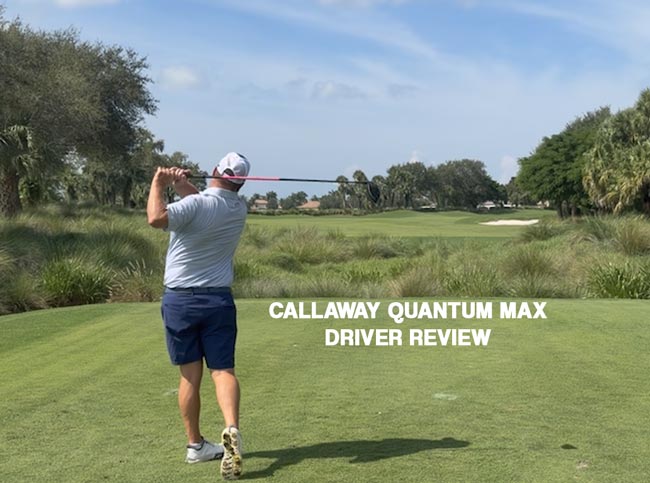
This is Golf Gear Advisor's Callaway Quantum Max driver review.
I am a six handicap, working on getting back to a scratch, and have been testing golf clubs and equipment for more than 20 years.
I tested the Callaway Quantum Max driver over several 18 hole rounds of golf here in Naples and Fort Myers Florida. I then tested the driver on the trackman launch monitor at The Cave Golf Club, in Estero, where I compared it to the Taylormade Qi4D driver, the Titleist GT2 and GTS drivers, and the Ping G440 k.
In this review, I will share my experience with this driver along with the features, benefits and potential drawbacks that you may experience.
Quick Verdict

Pros:
Cons:
Key Takeaways
This Callaway Quantum Max driver review looks at a driver built for low spin, mid high launch, ball speed, and forgiveness. The Callaway Quantum Max driver sits in the middle of the new quantum line, giving most golfers more help than the triple diamond models without becoming a slice-fix-only head.
- The TriForce Face Technology and ai Optimized Face Design are the headline upgrades, built to optimize speed, launch, and spin consistency across the entire face.
- Advanced perimeter weighting and the OptiFit hosel create a simple neutral or draw setup, so the Quantum Max can fit a wide range of launch direction and shot shape needs.
- At a glance, the Quantum Max driver is best for mid- to high-handicaps wanting distance retention and easy speed; low spin better players may prefer the Quantum Triple Diamond or Quantum Triple Diamond Max.
- Pros: strong ball speed, super forgiving performance on common misses, useful adjustability, and a confidence inspiring profile.
- Cons: premium price, modest gains over last year’s elyte for well-fit players, and less total control than a compact triple diamond.
Performance Testing: Distance, Forgiveness & Trajectory

Club Tester
John VanDerLaan (Author)
- Average score: 78.1
- Handicap: 5.1
- Years Experience Reviewing Golf Clubs: 20
- Ball flight: Fade with driver, draw with irons
- Golf ball: Titleist Pro V1 X
- Average Swing speed: 100 MPH
Driver Specs
- Loft setting: 10.5
- Shaft: AutoFlex 505X
- Shaft Flex: Stiff
Launch Monitor Numbers
These were the average numbers of my 20 best drives on the launch monitor.
Clubhead Speed | Ball Speed | Carry Distance | Launch Angle | Spin rate | Peak Height |
|---|---|---|---|---|---|
100 mph | 148 mph | 245 yds | 14º | 2400 rpm | 90 ft |
My Ratings After Two Sessions On the Launch Monitor And Two 18 Hole Rounds Of Golf
Rating on a scale of 1-5, 5 being the best.
My Rating Overall: 4.5 out of 5
Distance: (5) Very similar in distance to my gamer, which is a Taylormade Qi4D.
Forgiveness: (4) Not as forgiving as other drivers that I have tested this year.
Ball Flight: (4) Ball flight was slightly lower than I am used to, but still high enough, with a slight cut.
Feel: (3.5) I was not impressed with the feel, especially on off center hits.
Sound: (3.5) The sound is a medium metallic crack outdoors and sharper indoors. Mishits feel slightly hollow.
Looks At Address: (4) Great Aesthetics. Inspires confidence on the tee box
Tech Breakdown: What’s New in the Callaway Quantum Max Driver
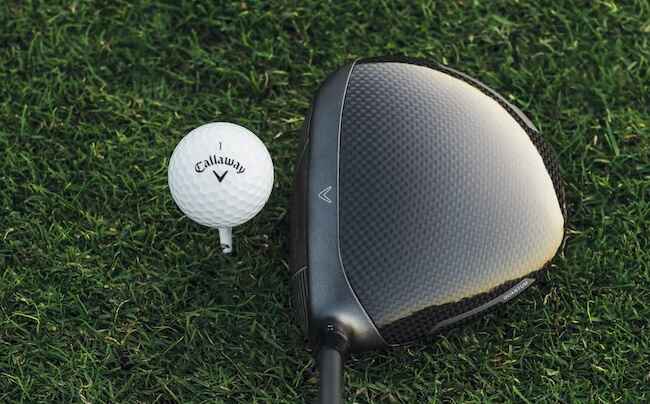
The Callaway Quantum Max is built around a fully integrated speed system: Tri-Force Face, 360° carbon chassis, and advanced perimeter weighting. The Tri-Force Face of the Callaway Quantum Max driver consists of three layers: high-strength titanium, poly-mesh, and carbon fiber, which is claimed to be a unique combination in driver face technology. In simple terms, the tri force face uses high strength titanium at the driver face, poly mesh behind it, and carbon fiber deeper in the structure.
The Tri-Force Face is designed to provide unprecedented speed, distance, and spin consistency, with the titanium face being up to 14% thinner than previous models, enhancing overall performance.
The AI-Optimized Face Design of the Quantum Max driver is engineered to deliver consistent performance across the entire face by optimizing speed, spin, and launch based on real-life strike locations. That means the face technology is not only chasing center-strike distance; it is trying to protect ball flight on heel, toe, high, and low contact.
The driver includes a 10g weight system at the back of the head that can be adjusted for a neutral or draw setup, allowing golfers to customize their ball flight based on their tendencies. The weighting system is not complicated, but it works. The Callaway Quantum Max driver features an adjustable hosel that allows for independent loft and lie adjustments with eight total configurations to fine-tune launch angle and shot shape.
My Experience With The Callaway Quantum Max Driver
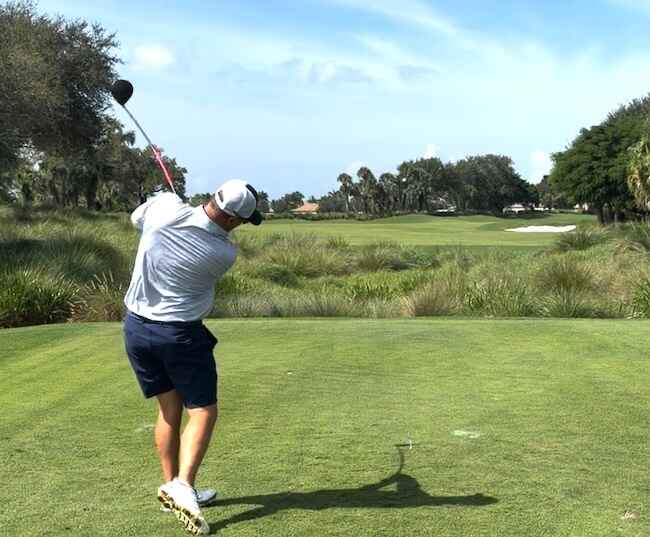
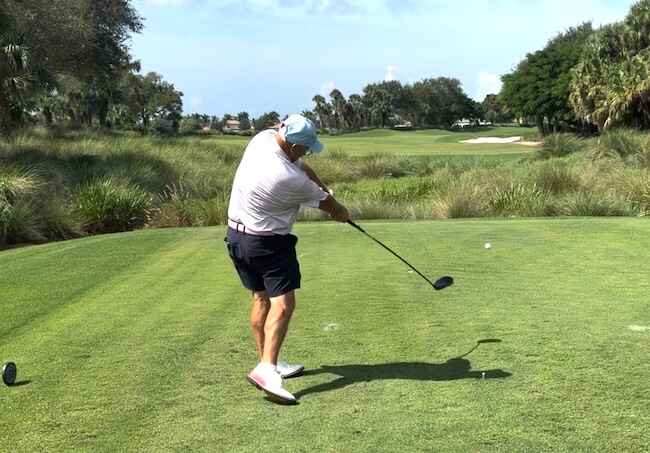
I put the Quantum Max into play over two 18 hole rounds at San Carlos Golf Club in Fort Myers Florida.
I play over 100 rounds a year at this course and I know exactly how far my drives go here.
I found the Quantum max to be similar in distance to my Taylormade Qi4D when struck in the middle of the club face, but the distance dropped off considerably on off center strikes.
The ball flight was slightly lower than I am used to, with a shallower descent angle, which made for slight more roll out.
I shot 77 in both rounds and I feel as though the Quantum Max driver cost me at least a couple of shots in each round.
Here are the score cards:
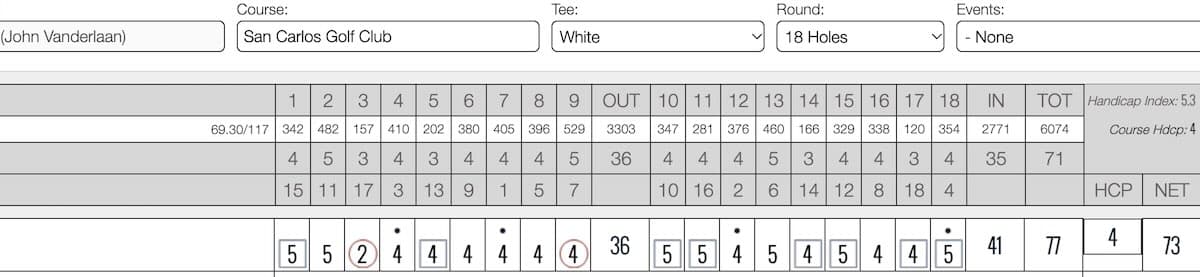
Scorecard Using The Callaway Quantum Max Driver 10-09-2026
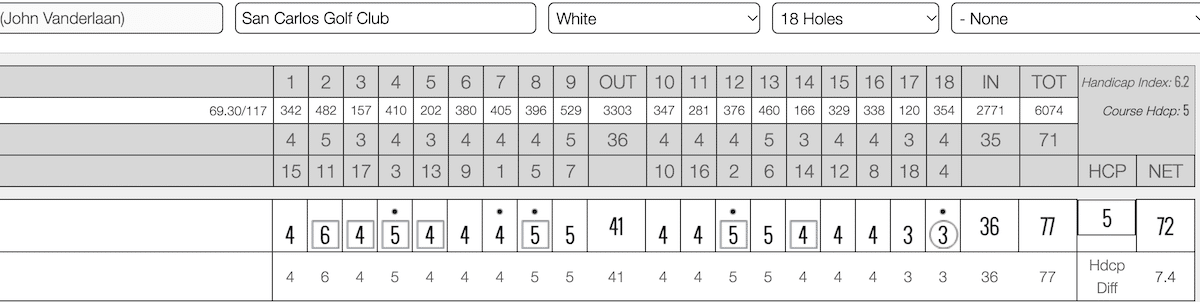
Scorecard Using The Callaway Quantum Max Driver 09-30-2026
Bottom Line: The Callaway Quantum Max is a good driver. It is not a great driver for my game. There are better options.
Who Should Play the Callaway Quantum Max Driver?
Low Handicaps: Yes, I know many low handicappers and scratch golfers that are gaming the Callaway Quantum Max.
Mid Handicaps: Yes, the combination of distance and a neutral-to-slight-draw help without an extreme anti-slice look will benefit many mid handicappers.
High Handicaps: There are much better drivers for beginners and high handicappers than the Callaway Quantum Max.
Value, Alternatives & Buying Advice
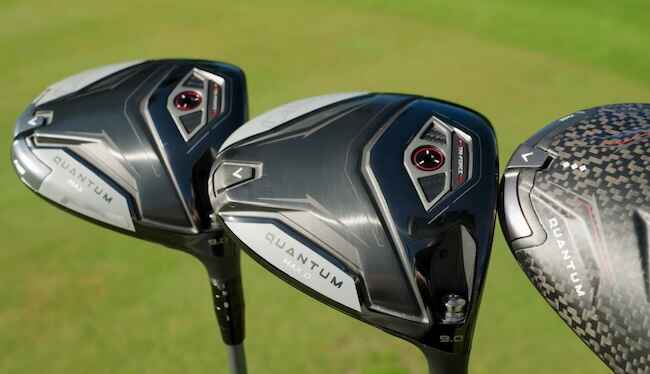
The Quantum Max is expensive, but it competes with other flagship drivers. If your current driver is 3–5 years old, the jump in stability, face technology, and adjustability is likely meaningful. If you already own the Elyte, the upgrade is more incremental.
Within Callaway, Max Fast suits slower swingers, Max D suits slicers, and TD Max suits better players wanting more forgiveness than Triple Diamond.
Alternatives
- Taylormade Qi4D: My favorite driver. It has been in my bag for almost a year now and has become the benchmark for every driver I review. It has outperformed all of them.
- Titleist GTS: Titleist's flagship model and the driver played by our staff member, John VanDerLaan, who plays on the PGA Tour.
- Ping G440K: In my opinion, this is Ping's best driver ever. Massive forgiveness, with good distance. an excellent driver for seniors that want to hit the ball straight.
- Performance Golf SF1 Driver - This was the best driver for a slice, after our extensive testing. You might give up a little distance, but if you struggle with a slice, it is worth it.
For more help in finding the right driver for your game, visit our golf driver buying guide.
Final Verdict: Is the Callaway Quantum Max Driver Worth It?
The Callaway Quantum Max is one of the most complete next gen Callaway drivers for golfers who want speed without giving up help. Its tri force face technology, ai optimized face design, and advanced perimeter weighting make it fast, stable, and easy to tune.
It may not be the best driver available today. But for mid- to high-handicaps, or a confident single-digit who wants a forgiving gamer, the Callaway Quantum Max driver should be on the test list.
Pros:
Cons:
FAQ
Is the Callaway Quantum Max driver good for beginners?
Yes. Its large footprint, simple neutral or draw setup, and strong mishit protection make it beginner-friendly. True beginners with a severe slice may be better fit into the Max D.
How does the Quantum Max compare to an older Callaway driver?
Against a 3–5-year-old Callaway driver, expect more ball speed, better spin consistency, and more useful adjustability. The biggest gain is usually on mishits, not perfect strikes.
Should I choose Quantum Max or Quantum Max D if I sometimes slice?
If you hit an occasional fade, start with Quantum Max in the draw setup. If your normal miss is a big slice, the quantum max d driver is usually the safer choice.
Do I need a fitting?
You can buy off the rack, but a fitting is strongly recommended. Loft, shaft, lie, APW position, and even grip choice can change launch direction, total distance, and shot shape.
How long will the Quantum Max stay current?
Major brands often refresh drivers yearly, but a well-fit Quantum Max should remain competitive for several seasons. Upgrade only when your swing, fit, or performance needs change.
