
Written by John VanDerLaan
*We may earn revenue from the products available on this site and participate in affiliate programs.

When a putter gets labeled a “golf cheat code” by multiple independent reviewers, you either believe the hype or assume it’s clever marketing. I spent over 50 rounds in 2025 putting the LAB Golf DF3 through its paces on actual golf courses—not just indoor mats—to find out whether this revolutionary putter lives up to its reputation.
Here’s my full review of what might be the most talked-about flat stick in golf bags across the country.
Quick Answer: Who the LAB Golf DF3 Is For (and If You Should Buy It)
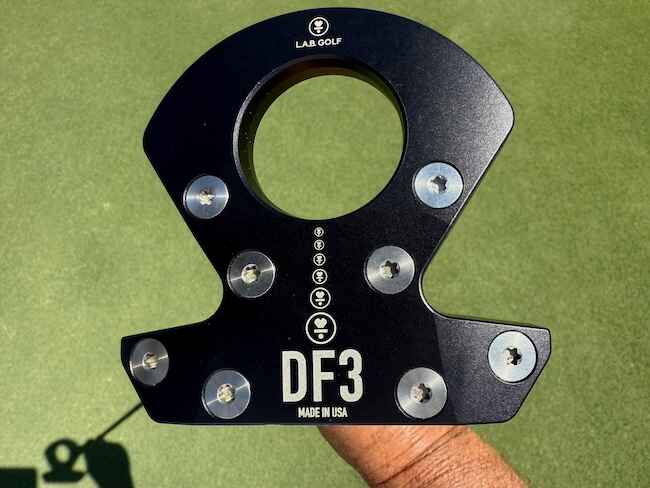
Let me cut to the chase: the LAB Golf DF3 Putter is absolutely worth considering if you want a putter that stays square to your target line throughout the putting stroke. The DF3 is deadly inside 10 feet and I have found it to be the best putter that I have ever tested. At $449 stock , it’s expensive but delivers measurable results where it matters most—inside 10 feet. It is the best L.A.B. putter that I have tested, and I have tested them all.
Here’s the mini-verdict:
- Best for: Golfers who fight push-pull tendencies on shorter putts, players who hate tinkering with their stroke mechanics, and anyone who’s tried “everything” to fix their putting game
- Skip if: You’re ultra-sensitive to unconventional aesthetics, can’t stomach premium pricing, or already putt lights-out with your previous putter
- Realistic expectation: Most testers report holing significantly more putts inside 6 feet and eliminating the dreaded 3-footers you normally miss under pressure
- Testing note: This honest review is based on over 50, 18-hole rounds on medium and fast greens, not just rolling balls on a practice green indoors
The DF3 isn’t magic. But it’s the closest thing to a magic wand I’ve found for golfers who chronically lose strokes on the green.
What Makes the DF3 Different: Lie Angle Balanced (LAB) Technology Explained
Most golfers have heard terms like “face-balanced” or “toe-hang” when shopping for golf putters. The LAB Golf DF3 throws those concepts out the window with something fundamentally different: Lie Angle Balanced technology.
Here’s what that actually means in plain English:
- Zero torque during your stroke: The putter head and shaft are engineered so there’s essentially no rotational force trying to open or close the putter face as you swing. Think of it like a weighted door that doesn’t want to swing open—it just stays where you put it.
- How it differs from traditional putters: A traditional putter with toe-hang wants to rotate around the shaft axis. Even face-balanced mallets require some manipulation to keep square. The DF3 eliminates this entirely.
- On-course effects: You’ll notice easier face control through impact, reduced need to “steer” the ball, and more start-lines that match your intended line—especially from that critical 4–12 foot range where most golfers hemorrhage strokes.
- Works across all builds: The DF3 maintains this torqueless feel even in longer 34–38” builds and broomstick options, which is uncommon in the putter market.
The directed force concept means the putter wants to stay square to your arc naturally. Your job shifts from “holding the face” to simply reading the green and controlling speed.
L.A.B. Golf also makes more traditional looking putters, like the Mezz 1 Max, the blade style Link putter and the mid mallet style Oz.1 and Oz.1i.
First Impressions: Looks, Shape, and Build Quality
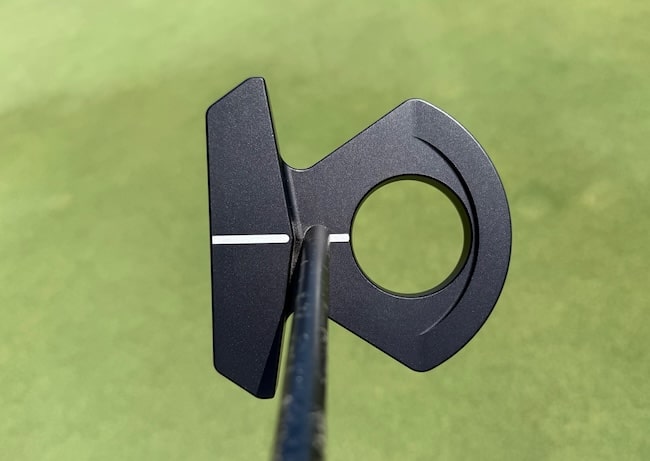
When I first pulled the DF3 out of the box, my immediate thought was: “This looks like a spacecraft landed on my putting green.”
The DF3 is a more compact, squared-off evolution of the original Directed Force 2.1—often called the “branding iron” by early adopters. Launched in 2023 and widely adopted on tours by 2024, it trades some of that aggressive bulk for a sleeker profile while maintaining nearly identical MOI.
What stands out at first glance:
- Smaller footprint than the DF 2.1 with sharper lines and a more refined mallet shape
- The circular “Gimme Getter” rear hole doubles as a ball pickup (no bending over), similar to the Pick Up Pocket on the PXG Black hawk putter, and a subtle alignment mark reference
- Finish options include black, blue, red, nickel, blue oil, and more—plus 30+ alignment aid layouts ranging from minimalist to “full techy”
- CNC-milled 6061 aircraft aluminum head with premium milling detail you can see and feel
- Hand-assembled in Creswell, Oregon with a great headcover included
On the first tee, my playing partners immediately noticed. “What is THAT thing?” was the most common reaction. By the 9th hole, after watching me drain putts I’d normally miss, the questions turned to “Where do I get one?”
Build, Specs, and Custom Options
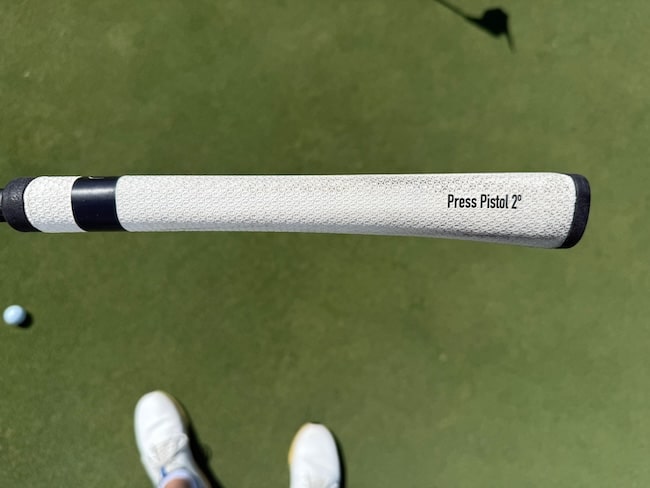
The DF3 that I tested has is 34" with a 69 degree lie angle, TPT shaft and a press pistol 2 degree grip.
The DF3 offers extensive customization that goes far beyond other putters in this price range:
- Lengths: Standard builds from ~32” to 39”, plus broomstick, armlock and counterbalanced configurations
- Lie angles: Typically between 65°–75° depending on your fitting results
- Shaft options: Stock LAB steel, or upgrades like Accra shaft, BGT, LA Golf, or TPT shaft in various colors
- Head weight: Tuned per build—the DF3 often feels heavier and more stable than a typical off-the-rack mallet
- Stock grips: Press 1.5, Press II 3°, Press 1.3/1.7 XL—all designed with built-in forward press to match shaft onset
- Remote fitting available: LAB’s process determines your ideal lie angle and shaft lean without visiting a store
Feel & Sound: What the DF3 Is Like to Stroke

The first thing you notice when the putter face meets the golf ball is how different it feels from anything else you’ve rolled.
Impact characteristics:
- Center strikes: Soft but not mushy—a slight “pop” from the milled aluminum face helps the ball launch and roll quickly. Reviewers describe it as “buttery soft and refined.”
- Mishits (heel/toe): Slightly higher-pitched “tick” with subtle tuning-fork feedback, but minimal twisting in your hands. You’ll know you missed the sweet spot, but the ball still goes where you aimed.
- Overall sensation: A very stable, slightly head-heavy putter that wants to stay moving straight back and through
- Shaft/grip impact: A graphite Accra shaft versus standard steel noticeably changes swing weight and sound; My TPT graphite shaft produces a very different sound than the standard steel; XL counterbalanced grips shift the balance point higher
Compared to popular milled putters like Scotty Cameron , PING PLD or Cobra 3DP Agera, the DF3 offers a softer, more muted sound with that unique stability profile. It won’t “click” the way a blade does—it “ticks” more gently.
The putter feels like it has its own gravity. Once you start the stroke, it wants to continue on its path without your interference.
Adjustment Curve: Getting Used to the DF3
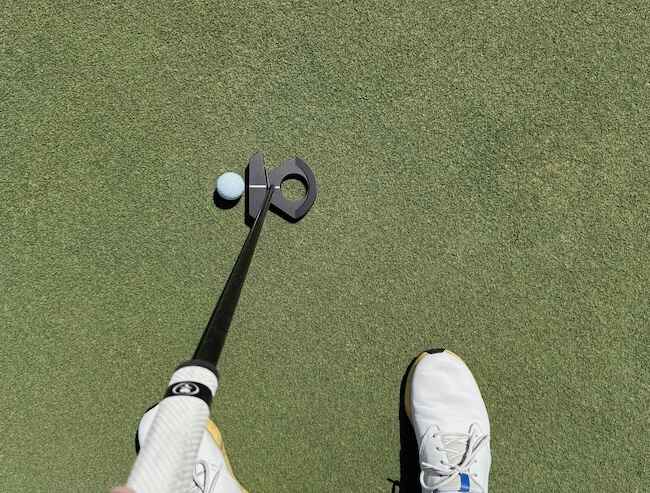
Expect a brief learning period before the DF3 becomes a permanent spot in your bag:
- Most golfers feel “locked in” on start line within a session or two on the practice green
- Speed control typically takes 2–4 rounds to fully dial in, especially on fast or slow greens
- Ball position should move slightly more forward than your previous putter
- Let the grip and shaft set the forward press naturally—don’t force it
- Trust the head not to twist; fighting it defeats the purpose
- Aggressive “hitty” strokes can initially lead to leaving putts short—the DF3 rewards a smoother, tempo-driven motion
- Some players have to get used to the center shaft; I have gamed a center shafted putter for years, so there was no adjustment for me
That’s the adjustment curve in a nutshell: initially strange, then almost immediately intuitive.
On-Course Performance: Does It Actually Hole More Putts?

This is where the LAB Golf DF3 Putter Review gets real. Theory is great. Holing more putts is better.
I tested across more than 50, 18-hole rounds on medium and fast greens in 2025, plus dedicated practice sessions from 40–60 feet.
This is a true story:
The very first time I took the DF3 to the course, I spent about half an hour on the practice green, getting used to the putter. I then went out and played 18 holes with my normal foursome. I ended up having 27 putts and shot 72! My playing partners could not believe it!
I keep my stats by using the Grint App for my scoring. I had to go back for more than a year to find the last time that I had 27 putts with my old scotty Cameron blade putter.

Scorecard with 27 Putts with The LAB DF3 Putter
Performance by distance:
- Inside 6 feet: Noticeable bump in make percentage. The putter head staying square virtually eliminates those embarrassing pushed or pulled three-footers. No more yips from trying to “hold” the face.
- 6–15 feet: More consistent starting lines mean more lip-ins and fewer violent lip-outs. Still dependent on your read—the putter can’t fix bad green reading—but when you see the line correctly, you start it there.
- 20+ feet (longer putts): Very strong at getting putts hole-high with practice. Distance control shines on fast surfaces, enabling precise 10-foot versus 12-foot differentiation. Requires recalibration compared to traditional putters.
Forgiveness factor:
The high MOI means heel/toe misses hold line better. Instead of tricky 4–5 foot comebacks, you’re left with tap-ins. This alone dropped my three-putt count dramatically.
The mental effect:
Knowing you don’t have to consciously “hold the face square” frees your mind to focus on speed and read. It’s a confidence boost that compounds over 18 holes.
Concrete example: In my first two weeks gaming the DF3, my three-putts dropped from 1 or 2 per round to 0. The difference came almost entirely from eliminating the “miss I can’t explain” on putts short inside 4 feet.
Performance vs Your Current Gamer (Blade or Mallet)
How does the golf DF3 Putter stack up against what’s already in your bag?
DF3 vs. Traditional Blade (Anser-style):
- Start-line consistency: DF3 significantly better—face doesn’t want to rotate, the exception being the Odyssey Square 2 Square Double Wide blade
- Stability on mishits: DF3 holds line; blades punish errors more
- Ease of aiming: Blade offers simpler sightlines; DF3’s alignment options can match or exceed
- Feel preference: Blades feel more responsive; DF3 feels more forgiving
Golfers moving from a light blade may initially perceive the DF3 as “different” in timing—it’s more stable but requires tempo adjustment. Those coming from large mallets typically adapt faster.
One informal test: In a closest-to-the-hole contest from 25 feet, the DF3 left every putt within 2 feet of the hole. My old blade scattered results from 1 to 6 feet. Small sample, big difference.
DF3 vs. Popular Mallet (Taylormade Spider, Odyssey Ai-One Square To Square Jailbird):
- Start-line consistency: DF3 edges ahead due to torque elimination
- Stability on mishits: Very comparable—both are forgiving
- Ease of aiming: DF3 offers more customization; Taylormade Spider ZT has awesome alignment aids, Odyssey has a more traditional look
- Feel preference: DF3 softer; Spider and Odyssey typically firmer with more “click”
- Look: The Odyssey Ai-One Square To Square Jailbird is much easier on the eyes
I love the feel of the DF3, and it rolls the ball very well, but there is a lot to be said for the Pure Roll Insert in the Taylormade Spider.
RELATED: Performance Golf SQ Putter Review
Fitting, Price, and Value
Let’s talk money—because the DF3 is expensive and a serious investment.
Pricing:
- Base DF3 direct from LAB Golf: ~$449
- With upgrades (exotic shafts, custom finishes): $600+
- Sale pricing at retailers: Often $380–$420
If you are looking for zero torque technology at a lesser price, check out our review of the Lazrus zero torque putter, it is available for under $200.
Where to buy:
- LAB Golf direct: Full customization and remote fitting options
- Golf Galaxy and major retailers: Quicker off-the-rack purchase, but limited custom choices
- Authorized fitters: Best of both worlds if available locally
LAB’s remote fitting process:
You can send stroke videos to LAB’s team, who then recommend your ideal lie angle, length, and grip. This matters significantly—a stock build might not unlock the technology for your stroke. Most reviews suggest getting fitted even if you start with a stock new club.
Value proposition (honestly):
The DF3 costs more than standard OEM putters. But if you’re chronically losing 3–5 strokes per round on the greens, the “investment-per-stroke” math works out quickly.
Who might test in-store first:
Budget-conscious golfers who want to confirm the feel before committing to a full custom order.
Pros & Cons Summary
Pros:
- Exceptional face stability that helps if you struggle with push-pull misses
- Improved make-rate inside 10 feet—many testers report dramatic three-putt reduction
- Wide customization options (30+ alignment layouts, multiple shaft and grip choices)
- Excellent build quality—CNC-milled aluminum, hand-assembled in Oregon
- High forgiveness on mishits; off-center strikes still hold their line
- Confidence boost for golfers who tend to “steer” the putter
Cons:
- Premium price ($449–$650+) that’s hard to justify for casual play or high handicappers
- Unconventional look that turns off traditionalists—this isn’t a good putter for everyone aesthetically
- Adjustment period for speed control and setup; expect 2–4 rounds before consistency clicks
- Limited in-store fitting availability in some regions; may require remote fitting
- Muted feel might underwhelm golfers who prefer firm face feedback
Final Verdict: Is the LAB Golf DF3 Going in the Bag?
After several rounds and countless putts, here’s where I land: the LAB Golf DF3 is a top-tier option for any golfer willing to invest in their putting. It’s not a gimmick. It’s not just marketing. The torqueless feel genuinely translates to more putts made.
For golfers in the foreseeable future of their game—those committed to improving rather than just playing—the DF3 represents a legitimate equipment edge. One prominent review called it a “golf cheat code,” and that description holds up.
Let me cut to the chase: the LAB Golf DF3 Putter is absolutely worth considering if you want a putter that stays square to your target line throughout the putting stroke. The DF3 is deadly inside 10 feet and I have found it to be the best putter that I have ever tested. At $449 stock , it’s expensive but delivers measurable results where it matters most—inside 10 feet.
Final thoughts on why to choose it:
- Torque-free feel eliminates the need to manipulate face rotation
- Stability and high MOI mean mishits don’t become disasters
- Custom fitting unlocks consistency that generic putters can’t match
- Real-world performance gains, especially inside 10 feet
Reasons you might pass:
- The look genuinely bothers you and you can’t get past it
- $449+ is beyond your budget for a single new club
- Your current putter already performs well and you’re averaging under 30 putts
Who should prioritize testing the DF3:
- Golfers averaging 34+ putts per round
- Players who struggle under pressure on short putts
- Gear enthusiasts open to non-traditional designs
- Anyone who’s had low expectations from other “game-improvement” lab putters
Looking ahead, expect more brands to chase LAB-style balancing technology. Scotty Cameron has just introduced a line of OC low torque putters to compete with LAB. But right now, the DF3 is one of the most refined versions of this concept available. It’s earned a permanent spot in many golf bags—and after testing it, I understand why.
If your putting stroke has been holding your golf game back, stop guessing and give this great putter serious consideration. Sometimes the answer isn’t more putting tips—it’s better equipment.
