
Written by John VanDerLaan

Game improvement irons are, technically, any clubhead that has a feature that deviates from a pure blade design to improve performance on mis-hits. This almost always includes some degree of cavity back / perimeter weighting, some degree of offset, a wider sole, and some degree of oversized clubhead.
In modern times this has expanded to include inserts into the back of the club and faces made of different materials to increase ball speed and forgiveness, as well as loft-jacking or delofting the clubs to increase distance while keeping the number on the club the same (i.e. a set could include a 31 degree 7 iron instead of a 34 degree 7 iron.
The truth is almost all clubs on the market nowadays use some of these features, but they exist on a spectrum from very very subtle lines labeled players distance irons or players cavity back irons, to maxing out all of these attributes, creating super game improvement lines.
What Is A Game Improvement Iron?
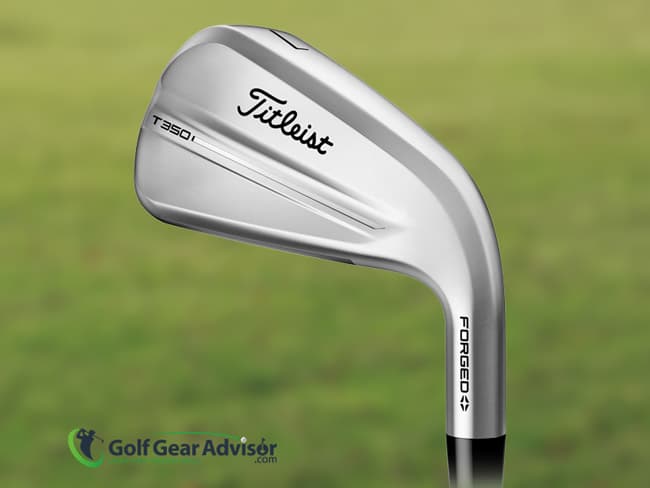
A game improvement iron technically speaking will use one or all of the following modifications in order to improve the performance of a golf iron for off-center hits and swing flaws: oversized club heads, perimeter weighting or cavity backing, offset, wider soles, and mixed-metal construction.
Typically nowadays since these technologies have been built into so many clubs used by all levels of players including tour pros, the game improvement label will be reserved for clubs marketed to higher-handicap, casual, amateur players in order to make the game easier.
What Are Super Game Improvement Irons?

The super game improvement moniker is reserved for clubs that take advantage of ALL of the different technologies and also attempt to build the club with the maximum possible amount of each attribute.
These clubs make no reservations about their purpose, and that purpose is very specific: to build as much forgiveness into the club as the materials will allow. Everything else is secondary.
You will see these clubs with the most offset to help close the face and encourage a draw or fix a slice. They will also have the biggest club head sizes possible, the most perimeter weighting possible, the widest soles and thickest toplines possible, attempting to maximize the trampoline effect for the biggest area of sweet spot that the engineers can come up with.
This results in very forgiving irons for beginners and high handicappers.
Features Of Game Improvement Irons
Engineers and clubmakers have come up with a lot of technology over the years, but behind all the marketing buzz there’s really only a limited number of variables they can play with. Let’s take a look!
Clubhead Size

The first thing that can be done to increase the size of the sweet spot is increase the clubhead size overall. Some manufacturers have used the tag OverSized but modern day marketing schemes have re-labeled these with much more sophisticated names.
The opposite of the muscle back blade iron set, game improvement irons are going to try to build in more clubhead size, and super game improvement irons are going to build in as much as possible.
They also have a large bottom flange that helps ensure proper turf interaction.
Clubhead Type
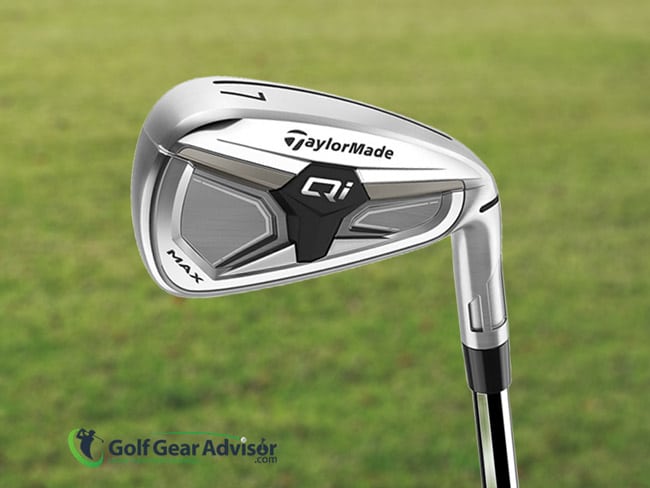
Basically without exception, anything that can even begin to claim to be in the game improvement category is going to feature a cavity back club head design.
These designs could feature more or less dramatic cavities, like the Lazrus Golf irons, and many nowadays will feature an insert that is either purely decorative (like a piece of plastic to fill part of the cavity) or more likely a multi-material design that adds a tungsten or titanium type weight (sometimes with a plastic cover, sometimes not) to the back of the club right near the sweet spot
Perimeter Weighting

Perimeter weighting is a simple enough concept - that weight taken out of the middle has to go somewhere to form the cavity, so the perimeter is bulked up. Without getting too into the physics of it, the effect of this is that the clubhead is less affected by off-center strikes and there can also be a trampoline effect when you hit the dead-center of the clubface.
When that weight is moved to the perimeter, you will see two other common attributes appear - a thick topline and a thick sole. Naturally, those are two of the perimeters. The thick topline is a dead give-away at address that there’s a big cavity hiding back there. The thick sole has a functional use of both putting more mass under the strike location, increasing launch and helping players get the ball up in the air more easily, as well as usually providing extra bounce and sole width to keep the clubhead gliding along the turf more which can save a few MPH on fat shots.
Offset

Offset refers to how far the clubhead is offset from the hosel. This is a matter of millimeters. While true zero-offset clubs (where the front edge of the hosel is perfectly in line with the leading edge of the clubface) do exist, almost all irons, even blade sets used by PGA Tour pros, will typically feature a very tiny amount of offset, depending on the club. Justin Thomas is one example of a player who has played zero offset irons on TOUR.
More offset gives the face more time to close, helping reduce a right-side miss (for a right-handed golfer). Since this is the most common miss amongst high-handicap and amateur golfers, club manufacturers have started to build in compensation for it. It by all means will not be a miracle cure for anything but it can help keep your tendencies playable.
Shaft Flex

Typically iron sets in the game improvement category are going to be fitted with regular flex or senior flex in both steel and graphite shafts. If you are a high swing speed player who is still looking for a lot of forgiveness, don’t overlook this aspect as it might be harder for you to control a softer flex that comes stock in some iron sets, negating any consistency advantages of the game improvement clubs.
Who Should Use Game Improvement Irons?

The truth is, anyone who wants to build in more forgiveness to their game and is less worried about aesthetics, feel, and wants to make the ball curve less, is a candidate for this type of iron.
They are also ideally suited for beginners, high handicappers and senior golfers.
The most common makeup for tour pros and many golfers getting custom fitted these days is to blend together different types of irons in their sets. That said, the overall trend is that golfers are getting more and more past the stigma of playing irons in the game improvement category and going with whatever produces the best numbers and results for them. It’s pretty much the norm for men and women tour pros to use a club with a lot of forgiveness technology built-in in 4-irons, 3-irons, and below, but more and more are building in that forgiveness in the rest of their sets too.
What Are The Advantages Of Game Improvement Irons?

The advantages are basically forgiveness, which technically speaking means less spin, less deflection, and more ball speed on off-center hits. Aside from this, game improvement irons that have an offset built-in can also help players who struggle with a slice or a hook, to straighten out their start lines. Finally, game improvement clubs that have a wide sole built in can also help reduce a little bit of the chunkiness of a fat shot by helping the club not enter the ground as easily.
What Are The Disadvantages?
There are a few reasons why many golfers who feel they can reliably hit the center of the face will choose a different type iron. First of all, many golfers have been playing with a certain aesthetic and for both style reasons and psychological reasons they prefer to play with the same type of club that they have played with their entire lives. They feel it gives them continuity in standing over a shot to see a certain look from a club that inspires confidence, demands a pure strike, and is easy for them to aim.
As far as performance, the second most cited thing would be that while amateurs need their golf balls to spin LESS, high-level players in some circumstances want their ball to spin MORE. Whether it’s trying to shape shots or get a ball to stop on a green, they feel they have total control over their club and want to have this at their disposal instead of eliminating it.
Lastly, one overlooked aspect is that a cavity-back design can have, as we mentioned, a trampoline effect. Which is fantastic fun for a weekend golfer to feel that pure shot jump 10 yards farther than they’ve ever hit one. But for a low-handicap golfer who relies on precise distance control, that hot spot effect when you hit one right on the screws is reduced with players clubs. While most amateurs just want to hit their irons as long as possible, the tour-level golfer just needs them to go the exact same distance every single time.