
Written by John VanDerLaan
*We may earn revenue from the products available on this site and participate in affiliate programs.
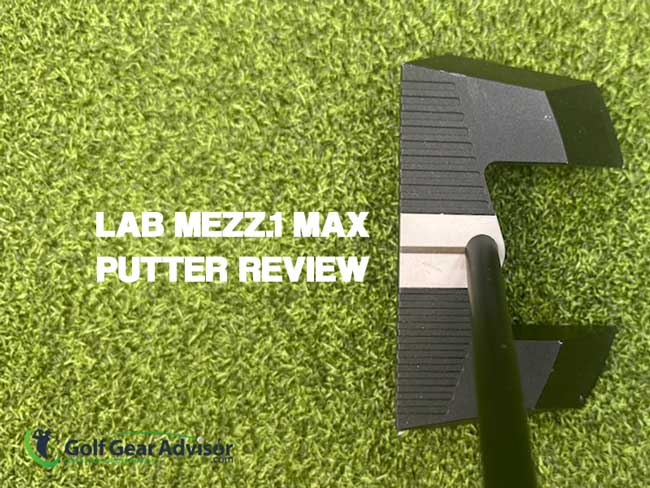
If you’ve been scrolling through golf equipment forums or watching your playing partners roll in putts with a strange-looking mallet, you’ve probably heard about the LAB Mezz.1 Max. This lab putter has generated serious buzz since its release, and for good reason. But does the reality match the hype?
I spent several weeks putting with this futuristic putter across different courses and green speeds to find out. Here’s what you need to know.
Key Takeaways
LAB Golf Mezz.1 Max
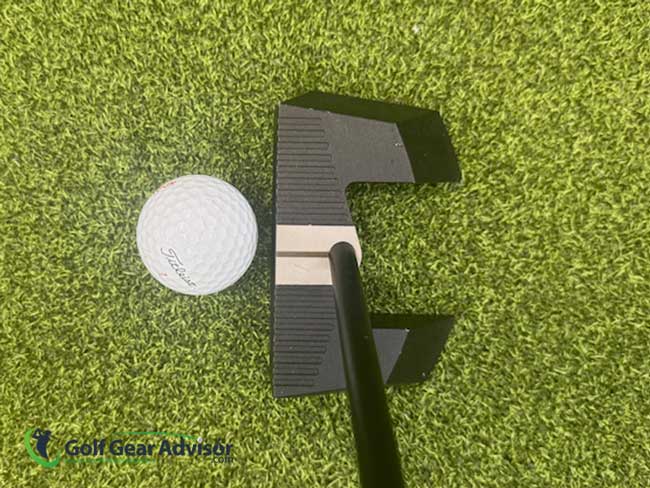
- The Mezz.1 Max is approximately 20% larger than the original Mezz.1 and uses lie angle balanced technology to keep the putter face square throughout your stroke with effectively zero torque.
- On-course testing revealed impressive consistency on mishits—even extreme toe and heel strikes on longer lag putts held their intended line remarkably well.
- Short putts inside 6-10 feet feel almost automatic once you trust the design, with the putter head resisting twisting under pressure.
- Pricing starts around $469 for stock builds, climbing to $550-$650+ for custom options with premium shafts and finishes.
LAB Mezz.1 Max Overview
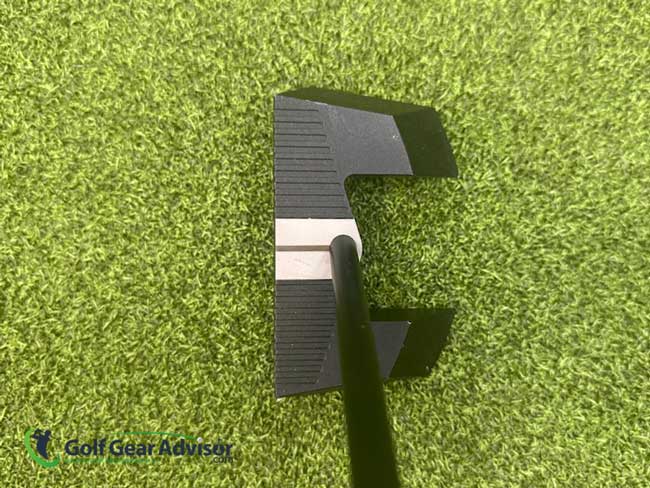
The Lab Golf Mezz 1 Max is the answer to golfers who loved the lie angle balanced concept but wanted more forgiveness in a less radical package than the DF3. Think of it as the middle ground between traditional and avant-garde.
So what makes this actual putter different? The core technology is called Lie Angle Balance. In simple terms, the center shaft and head are hand-weighted so precisely that when you balance the putter on your finger, the face stays perfectly perpendicular to the ground. This means the putter naturally wants to stay square to your target line throughout your putting stroke—no manipulation required.
The Mezz.1 Max launched in the early-to-mid 2020s and quickly found its way onto tour bags, most notably with Adam Scott gaming one. A typical build runs 33-35 inches with a 69° lie angle, standard weight, a Press II 1.5° or 3° grip, and the black steel shaft, a graphite shaft is available to order. The head itself comes in several finishes, with black and dark green being popular choices.
Design & Technology
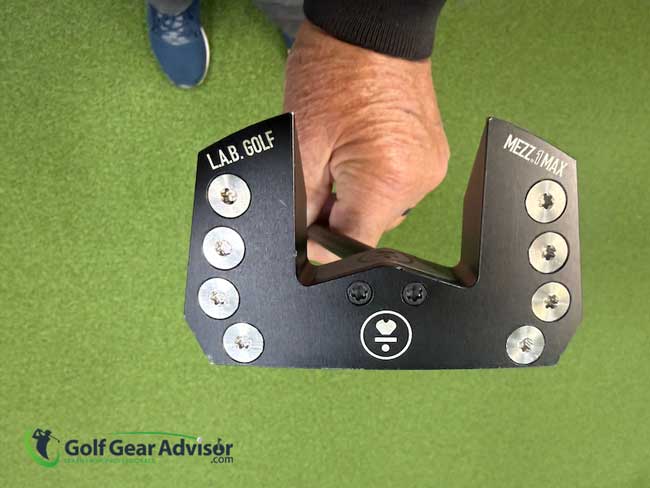
The Mezz.1 Max doesn’t look like anything else in your golf buddies’ bags. Here’s what sets it apart:
Head Shape and Aesthetics
- Compact mallet profile with an industrial, almost futuristic design
- Visible weights on the sole that look more aerospace than country club
- Deep cavity that frames the ball at address, creating a natural alignment aid
- The putter shaft and Press grip enters directly into the center of the head
- The Mezz 1 Max is also available in a counterbalance configuration
How Lie Angle Balance Works
Traditional putters have either toe hang or are face balanced, but lie angle balanced putters operate differently. The entire assembly—head, shaft, and grip—is weighted so the balance point sits almost directly in line with the shaft axis. This eliminates the natural rotation that occurs in conventional designs.
When you make your stroke, the putter face doesn’t want to open or close. It simply swings like a pendulum, staying square without any conscious effort from you.
Forgiveness Engineering
- The Mezz.1 Max’s larger footprint (20% bigger than the standard Mezz 1) redistributes mass for higher MOI
- This means heel and toe strikes lose less energy and hold their line better
- CNC-milled body and face ensure precision
- Full-face groove pattern promotes immediate forward roll and reduces skipping
The Press Grip System
The proprietary Press grips deserve special mention. Available in 1.5° or 3° versions, these grips have a built in forward press that automatically positions your hands ahead of the ball. This complements the lie angle balanced head by promoting natural forward shaft lean without any manipulation.
Looks, Feel & Sound
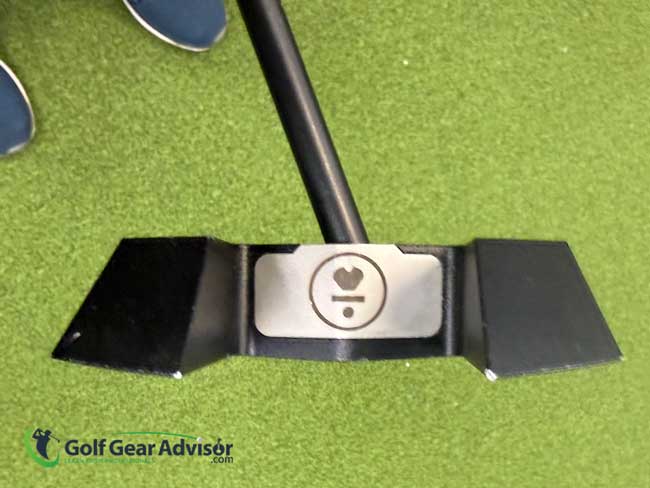
First impressions of the LAB Golf Mezz 1 Max putter are polarizing. The head looks unlike anything from mainstream manufacturers—more like precision golf equipment from the future than a traditional club champion trophy winner.
At Address
- The top line is chunky but purposeful
- Sloping shoulders guide your eye toward the ball
- The deep cavity creates a natural frame that makes alignment surprisingly easy
- After a few holes, the unconventional geometry starts making sense
Available Finishes
- Black (standard)
- Platinum/Silver
- Dark Green
- Blue
- Orange
- Some finishes carry upcharges
Feel Off the Face
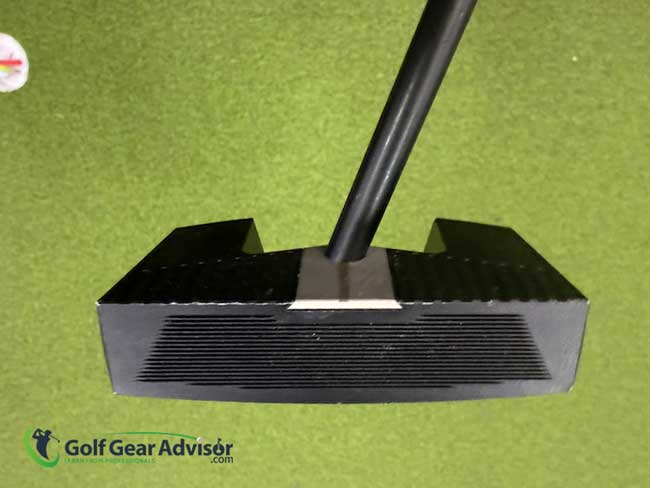
This is where the new max surprised me. Despite the industrial looks, impact feels soft—almost buttery. It’s more of a hushed click than the high-pitched ping you get from some other putters. Even with firmer ball constructions, the feedback remains muted and pleasant.
Centered strikes feel incredibly pure. The sweet spot seems generous, and when you catch it perfectly, there’s an almost satisfying deadness to the impact.
The Forgiveness Trade-off
Here’s something to consider: mishits don’t give you much feedback through your hands. Some players love this—the stability feels reassuring. Others might find it almost too forgiving, missing the tactile cues they rely on to diagnose their stroke. If you’re the type who wants to feel every mishit, this could be an adjustment.
Sound Profile
On the putting green and on course, the LAB Golf Mezz 1 Max produces a very quiet, deadened tone. Most players associate this with premium milling and dense head construction. It’s distinctive without being distracting.
On-Course Performance
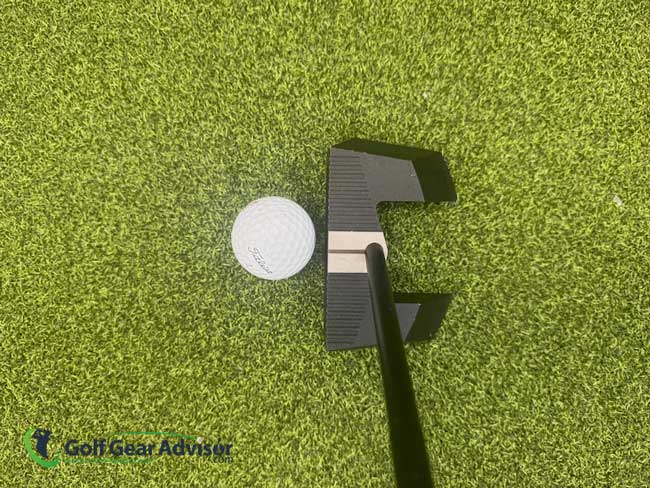
This is where the LAB Mezz.1 Max either wins you over or sends you back to conventional designs. After extensive testing, here’s how it performed across different putting scenarios.
Short Putts (Inside 6 Feet)
Must-make putts are where this putter shines brightest. The putter face genuinely wants to stay square through impact, which translates to more putts dropping on their intended line. During testing, I holed more putts from inside 10 feet than with my previous gamer—and that confidence builds quickly.
On pressure putts, knowing the head won’t twist under tension changes your mental approach. You focus on speed rather than worrying about face angle.
Long Lag Putts (30-60 Feet)
The larger Mezz Max head adds noticeable stability on longer lag putts. Once you dial in the weight and tempo, distance control becomes more consistent. Independent testers report significantly tighter dispersion on lag putts, and my experience matched that.
One particularly impressive test: intentional extreme toe and heel mishits on 40-foot putts still finished close to the hole. The ball lost some speed but held its line far better than any face balanced mallet I’ve used.
Off-Center Strikes
This might be the biggest deal for many golfers:
Strike Location | Traditional Mallet | Mezz.1 Max |
|---|---|---|
Toe hit | Face opens, ball starts right | Minimal twist, holds start line |
Heel hit | Face closes, ball starts left | Slight deviation, mostly speed loss |
High/Low | Variable feedback | Consistent roll, muted feel |
The Learning Curve
Here’s the honest truth: if you’re used to actively releasing the putter head, the Mezz.1 Max will feel strange initially. The technology works best when you stop trying to manipulate the face and let it swing itself.
Most golfers need 3-5 rounds or several practice sessions to fully trust the design. Arc-strokers and players who rely on feel may need longer. But once you commit, the results speak for themselves.
Consistency Across Green Speeds
The design holds up well whether you’re playing fast tournament greens or slower municipal tracks. Pace control remains consistent, and the head weight options (lighter, standard, heavier) allow you to tune the putter for your natural tempo:
- Lighter head: Better for quick, poppy strokes
- Standard weight: Works for most players
- Heavier head: Suits slower, deliberate tempos
Price, Value & Who It Suits
Let’s talk money. The stock Mezz 1 Max starts around $469. Custom builds with premium graphite shaft options and special finishes commonly land in the $550-$650+ range. The other end of the spectrum would be the Lazrus Zero Torque putter, coming in at under $200.
How That Compares
Putter | Price Range |
|---|---|
$350-$400 | |
$350-$400 | |
$450-$500+ | |
$500 | |
$450 |
LAB sits at or above the premium tier, even before upcharges.
Where the Value Lies
For golfers willing to commit to proper fitting and play golf regularly, the Mezz.1 Max can legitimately be the last putter you buy. It’s not a cheat code, but it does eliminate variables that cause inconsistency.
Who Benefits Most
- High-handicappers who three-putt frequently will see the biggest scoring improvement
- Single-digit players gain pressure-putt confidence on those crucial 6-10 footers
- Yips sufferers or anyone fighting face rotation issues
- Players who want one gamer instead of constantly rotating equipment
Who Might Not Love It
- Golfers strongly attached to traditional blade aesthetics
- Players who enjoy tinkering and swapping putters seasonally
- Anyone unwilling to go through any fitting process
- Those who prefer pronounced tactile feedback from mishits
LAB Mezz.1 Max vs Other Putters
How does the Mezz.1 Max stack up against the competition?
vs. Original Mezz.1
The new Max offers more forgiveness and stability due to its larger footprint. Players who struggle with distance control on longer lag putts tend to favor the Max. The original Mezz 1 remains popular for those preferring a sleeker profile.
vs. LAB DF2.1 (Directed Force)
The Directed Force 2.1 is LAB’s most radical design—extremely forgiving but visually challenging. The Mezz.1 Max provides a more compact, traditional-ish look while maintaining high stability. Feel-wise, both offer that buttery response, though the Max has a slightly firmer touch.
The Odyssey Ai One Double Wide is a wide blade design and can't compare to the forgiveness of the LAB Golf Mezz 1 Max. It is, however a very forgiving blade style putter.
vs. High-MOI Mallets (Cobra 3DP Agera, Spider ZT, Wilson Infinite Buckingham)
Both categories offer forgiveness, but the comparison ends there. The Mezz.1 Max’s lie angle balance creates a unique torque-free release that conventional face balanced mallets can’t replicate. Start line consistency is noticeably better.
Real-World Testing
In informal head-to-head putting challenges, properly fit Mezz.1 Max users consistently outperform conventional mallet users. One notable test showed 5 out of 6 successful makes on intentional lip-out challenges—impressive consistency by any standard.
Verdict: Is the LAB Mezz.1 Max Worth It?
LAB Golf Mezz.1 Max
Pros:
Cons:
After extensive testing, here’s my bottom line on this 1 max putter review:
- The Mezz.1 Max is one of the most stable and forgiving mid-mallets available, particularly effective for players who fight face rotation or experience yips
- Its performance advantage only fully materializes when built to your correct length, lie angle, grip, and weight—fitting isn’t optional
- The premium price makes sense as a long-term investment if this becomes the gamer that stays in your bag for years rather than rotating out every season
- Golfers willing to embrace the unconventional look and commit to proper fitting can expect measurable gains on the putting green
The Mezz.1 Max isn’t for everyone. But for golfers tired of three-putts and searching for a standard length putter that eliminates variables, it delivers. If you’ve tried everything else and still struggle with start line consistency, this might be your answer.
FAQ
How long does it take to adjust to the LAB Mezz.1 Max?
Many golfers feel improvement on short putts almost immediately—the stability is that noticeable. However, full adjustment typically takes several practice green sessions or 3-5 rounds of play. Players accustomed to actively releasing the putter head need longer to “unlearn” old habits and trust the torque-free design. The softest feel comes once you stop fighting it.
Can I bend the lie angle or change the head weight after buying?
The Mezz.1 Max is hand-weighted for lie angle balance, so DIY adjustments aren’t recommended. Bending the lie or swapping weights at home will likely compromise the zero-torque effect. Significant changes require sending the putter back to LAB or an authorized fitter for professional reweighting and adjustment, typically with an additional service fee. This is why getting your putter specs right during initial fitting matters so much.
Is the Mezz.1 Max suitable for straight-back-straight-through or arcing strokes?
Lie angle balance works with your natural stroke path, whether it’s straighter or has a gentle arc. The key is matching lie, length, and grip during the fitting process so the putter naturally returns to square without forcing any particular stroke shape. Both stroke types can benefit equally—the technology accommodates rather than dictates.
What handicap range will benefit most from the Mezz.1 Max?
High-handicappers often see the biggest scoring gains by reducing three-putts, while single-digit and competitive golfers appreciate added confidence on 6-10 footers under pressure. The real dividing line isn’t handicap—it’s commitment to proper fitting and giving the putter enough time to become comfortable. If you’re willing to invest in the process, handicap doesn’t limit your potential improvement.
