
Written by John VanDerLaan
*We may earn revenue from the products available on this site and participate in affiliate programs.

The Titleist GT2 driver has been generating serious buzz since its late 2025 launch, and after months of testing, it’s time to break down exactly what this golf club delivers on the course. Whether you’re a Titleist guy looking to upgrade from TSR2 or simply shopping for your next new driver, this gt2 driver review covers everything you need to know.
Key Takeaways
Titleist GT2 Driver
Pros:
Cons:
- The Titleist GT2 is a 460cc, high-MOI driver designed for golfers wanting more distance and stability without sacrificing that classic Titleist look and solid feel at impact.
- Testing through late 2025 and early 2026 confirms the GT2 ranks among the longest drivers for mid-handicappers, with ball speed around 150 mph at 100 mph clubhead speed translating to 250-255 yards carry—though forgiveness is “very good” rather than class-leading compared to models like Ping G430/440 MAX.
- Sound and feel remain distinctively Titleist: a higher-pitched, percussive smack with clear feedback on strike quality, thanks to the new proprietary matrix polymer crown material and more aerodynamic shape.
- GT2 performs best for golfers with moderate swing speeds to faster swings (95-105 mph) who want high launch and relatively low spin; slower swingers or those needing maximum slice correction may find better results with GT1 or dedicated max-draw options.
- At approximately $649 MSRP, this is a premium investment that demands a proper driver fitting rather than a blind upgrade from your current gamer.
Overview: What Is the Titleist GT2 Driver Aiming to Do?
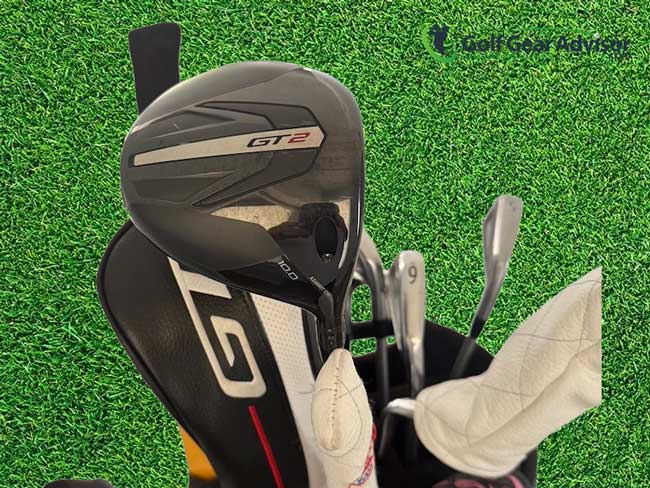
The Titleist GT2 sits as the “distance-plus-forgiveness” model in the Titleist GT family, effectively replacing the popular TSR2 in the lineup. Titleist’s engineering brief was clear: blend the ball speed characteristics of TS/TSR drivers with a more stable, game-improvement friendly head that still looks and sounds like tour-calibre equipment.
Here’s what defines the GT2’s position in the market:
- Purpose: High-MOI construction delivers tighter dispersion on off center hits while maintaining aggressive ball speed across the face
- Price bracket: Around $649 USD at launch, competitive with other flagship drivers from major brands
- Direct competitors: Ping G430 MAX, TaylorMade Qi10 series, Cobra DS-Adapt Max-K
- Target player: Mid-handicappers and improving golfers who routinely strike the face but want more “forgiveness buffer” and extra yards without sacrificing traditional aesthetics
- Release timing: Available at retail from late 2025 through the 2026 season
Tech & Design: What’s New Under the Hood?
The GT2 isn’t simply a cosmetic refresh of TSR2. Titleist has introduced genuinely new materials and face geometry that fundamentally change how weight moves around the head and how ball speed is protected on mishits.
PMP Crown Technology
The new crown uses new proprietary matrix polymer—a lightweight carbon-based material that’s thermoformed to create a smooth, seam-free surface. This pmp crown design saves grams high in the club head, allowing engineers to redistribute that mass low and deep in the sole. The result? A new crown that contributes to both improved aerodynamics with sharper contours and a refined profile, plus a surprisingly “metal-like” acoustic signature rather than the muted thud of traditional carbon weaves.
SpeedRing Variable Face Thickness
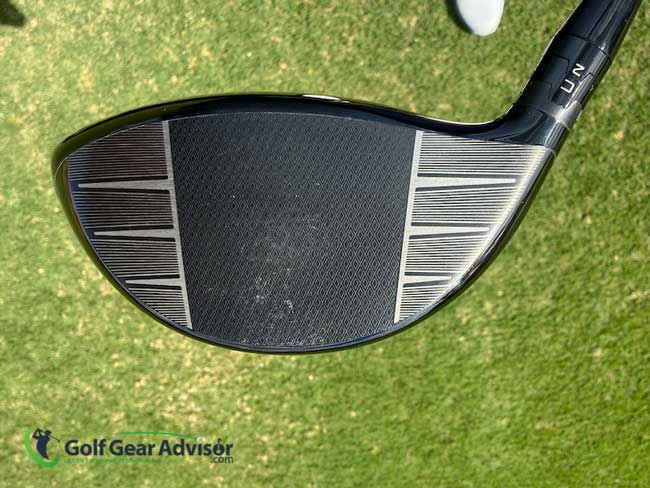
The updated Speed Ring VFT face technology is where much difference appears in real-world performance. A titanium speed ring stabilizes the perimeter to maximize sweet spot ball speed within regulatory limits. The variable face thickness pattern strategically thickens high-impact zones in the center while thinning edges—particularly low on the face and toward the toe/heel—to preserve ball speed on bad shots.
High-MOI Chassis
The stretched 460cc footprint pushes weight distribution deep and low, with internal weighting that creates a neutral-to-slight draw bias through CG placement. This helps straighten the common fade without turning GT2 into a heavy draw driver.
SureFit Adjustability
The standard SureFit hosel provides roughly ±1.5° of loft and lie variation across 16 surefit settings (A1 to D4). Combined with the interchangeable back weight, golfers can fine-tune swing weight, stability, and shot shape during fittings.
Looks at Address & Bag Appeal

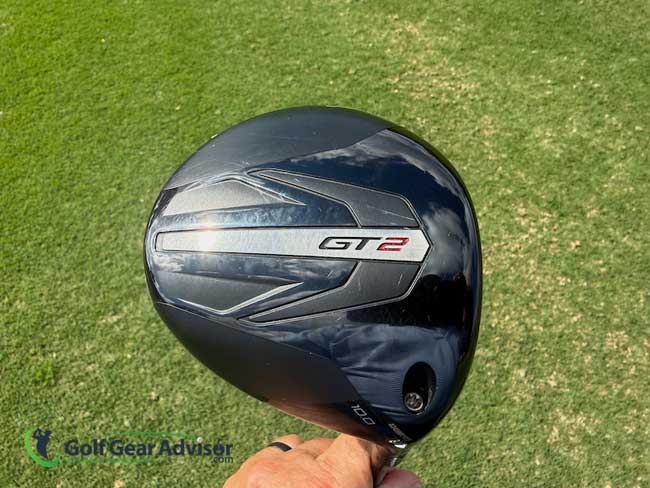
First impressions matter with any driver, and the Titleist GT2 delivers a confidence-inspiring setup view. The classic black-on-black color scheme remains, but the head shape has evolved—slightly stretched back compared to TSR2, with minimal but sharp GT branding that reads “tour-inspired” without screaming for attention.
Looking down at the crown, you’ll notice:
- High-gloss or satin-like black finish (depending on spec) without visible carbon weaves or awkward seam lines
- Low-profile “GT” alignment mark positioned behind the face—subtle enough to not distract, prominent enough to aid alignment
- A full 460cc volume with a slightly elongated back creating a subtle pear shape near the hosel
The face stands tall, offering visual reassurance without resembling a game-improvement shovel. This is where Titleist walks the line effectively—maximum forgiveness technology packaged in a head that better players won’t find embarrassing.
On the sole, bold GT2 lettering outlined with thick metallic accents creates genuine bag appeal. The weight ports and channels look premium next to modern fairway woods and hybrids, reinforcing the GT clubs’ position as flagship equipment.
Sound & Feel
Sound and feel are major reasons many golfers gravitate toward Titleist drivers, and GT2 continues that tradition with its own modern twist.
Impact Sound
Center strikes produce a higher-pitched, percussive “smack” rather than a dull thud. It’s slightly deeper than some older Titleist models but not as muted as heavily carbon-damped heads from competitors. There’s a metallic note that communicates strike quality clearly—you know immediately when you’ve found the center versus catching it toward the toe or heel.
Strike Feedback
The feel is solid and responsive throughout. Good swings deliver that satisfying “compressed” sensation with slight springiness off the face. Extreme mishits feel firmer and less hot, but critically, they don’t transmit harsh vibration up the shaft. You get honest feedback without punishment.
Compared to TSR2
The new material composition—particularly that pmp crown and updated internal structure—gives GT2 a slightly more modern, metallic note while still fitting the “classic Titleist” sound profile loyal users expect. It’s evolution rather than revolution, which is exactly what most Titleist clubs buyers want.
Performance: Distance, Forgiveness & Trajectory
This is the core of any driver review: how far does it go, how often does it find the fairway, and what kind of ball flight should you expect?
Distance
GT2 ranks among the longest drivers tested for many mid-swing speed players. In original testing with a 100 mph swing speed, ball speed consistently hit around 150 mph, translating to 250-255 yards carry with mid launch angle and low-mid spin (typically 2200-2800 rpm). The gt drivers delivered a few more yards versus TSR2 in head-to-head comparisons, primarily through improved speed retention on slight mishits.
Forgiveness
The high-MOI design keeps ball speed and direction playable on moderate toe/heel strikes. However, forgiveness feels “very good” rather than truly class-leading. In dispersion testing, GT2 trails the most forgiving drivers like Ping G430/440 MAX and Taylormade Qi4D in extreme miss-hit protection. If you’re consistently hitting bad swing after bad swing, the maximum forgiveness options from competitors may serve you better.
Trajectory and Spin
Expect high launch with low spin characteristics, producing a penetrating ball flight that holds up in wind. The 9° head often delivers the optimal blend of height and carry for average-speed testers, while 10°-11° options help slower launchers achieve proper trajectory.
Metric | Typical GT2 Results (100 mph swing) |
|---|---|
Ball Speed | ~150 mph |
Carry Distance | 250-255 yards |
Launch Angle | Mid (typically 11-13°) |
Spin Rate | 2200-2800 rpm |
Shot Shape | Neutral to slight draw |
GT2 vs TSR2
The performance difference comes primarily from improved low-face stability. Low strikes—common in real-world play—maintain speed and spin control better than TSR2. High-face hits still carry well but spin less and roll more. For most golfers, this translates to straighter drives and fewer catastrophic misses rather than transformative distance gains.
On-Course Experience & Confidence Off the Tee

Launch-monitor numbers only tell part of the story. After multiple rounds with GT2, here’s what translates to actual on-course performance.
Visual Confidence
Standing on a tight par-4 with water right, the stretched profile and tall face inspire genuine confidence. The head looks substantial without appearing unwieldy. For mid-handicappers accustomed to forgiving drivers, the setup feels reassuring rather than demanding.
Directional Tendencies
GT2 exhibits a slight draw-bias for most testers based on my personal experience. Misses typically start slightly right and curve back toward target rather than peeling off into big slices. This isn’t aggressive draw correction—it’s gentle help that turns potential blocks into playable fades.
Consistency on Poor Swings
The real test is how GT2 handles your worst swings. Across several rounds, bad swing attempts that would have produced OB tee shots with older drivers stayed in play more consistently. The MOI helps stabilize the head through impact, reducing the penalty for late closures or slightly open faces.
Wind Performance
The penetrating flight characteristics shine in crosswinds and into-the-breeze conditions. Launch doesn’t balloon excessively with tailwinds if spin stays in the optimal range. This matters for golfers playing links-style courses or in consistently breezy conditions.
Real-World Results
Fairway hit percentages improved incrementally over TSR2 across multi-round testing—nothing revolutionary, but noticeable over 4-6 rounds. The biggest improvement came in reducing catastrophic misses rather than dramatically improving already-good swings.
Durability & Finish Quality

Durability has become a legitimate talking point for modern drivers, especially those with textured faces and premium painted finishes.
Face and Crown Condition
After several weeks of regular play, the GT2 face shows typical tee paint transfer and light scuffing from low strikes. These marks wipe off relatively easily with a damp cloth. The crown held its finish well without chipping or significant scratching, though careful headcover use remains advisable.
Comparative Durability
Compared to other premium brands, GT2 falls into the “good but not exceptional” category. Ping drivers often look newer for longer, even with heavy use. TaylorMade heads show similar wear patterns to GT2. If you absolutely love maintaining pristine equipment appearance, be prepared for some cosmetic evidence of use.
Headcover and Shaft Quality
The included headcover maintained its shape and graphics through extended testing. Premium shafts like the Tour AD DI and Tour AD CQ options held colour and finish on the graphics, which matters when you’re investing $649+ in a new driver.
Who Should Play the Titleist GT2 Driver?

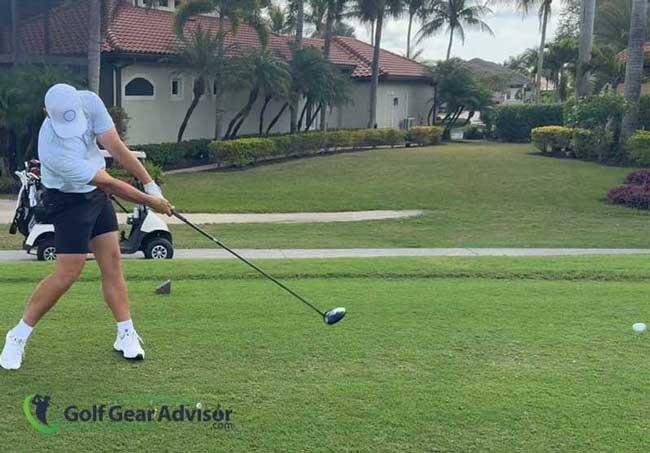
PGA Tour Player John VanDerLaan Testing The Titleist GT2 Driver
GT2 is highly versatile but not universally ideal. Here’s how to determine if you’re a good fit:
- Mid-handicappers (8-20 index) with moderate swing speeds who want distance and forgiveness in a traditional, non-offset package will find GT2 hits the mark. It’s forgiving enough to help on mishits without looking like game-improvement equipment.
- Lower-handicap players currently using TSR2 or another “player-distance” head will appreciate GT2’s improved high-face stability and speed retention. The upgrade makes sense if you’re seeking incremental gains without jumping to a pure max-game-improvement model.
- Higher handicappers with decent speed (90-100 mph) will benefit from high launch and mishit help. However, high handicappers or seniors with very slow swing speeds might see better results from GT1 or ultra-light, higher-lofted options from any brand.
- Slice-fighters and hook-battlers needing maximum directional correction may find more help in extreme-MOI, max-draw options. GT2 aims for balanced assistance rather than aggressive bias. If your miss is a consistent slice, dedicated draw-bias heads offer more correction.
Best Alternatives to Consider
Even if GT2 is excellent, golfers should test peers before committing $649. Here are the primary alternatives:
The benchmark for pure maximum forgiveness and stability. Many testers find Ping’s offering marginally more forgiving, particularly on extreme mishits. Different sound and feel profile—more muted and less “metallic” than Titleist—but exceptional dispersion control for slice-prone players.
TaylorMade Qi10 Series
Very long with aggressive ball speed technology and a more “techy” carbon aesthetic. Sound differs significantly from GT2—often described as lower-pitched and carbon-damped. Spin can be less predictable for some players, but distance potential is genuine.
Cobra DS-Adapt Max-K
Another high-forgiveness option with a more aggressive visual profile and strong distance reputation. Often available at a slightly lower price point than Titleist or TaylorMade flagships, making it compelling for value-conscious buyers.
The Fitting Factor
A proper driver fitting—matching loft, shaft weight (like Ventus Blue, Project X HZRDUS, or Tour AD options), length, and swing weight to your swing—often makes more difference than the brand badge. GT2’s neutral-friendly shape makes it especially fitting-friendly across a wide range of player profiles. Book time with a Titleist fitter to optimize launch angle, spin, and shot shape.
Final Verdict: Is the Titleist GT2 Driver Worth It?
The Titleist GT2 driver is a premium, 460cc, high-MOI head that blends excellent distance with solid forgiveness, classic looks, and refined sound/feel. It’s not an automatic “must upgrade” for every TSR2 owner, but it represents meaningful evolution in the gt line for those seeking the best driver for their game.
Value Assessment
At approximately $649, GT2 is pricey but competitive with other flagship drivers. The performance and feel justify that cost for committed golfers who absolutely love the Titleist aesthetic and acoustic signature. It’s not the best driver for every golfer, but for its target audience, value is strong.
Main Pros
- Strong ball speed with impressive retention on off-center strikes
- High but penetrating ball flight that performs in wind
- Confidence-boosting look at address with tour-inspired shaping
- Classic Titleist acoustics and solid feel
- Enough forgiveness for most mid-handicaps seeking tighter dispersion
Main Cons
- Premium price without best-in-class forgiveness
- Miss-hit protection is “very good” but not maximum
- Durability shows use sooner than some ultra-robust competitors
- May not suit very slow swingers or those needing aggressive slice correction
The Bottom Line
Put the GT2 head-to-head against your current driver and a couple of competitors. Based on my own experience, the difference between a properly fitted GT2 and a poorly matched alternative can easily exceed 10-15 yards and dramatically improve consistency. The only way to know if GT2 earns a spot in your bag is to hit it yourself—preferably on a launch monitor with a qualified fitter who can dial in the optimal ball for your swing.
Titleist has just launched the GTS driver, and upgrade from the GT series. I have gotten my hands on the GTS2 driver and have tested and reviewed it here.
