
Written by John VanDerLaan
*We may earn revenue from the products available on this site and participate in affiliate programs.
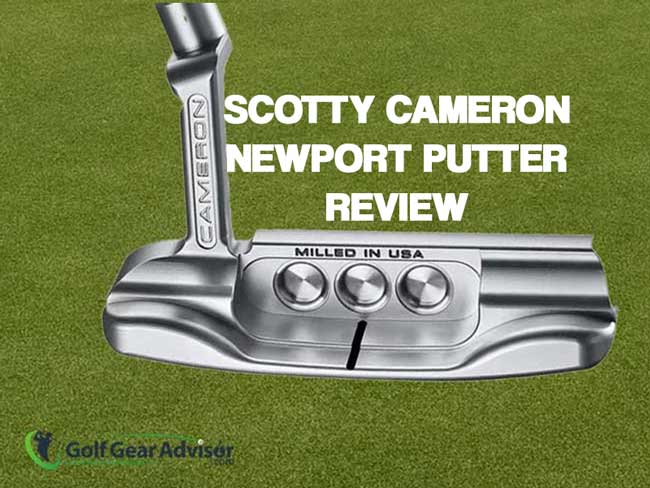
Everyone remembers their first Scotty Cameron. Much like getting your first car, that initial Newport experience—even if second-hand and slightly worn—means everything to golfers who appreciate craftsmanship. This emotional connection explains why the scotty cameron newport putter remains deeply aspirational decades after its debut.
Scotty Cameron focused on subtle technology refinements that genuinely help players without overdesigning what already works. This putter review focuses on real-world performance across handicap levels, examining whether the investment delivers on the practice green and during competitive rounds.
Quick Verdict: Is the Newport Worth It?
Scotty Cameron Newport Putter
Pros:
Cons:
Should you buy it? For mid-to-low handicap golfers who value feel over maximum forgiveness, the Newport earns a confident yes.
Best for: Players with slight-arc putting strokes, feel-driven golfers seeking premium feedback, and those upgrading from older Newport models within the select line.
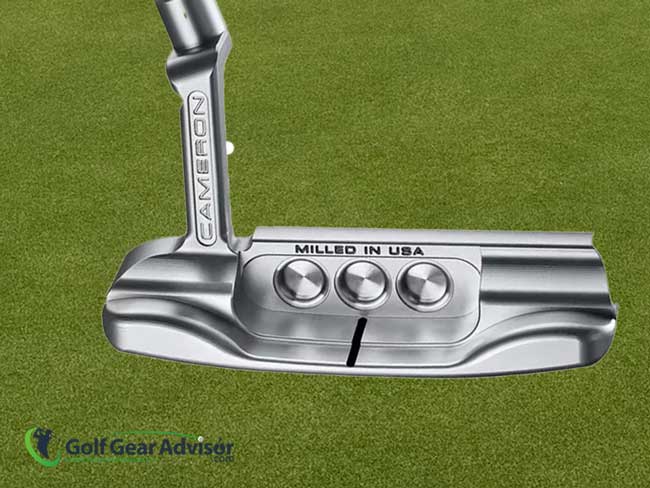
Key strengths: Exceptional dual-milled face producing soft feel with consistent ball speed, refined I-beam neck design saving weight for enhanced stability, and timeless looks that inspire confidence at address.
Main drawbacks: Price sits around $449 US—a substantial investment. High handicappers with inconsistent strike patterns will find higher-MOI mallets more forgiving.
Bottom line: This tour-proven blade putter replaces the Special Select Newport with meaningful upgrades in face milling and neck construction. For golfers prioritizing craftsmanship and distance control over forgiveness.
Scotty Cameron Studio Style Or Super Select? What's The Difference?
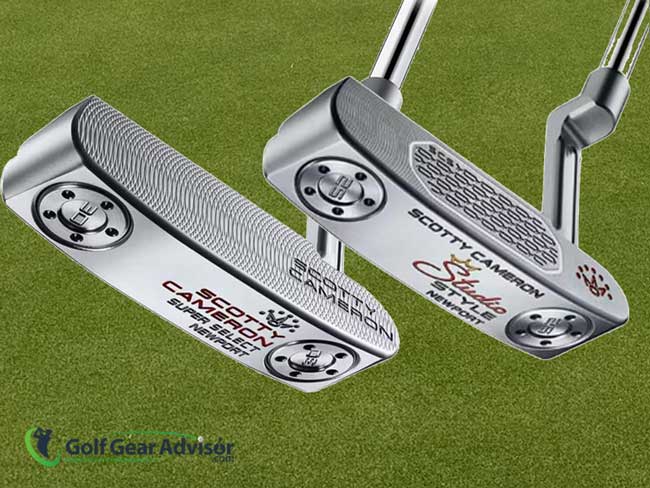
The Scotty Cameron Studio Style Newport putter first came out in 2025 and features a soft Studio Carbon Steel (SCS) insert with chain link milling designed to provide a much softer, muted feel.
The Scotty Cameron Super Select Newport putter first came out in 2023 and are milled from a single block of 303 stainless steel and feature a dual milled face. This produces a much firmer feel compared to insert putters.
Design & Looks: Classic Newport Shape with Modern Detailing
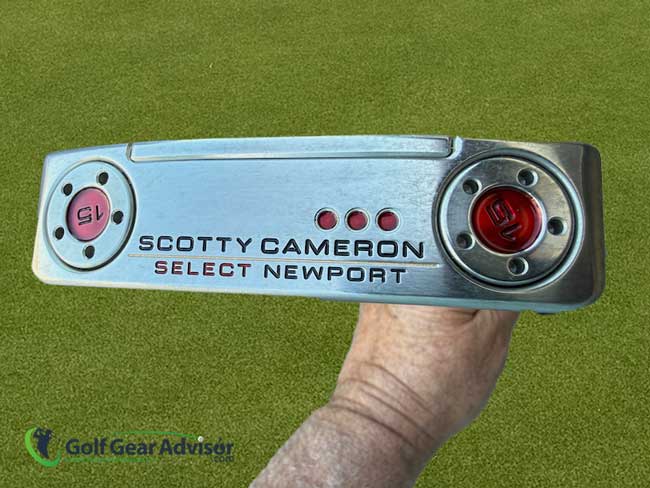
At address, the Newport presents a clean topline with minimal distractions—exactly what feel-driven golfers want when reading putts. The traditional Anser-style blade features a compact profile with rounded shoulders and medium topline thickness that frames the ball without overwhelming it.
The satin silver stainless steel finish looks premium without being flashy. A single alignment aid runs along the flange, while subtle Scotty Cameron engraving appears on the neck. The sole displays “Super Select Newport” branding alongside removable weights in the 30-40 gram range.
Compared to earlier generations, the new model shows cleaner lines and a more refined cavity. The graphics are less busy than the studio select era, reflecting a philosophy that blade putters shouldn’t be redesigned for change’s sake. Three larger silver cavity dots replace the red-bordered dots of the Special Select Newport, creating a more contemporary aesthetic that divides opinion—some prefer the silver, others miss the classic red.
Scotty Cameron I‑Beam Neck & Cavity Dots: Form Meets Function
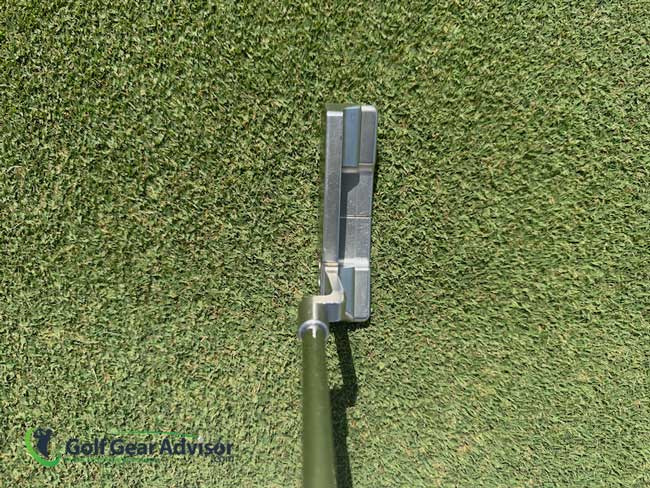
The skeletal I-beam plumbing neck is the signature engineering feature. This sculpted, cut-out design removes weight from the hosel area while maintaining the classic plumbers neck look and moderate toe hang that arc-stroke players prefer.
Where does that saved weight go? Straight to the heel and toe via sole weights, theoretically enhancing stability on off-center strikes. The three larger cavity dots work similarly—removing central mass to boost perimeter weighting slightly.
Here’s honest context: one detailed tester noted the amount of weight moved has no noticeable impact on actual putting performance. The technology exists, but practical benefits remain subtle. For amateurs who aren’t consistent ball strikers, this mild forgiveness boost within the blade category is genuine—just don’t expect mallet-level stability.
Feel, Sound & Roll: How The Newport Performs on the Greens

Premium milled putters live or die by their impact sensation, and this is where the Super Select Newport genuinely excels. The dual-milled face combines deep milling for soft feel with a secondary shallow pass for consistent ball speed—a similar manual process to previous generations but refined further.
Impact sensation: Soft yet solid sounds counterintuitive, but that’s precisely what this golf club delivers. With premium urethane balls, feel registers as medium-soft with excellent feedback. You’ll know immediately where you struck it without harsh vibration.
Sound profile: Expect a quiet “tock” rather than loud click. Mis-hits produce slightly higher-pitched feedback, giving useful auditory information without being intrusive. One tester described it as “everything about it was brilliant.”
Ball roll: The outcome is impressively consistent roll with minimal skid phase. This matters most on medium-fast greens where distance control separates good putts from three-putt disasters.
Forgiveness & Distance Control for Real‑World Golfers
Let’s be clear: as a classic blade, the Newport offers reasonable stability for its category but won’t match high-MOI mallets on mishits. Players expecting maximum forgiveness should look elsewhere.
That said, the perimeter weighting genuinely helps. On longer putts of 25+ feet, mild heel or toe strikes still produce consistent ball speed, making lag putting more predictable. One tester noted strikes feel solid on “pretty much every shot,” with distance control becoming easier after a few rounds of adjustment.
The caveat? Golfers with highly variable strike patterns won’t notice these benefits as dramatically as players with repeatable strokes. The Newport rewards good fundamentals rather than compensating for poor ones.
Specs, Options & Pricing
Scotty offers the Super Select and the Studio Style Newport in configurations fitting most golfers. Standard lengths include 33”, 34”, and 35”—with 34” being most common. Head weight adjusts accordingly: approximately 360g for 33”, 350g for 34”, and 340g for 35”.
Standard loft sits around 3.5° with a 70° lie angle, promoting proper ball launch without excessive modifications at address. The stock steel shaft pairs with a mid-size pistol-style Scotty Cameron grip featuring brand elements—a matador grip option exists for those preferring different textures.
Pricing guidance: Launch price was approximately $449-$499 US. A high-quality headcover comes included—important protection for a carbon steel investment at this level.
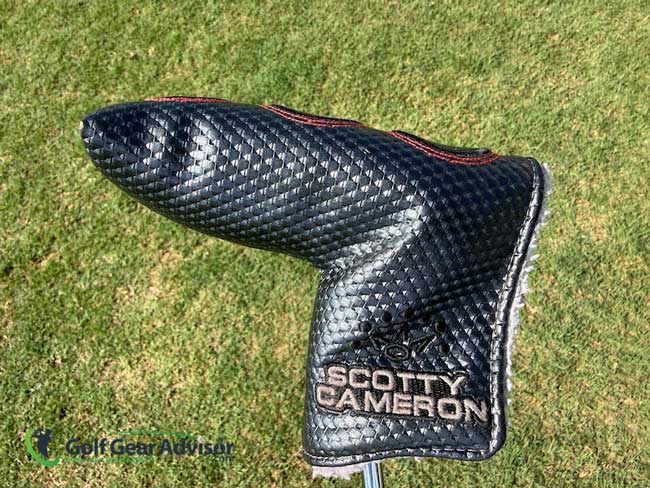
Additional sole weights range from 20-40 grams if you want to customize swing weight. Sending putters to Scotty’s custom shop for weight changes costs $49-79 depending on specifications.
Fitting Considerations: Length, Grip & Toe‑Hang
Toe hang matters most. The plumbers neck creates moderate toe hang, favoring slight-arc strokes rather than straight-back-straight-through motions. If your natural putting stroke has zero arc, consider face balanced alternatives.
Length selection: 33” suits shorter players or crouched postures, 34” fits most golfers, and 35” works for taller players or upright setups. Don’t guess—getting measured takes minutes.
Grip impact: The standard pistol grip promotes light tension and face awareness. Swapping to larger grips subtly changes swing weight and can affect feel, so test before making permanent changes.
On‑Course Performance: Testing the Super Select Newport

Across multiple rounds on medium-fast greens (roughly 10 on the Stimpmeter), the Newport performed like a precision instrument rather than a forgiving tool—which is precisely what blade loyalists want.
Short putts (3-8 feet): Confidence comes immediately. The clean topline and alignment line make starting balls on your intended line almost automatic. One tester described “practically skipping around the green, knocking in 5 and 6-footers for fun.”
Mid-range putts (10-20 feet): Pace control improves after a short adjustment period. The dual-milled face produces consistent speed, and slight mishits still finish close to the hole rather than wildly offline.
Lag putting (20-40+ feet): Head weight and balance encourage a pendulum-like stroke. After substantial time adapting, leaving long putts tap-in became routine rather than exceptional.
Comparing to Previous Newport Generations
Upgrading from a 2010-era Select Newport? You’ll notice meaningful refinements. Earlier versions felt slightly firmer or “clickier” at impact compared to the Super Select’s smoother response.
The Special Select Newport sits closer in performance, but the I-beam neck and updated milling represent genuine—if subtle—evolution. If you’ve recently purchased a Special Select, you won’t find a huge difference justifying immediate replacement.
The Studio Style Newport putter features a Studio Carbon Steel insert with chain link milled face that produces a softer feel.
For golfers using new models from other brands or much older Scotty Cameron putters, the Super Select and Studio Style represent the current pinnacle of Newport engineering. You’ll feel at home quickly while appreciating enhanced consistency on off-center contact.
Who Should (and Shouldn’t) Buy the Scotty Cameron Newport?
The Newport putter suits specific golfer profiles excellently while leaving others underserved.
Ideal buyers: Golfers with slight-arc strokes, mid-to-low handicaps, and strong preferences for traditional blade shapes. Players who compete frequently and demand premium feedback on fast greens will earn money-equivalent value from this investment through saved strokes. Those who finally found their putting stroke and want equipment matching their ability belong here.
Who should pass: Beginners or high-handicappers struggling with strike consistency need higher-MOI alternatives. This putter doesn’t compensate for inconsistent contact—it exposes it.
Budget honesty: At $449+, restrictions apply to casual consideration. Performance is excellent, but cost partly reflects brand prestige rather than proportionally superior function. Quality justifies the investment for committed players; others should test other putters first.
Alternatives Within the Scotty Cameron Line
Not sold on the standard Newport? The Newport 2 offers a more square, boxy look with similar performance characteristics—some golfers find it easier to align. The 2.5+ provides mid slant neck options with different toe hang.
Click here for the differences between the Newport and Newport 2.
For golfers wanting more forgiveness while staying within Scotty’s ecosystem, the Del Mar or Phantom 11R OC offer larger heads with greater stability. Stroke type compatibility varies, so testing matters—but these keep you in premium territory without sacrificing brand loyalty.
Final Thoughts: Is the Scotty Cameron Newport Still the Benchmark Blade?
The Super Select Newport blends heritage with modern engineering thoughtfully. The I-beam neck and dual-milled face represent genuine updates without abandoning what makes this new putter special—refined simplicity serving golfers who know what they want.
Key takeaways: premium looks inspiring confidence, exceptional feel matching the best in golf, solid forgiveness within blade limits, and pricing reflecting top-tier craftsmanship. The technology changes are subtle rather than revolutionary, but that’s the point. Scotty Cameron doesn’t overdesign.
For golfers who love traditional blade putters and accept the investment, the Scotty Cameron Newport remains a benchmark. Get one today, practice with it, and improve your putting.
