
Written by John VanDerLaan
*We may earn revenue from the products available on this site and participate in affiliate programs.
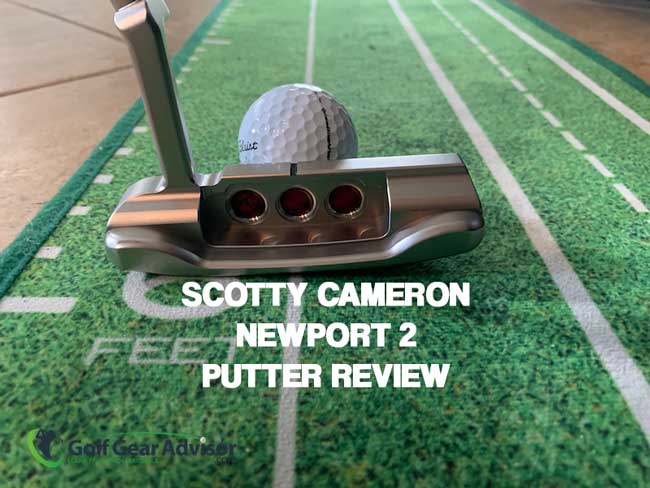
The Scotty Cameron Newport 2 remains one of the most iconic putters in golf. But in 2026, with high-MOI mallets and AI-designed faces flooding the market, does this classic blade still deserve its premium price tag? This Newport 2 putter review breaks down everything you need to know.
Quick verdict: Is the Scotty Cameron Newport 2 worth it in 2026?
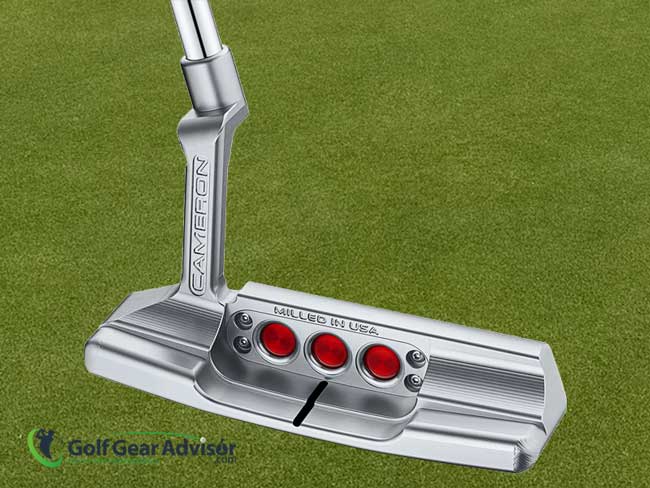
Scotty Cameron Newport 2 Putter
Pros:
Cons:
The Newport 2 is a great putter for mid-to-low handicap golfers with a natural arc in their putting stroke who value precision, feedback, and tour-proven aesthetics over maximum forgiveness. If you’re drawn to a blade style putter and appreciate knowing exactly where you struck the ball, the Newport 2 delivers. This review focuses primarily on the modern Special Select and Super Select lines, though we’ll reference the classic Tiger-era and Studio Select models for context.
This putter continues to be one of the most played blades on professional tours worldwide—a testament to its enduring design rooted in the anser style putter that Tiger Woods made famous in the late 1990s.
Quick verdicts:
- Feel: Firm and crisp rather than soft—the solid milled putter face provides excellent feedback but won’t suit players seeking insert-level softness
- Forgiveness: Moderate for a blade; heel-toe tungsten weights help, but this isn’t a high-MOI mallet
- Value/Collectability: Premium pricing holds strong, with older models often commanding collector premiums that exceed original retail
- Best for: Arc stroke players, traditional blade fans, single-digit handicaps who prioritize control and feedback over error correction
Looks and setup behind the ball
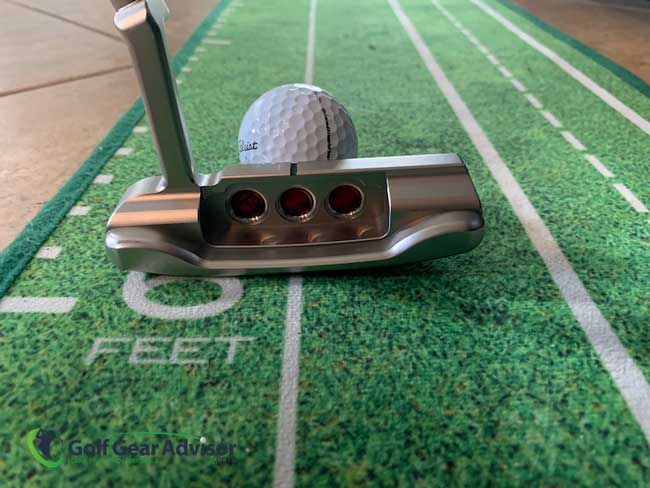
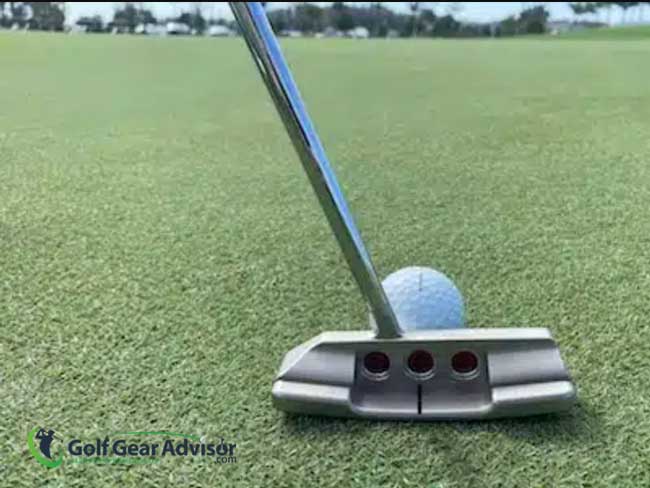
The scotty cameron newport presents a classic shape that frames the ball beautifully at address. The slightly squared-off profile features a thinner topline than many competitors, creating a refined look that instills confidence without visual bulk.
The flange on modern Newport 2 models is relatively narrow, with adjustable weights that widen the footprint slightly without appearing chunky. Compared to older milled blades like the Ping Redwood Anser, Cameron’s soft, radiused back edges and bumpers create a more refined appearance—the head looks smaller and less intrusive behind the ball.
Key visual elements:
- Single bold white alignment line on the flange contrasts sharply with the stainless head for straightforward aim
- Three red dots (the signature “Cherry Bomb” dots) in the back cavity serve as premium visual cues
- Distinctive face milling patterns add visual texture without distraction
- High toe design helps the putter sit square on the ground, reducing the feeling that the toe is up
- Players who tend to aim left or right with conventional blades often find the Newport 2 easier to square
The cameron attention to detail extends to tasteful engravings—“Titleist” and “Cameron” markings in the cavity, Scotty’s name on the face, and refined sole stamping that signals premium craftsmanship.
Feel, sound, and feedback

Feel is the primary reason golfers pay a premium for a scotty cameron super select Newport 2. The 303 stainless steel construction delivers a distinct balance of firmness and responsiveness that separates it from both mushy insert putters and harsh cast alternatives.
The impact sensation is solid and crisp rather than soft. Center strikes produce what many describe as the “Scotty click”—a soft, confident sound with a slightly springy sensation that tells you immediately the ball was struck pure. Mishits toward the heel or toe feel noticeably different, transmitting a harsher vibration that provides clear tactile feedback on exactly where contact occurred.
How components contribute to feel:
- The stepless steel shaft creates a firm, connected sensation through the hands
- Stock cord-style grip options (red cameron cord grip, red baby t, black baby t, or smooth studio design grip variants) maintain that connection without dampening feedback
- Alternative grips like the red winn avs midsize or new grip options from the custom shop can subtly alter the feel profile
Players accustomed to extremely softer feel insert models like the Odyssey White Hot may initially find the Newport 2 “too firm.” However, golfers coming from older milled carbon or stainless designs will appreciate the consistent, communicative feedback. On fast, modern greens, the firmer face actually aids distance control by preventing over-hit, “jumpy” putts.
The Super Select’s Dual-Milled Face offers medium-soft feel on urethane-covered balls—quieter than the Special Select but firmer than plastic inserts. Cold weather can make any solid block steel putter feel slightly harder, so keep that in mind for early-season rounds.
Performance on the greens (roll, distance, and forgiveness)
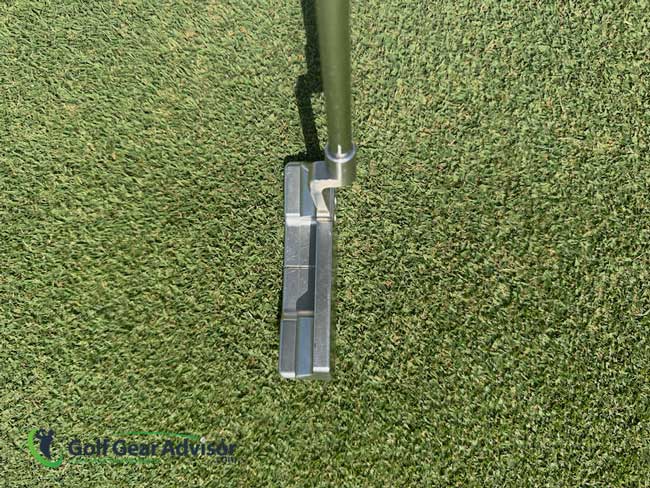
The Newport 2 is designed for smooth, consistent roll with moderate forgiveness—prioritizing control and feedback over maximum error correction. This is a precision instrument, not a game-improvement golf club.
The milled 303 stainless face with precise loft (typically 3.5–4°) gets the ball rolling quickly with minimal skid. In testing scenarios, 90% of 2-foot putts stayed within gimme range, and every 20-footer lagged within 3 feet—reflecting excellent distance control across varying green speeds.
Performance characteristics:
Aspect | Newport 2 Behavior |
|---|---|
Roll quality | Quick, true roll with minimal skid |
Toe hang | Moderate—suits natural arc strokes with toe flow |
Center strikes | Predictable distance, great roll consistency |
Off-center hits | Loses energy, may come up short (blade limitation) |
Sweet spot | Well-defined; tungsten weights expand it modestly |
The heel-toe tungsten sole weights (around 35 grams each in Special Select blades) stabilize the head through impact. Toe strikes typically finish 2-3 inches offline; heel strikes 2-4 inches—solid for a blade, though not mallet-level forgiveness.
The standard plumbers neck creates moderate toe hang, rewarding players who release the toe naturally through impact. If you prefer a straight-back-straight-through stroke, consider center-shaft variants or a face balanced option instead.
Real-world examples:
- Lagging 30-40 footers on fast bentgrass becomes intuitive once you trust the distance feedback
- Straight 6-8 footers where alignment and face control are crucial showcase the Newport 2’s precision
- On slow, shaggy municipal greens, you may prefer more loft adjustment or a softer insert to help get the firm ball to the hole
Design, specs, and customization options

One of the Newport 2’s strengths is its blend of traditional design and modern adjustability. SC putters offer customization that lets you dial in exactly what you need without resorting to lead tape or permanent modifications.
Stock specifications:
Length | Head Weight | Lie Angle | Loft |
|---|---|---|---|
33” | ~350g | 71° | 3.5-4° |
34” | ~340-345g | 71° | 3.5-4° |
35” | ~330-340g | 71° | 3.5-4° |
The select newport 2 putter comes in three lengths with lie angle and loft adjustable ±2° by qualified fitters. Getting your length, lie, and loft dialed in is crucial—an ill-fitted Newport 2 won’t perform to its potential regardless of how premium the construction.
Weight system: Interchangeable heel and toe weights let you fine-tune swingweight and stability. Tungsten weights in blade models add additional weight to the perimeter without making the head feel sluggish. This system allows you to stretch the sweet spot modestly without transforming it into a high-MOI design.
Neck options across generations:
- Plumber’s neck (standard): Moderate toe hang, slight shaft offset aids visual alignment
- Mid-slant/Newport 2.5: More toe flow for pronounced arc strokes
- Center-shaft: Less toe hang, suits straighter stroke paths
Center Shafted Scotty Cameron Newport 2 Putter
Grip and cosmetic options via the Custom Shop:
- Red studio design or black studio design grips
- Red baby or black baby T options in various sizes
- Best grip choice depends on hand size and pressure preferences
- Raw or satin stainless finishes to reduce glare
- Limited-edition headcovers and sole engravings
The signature headcover with large red dots or limited themes adds collectability for those who appreciate the brand’s aesthetic lineage.
Scotty Cameron Newport 2 models and generations
The “Newport 2” name covers several generations spanning nearly three decades. Understanding the evolution helps you decide between modern retail and vintage collectibles.
Generational overview:
Era | Key Features |
|---|---|
Late 1990s (Tiger-era) | Carbon/soft stainless heads, original tour-proven shape |
Mid-2000s | Studio style GSS insert models, initial weight systems |
2010s | Studio select all-303 stainless steel sole weights |
2020s | Special select and cameron super select newport refinements |
The super select newport iteration (2023+) introduced the I-Beam Plumbing Neck for sharper rear views, larger milled cavity dots that redistribute central weight to heel and toe, and Dual-Milled Face Technology. However, reviewers note no revolutionary performance shifts—just continued refinement of the proven formula.
Key differences to understand:
- Insert vs solid milled faces (insert models feel softer; milled feels firmer with more feedback)
- Milling depth variations affect sound and responsiveness
- Topline and sole geometry tweaks make newer models look slightly cleaner
- Neck updates influence toe hang and alignment perception
Choosing between new and used:
- New retail provides warranty, fresh grooves, current grips, and tighter manufacturing tolerances
- Older studio select or Tiger-era models hold collector value—sometimes exceeding original retail
- The old putter charm appeals to those wanting a specific feel profile or mil spec aesthetic
Left-handed Newport 2 options have been widely available across generations—rare in the blade category and important for lefty golfers often underserved by premium putters.
Who should play the Newport 2 (and who shouldn’t)?

John VanDerLaan Using A Scotty Cameron Putter On The PGA Tour
The special select newport suits a specific type of golfer. Being honest about whether you fit the profile will save you money and frustration.
Ideal players:
- Single-digit to mid handicaps with consistent stroke mechanics
- Golfers who prefer a bit of toe flow and release through impact
- Players comfortable seeing and feeling mishits—using feedback to improve
- Those inspired by classic tour-pro blades and traditional aesthetics
- Golfers playing golf on fast, well-maintained greens
Players who might struggle:
- Beginners still developing a consistent putting stroke
- High Handicap golfers with highly inconsistent strike location seeking maximum forgiveness
- Those who prefer face balanced mallets with multiple alignment aids
- Players on slow, bumpy greens who need softer feel to reach the hole
Stroke type considerations:
- The moderate toe hang rewards natural arc strokes with toe release
- Players who tend to hook putts with excessive right-hand dominance often benefit from the heel-toe weighting
- Chronic “blockers” who leave the face open may need alternative necks or more face-balanced options
Green speed matters: The firm, crisp feel and solid face suit modern fast greens where controlling distance is paramount. If you primarily play slow, shaggy public courses, consider whether you need a softer insert or different loft configuration.
Fitting recommendation: Get properly fitted for lie angle, loft, length, and grip size. A well-fitted Newport 2 performs dramatically better than one grabbed off the rack at standard specs. This isn’t a club to guess on.
Alternatives to consider

While the newport 2 sets the benchmark for tour-style blades, several models might better suit different budgets or stroke types.
Other Scotty Cameron options:
- Newport: More rounded shape with plumber’s neck—slightly different visual preference
- Newport 2.5/mid-slant: More toe flow for pronounced arc strokes
- Center-shaft Newport 2: Less toe hang, suits straighter stroke paths (available in certain generations)
Competitor alternatives:
- Ping Anser/Redwood: Chunkier profile, potentially softer feel, strong heritage at lower price points
- Odyssey milled blades: Insert options provide softer feel; Ai-ONE technology adds alignment and forgiveness features
- Other premium milled putters: Similar construction quality at varying price points, like the Evnroll and Bettinardi Putters.
Budget-conscious options: Cast or partially milled Anser-style copies, like the Kirkland putter, offer similar shape at fraction of the cost but generally lack the precision milling, finish quality, and long-term value of genuine sc putters.
When to consider something else entirely: If you struggle with short putts, alignment, or consistent strike location, a higher-MOI mallet with multiple alignment aids, like the Scotty Cameron Phantom 11R OC, may outperform any blade in your hands. Don’t let pride push you toward a new putter that doesn’t fit your game.
Price, value, and collectability

Scotty Cameron putters sit at the premium end of the market, and the Newport 2 is no exception. Expect to pay accordingly for what many consider the best putter in its class.
Value considerations:
- High-quality 303 stainless steel and precision milling create exceptional durability
- Timeless design means the putter remains viable in your bag for decades
- Resale value typically exceeds mass-market alternatives significantly
- The last putter many serious golfers ever buy
Collectability factors:

- Limited releases, tour-only runs, and Custom Shop builds command premiums
- Tiger-era and specific studio select models often exceed original retail on secondary markets
- Collectability is driven by rarity and cosmetics rather than performance differences
Buying used guidance:
- Check loft and lie angle integrity (can shift with use or abuse)
- Inspect face wear and milling condition
- Verify shaft condition and authenticity via stamps, cavity dots, sole weights, and engravings
- Only gripe with used market is authenticity verification—fakes exist
Frame the Newport 2 as a performance tool first. Collectability is a bonus for those who appreciate that dimension of the brand.
Conclusion: Should you put a Scotty Cameron Newport 2 in the bag?
Key takeaways:
- The Newport 2 remains a top choice for serious golfers seeking a classic shape, tour-proven blade
- Premium looks, solid feel, precise roll, customizable weighting, and proven performance for arc strokes justify the investment
- Limited forgiveness compared to mallets and firmer feel won’t suit every player
- Price remains the barrier—but build quality and resale value offset long-term cost
If you match the target profile—mid-to-low handicap, arc stroke, feedback-focused—test the Newport 2 in a proper fitting session. Compare it against at least one mallet and one softer-insert blade to confirm the difference matters to your game. For those who fit the mold, this could genuinely be the last putter you ever need.
