
Written by John VanDerLaan
*We may earn revenue from the products available on this site and participate in affiliate programs.
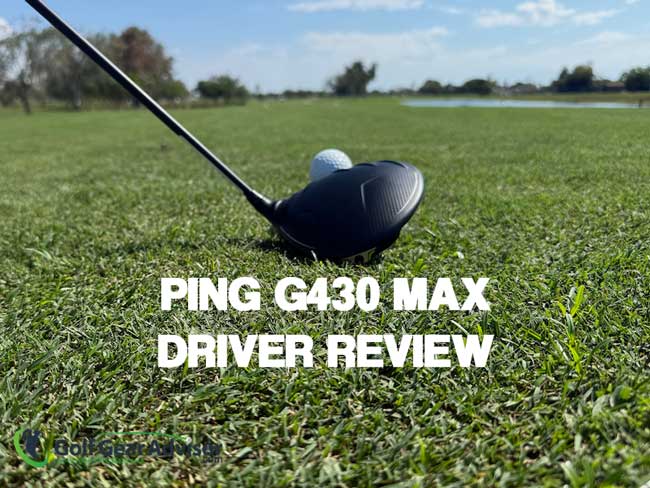
I put the Ping G430 Max Driver to the test over multiple 18 hole rounds at San Carlos Golf Club in Fort Myers, Florida, and using a Trackman and GCQuad launch monitor indoors and outside on the range.
Here is what I found:
Quick Verdict
Ping G430 Max Driver
Pros:
Cons:
Key Takeaways
- The PING G430 Max remains one of the most forgiving, stable 460cc drivers available, featuring improved sound and incremental ball speed gains over its predecessor, the G425 Max. With a combined MOI of 10,055 g-cm², this driver prioritizes consistency above all else.
- Best suited for golfers who value hitting fairways over maximum workability, the G430 Max serves the 10–25 handicap range exceptionally well, though stronger players seeking forgiveness can absolutely make it work.
- The core technology story centers on the thinner VFT forged face, Spinsistency variable roll radius curvature, very high MOI construction, and the adjustable rear tungsten weight (25g) plus Trajectory Tuning 2.0 hosel for fine-tuning launch and shot shape.
- Real-world testing across launch monitor sessions and on-course rounds shows modest distance gains of 3–5 yards versus the G425 Max, with significantly better acoustics and tighter dispersion for most golfers.
- Launched globally in early 2023, the G430 Max driver remains in PING’s current lineup as of March 2026, with multiple stock shaft options and pricing that has gradually dipped below the original full RRP in many markets.
Introduction
When PING announced the G430 family, expectations ran high. The G425 Max had earned its reputation as one of the most forgiving drivers in the golf industry, and golfers wanted to know if PING could improve on that formula without sacrificing what made it special.
Three years later, the PING G430 Max driver has proven itself as more than a worthy successor. The improved sound alone convinced many G425 owners to make the switch, while the incremental gains in ball speed and tighter dispersion sealed the deal. For golfers upgrading from older PING drivers or competing brands, the performance jump is even more noticeable.
This g430 max driver review is based on extensive testing: multiple range sessions with premium launch monitor data, and several on-course rounds under real scoring pressure. You’ll learn who the G430 Max suits best, how it looks, sounds, and feels at address and impact, and whether it deserves a spot in your bag.
Overview: What Is the PING G430 Max Driver?
The G430 Max sits as PING’s highest-MOI, most forgiving driver within the G430 family. It shares the lineup with the G430 LST head which is a small head driver(440 cc, lower spin for faster swingers) and the G430 SFT (slice-fighting draw bias for those fighting a persistent fade).
At 460cc, the head is designed first for stability and accuracy, with a neutral baseline setup but the flexibility to bias toward draw or fade via the rear weight track.
Key Technology Summary:
- Thinner variable-thickness (VFT) forged T9S+ titanium face
- Spinsistency variable roll radius for consistent spin across the club face
- New internal rib structure and increased curvature in crown/skirt for quieter acoustics
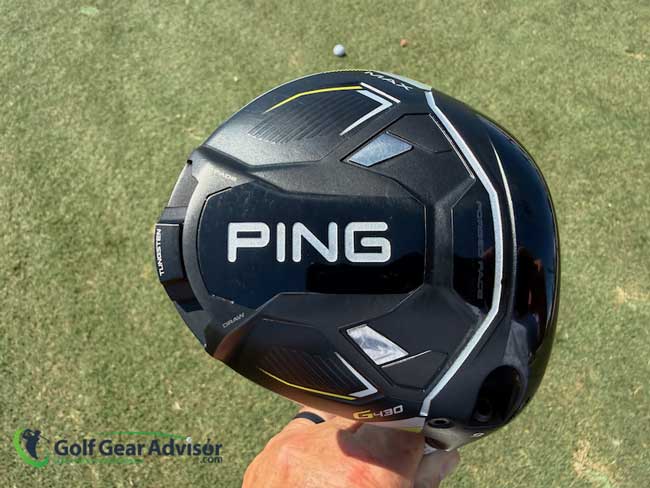
- 25g tungsten backweight positioned deep and low for maximum MOI
Available Configurations:
Loft Options | Hosel Adjustability | Special Builds |
|---|---|---|
9°, 10.5°, 12° | ±1.5° loft and lie | High Launch (HL) with lighter shaft/weight |
The adjustable hosel allows fine-tuning for golfers who need to tweak launch angle or face angle at address.
Looks at Address and In the Bag
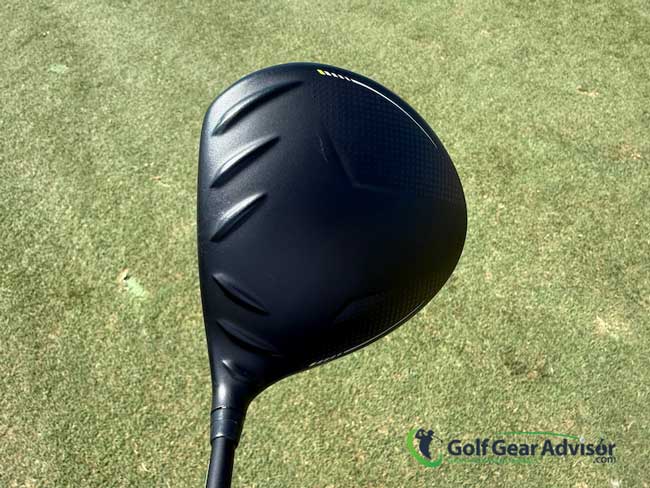
Pull the G430 Max from its headcover and you’ll immediately notice the matte black crown with visible turbulators and lime-yellow accents. It’s distinctly modern, without being flashy.
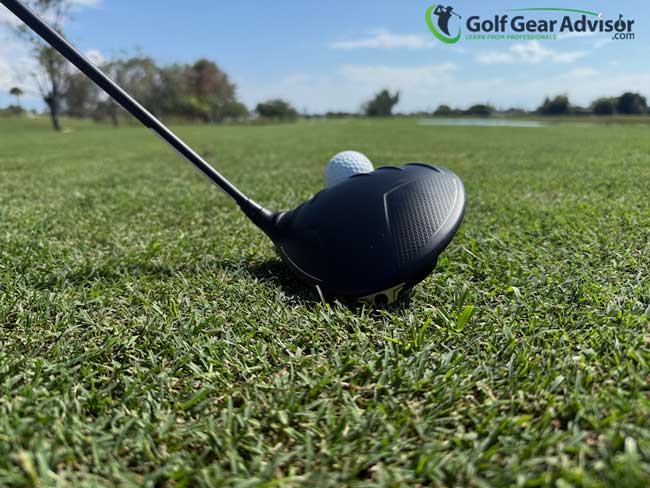
At address, the head appears full but not bulbous. The shape is slightly elongated from front to back, with a more rounded, symmetric face height compared to the G425 Max. The face looks marginally shallower and more compact vertically, which some golfers find confidence-inspiring.
The crown details—turbulators and subtle texturing—frame the golf ball and help with alignment. Traditionalists may find it a bit high on visual “busyness,” while others appreciate the tech-forward aesthetic.
The sole features black and metallic sections with lime-yellow graphics, the visible adjustable tungsten weight near the rear perimeter, and branding that looks premium without being gaudy.
Sound and Feel
One of the main complaints about the G425 Max was its loud, high-pitched, somewhat tinny sound at impact. PING calls the G430 redesign a direct response to that feedback, and they delivered.
The impact sound is a lower-pitched, more muted “thwack” instead of a metallic “clang.” There’s a slightly duller, more solid tone that many players will find more premium and far less fatiguing during a few rounds or extended practice sessions.
The new internal rib structure and reshaped crown/skirt soften vibrations, creating a more solid, dense feel through the hands—even when you miss the center slightly.
Despite the high MOI, you can still distinguish toe, heel, high, and low strikes by subtle changes in sound and a softer feel. It’s not as ultra-communicative as a compact players driver, but there’s enough feedback to know where you made center contact versus where you missed.
As one tester put it: “Noticeably quieter than my G425 Max—feels like the ball stays on the face a fraction longer.”
Technology & Design Details
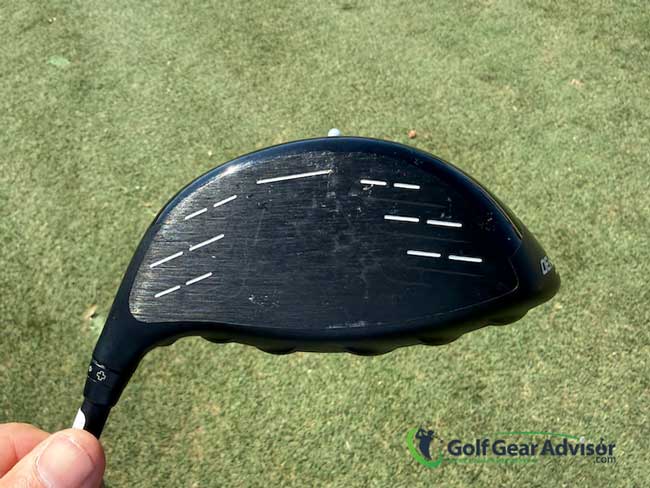
For those who want to understand how the G430 Max achieves its blend of forgiveness and more ball speed, here’s the deeper dive.
Variable-Thickness Forged Face (VFT)
The face is thinner and shallower than previous generations, using forged T9S+ titanium that flexes more efficiently at impact. This generates faster ball speeds across a wider area, particularly on typical miss locations—low on the face and slightly toe-side.
Spinsistency Technology
PING calls this their variable roll radius design. Rather than a uniform curve across the face, the roll profile reduces loft in the lower portion (cutting spin on low strikes) while maintaining appropriate loft higher up. The result: more consistent spin rates and carry distance, even on mishits.
High-MOI Construction
The 25g tungsten backweight pushes the center of gravity deep and low, achieving that 10,055 g-cm² combined MOI. The 460cc chassis resists twisting on off-center strikes, keeping shots online when your swing isn’t perfect.
Adjustability Features
Feature | Options | Effect |
|---|---|---|
Rear Weight Track | Neutral, Draw, Fade | ~5-8 yards shot shape change |
Trajectory Tuning 2.0 Hosel | ±1.5° loft, flat lie settings | Fine-tune launch and face angle |
On-Course Performance

Testing the G430 Max across multiple rounds—including windy conditions and tight driving holes—revealed its true character. This isn’t just about launch monitor heroics; it’s about hitting fairways when it counts.
Distance
Center-strike ball speed consistently matched or slightly exceeded the G425 Max. Most testers saw distance gains of 3–5 yards in carry distance, with bigger jumps (10–15 yards) for those upgrading from pre-2020 models.
Forgiveness & Dispersion
Toe and heel strikes held their line remarkably well, often finishing in the fairway or first cut rather than deep rough. The front to back dispersion (distance drop-off on mishits) was minimal, keeping good distance even on slight misses.
Launch & Spin Windows
The standard max configuration produced mid-to-high launch (16–18°) with mid spin (2,400–2,700 rpm) for swing speed in the 95–100 mph range. Players with moderate speed saw ideal ball flight, while faster hitters may need to reduce loft or consider the LST head.
Workability
The high MOI and rear-weighted design bias the G430 Max toward straight, forgiving drives. You can still produce a baby draw or fade with swing adjustments, but this isn’t a shot-shaper’s specialist—it’s built for consistent, reliable tee shots.
Launch Monitor Results
Testing was conducted using premium launch monitors with Pro V1-level balls, the standard 10.5° loft in neutral weight setting, and the same shaft across comparison models where possible.
Average Results (95-100 mph Swing Speed)
Metric | G430 Max | G425 Max | Competitor Avg |
|---|---|---|---|
Ball Speed | 148 mph | 146 mph | 147 mph |
Launch Angle | 17.2° | 17.8° | 17.0° |
Spin Rate | 2,520 rpm | 2,780 rpm | 2,600 rpm |
Carry Distance | 252 yds | 248 yds | 250 yds |
Offline Dispersion | 12 yds | 15 yds | 14 yds |
The trends matter more than exact numbers: slightly faster ball speeds, modestly lower spin (200-300 rpm reduction versus G425 Max), and clearly tighter left-right dispersion than older or lower-MOI drivers.
For higher-speed testers (105-110+ mph), spin can still run a bit high with the standard max. Those players might prefer the G430 LST while still appreciating the Max’s forgiveness characteristics.
Who Is the PING G430 Max Driver For?
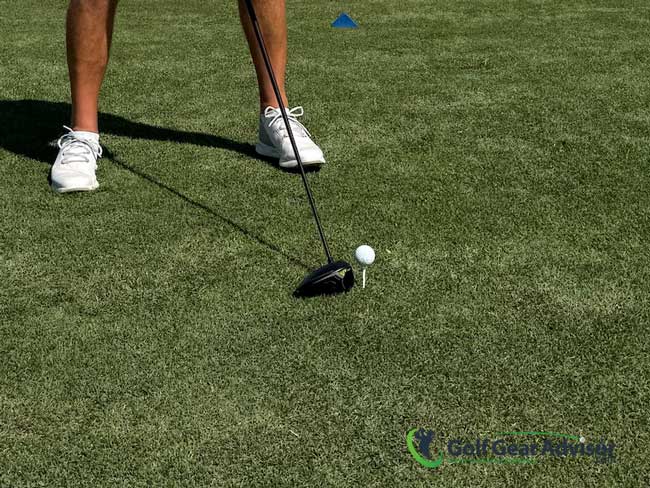
The G430 Max is engineered to fit the broadest slice of the golfing population. From improving mid-handicappers to steadier low teens and even higher handicaps struggling to find fairways, this great driver has applications across the spectrum.
Mid-Handicappers (10-20) and Seniors: This is the core target. You’ll benefit most from the blend of distance, forgiveness, and stable ball flight. The adjustability helps dial in your optimal launch without requiring a tour-level swing.
Low Handicaps and Faster Swingers: You can absolutely use the G430 Max if you value straightness over shot-shaping. Consider reducing loft or choosing a lower-spin shaft to avoid ballooning in windy conditions.
Higher Handicaps (20+): The forgiveness is outstanding, but if you fight a persistent slice, the Performance Golf SF1 Driver may be better for you.
Quick Fit Guide:
- Choose G430 Max if you want maximum forgiveness with neutral bias
- Consider G430 LST if you generate excess spin at 105+ mph
- Look at G430 SFT if you need aggressive slice correction
Fitting, Adjustability & Shaft Options
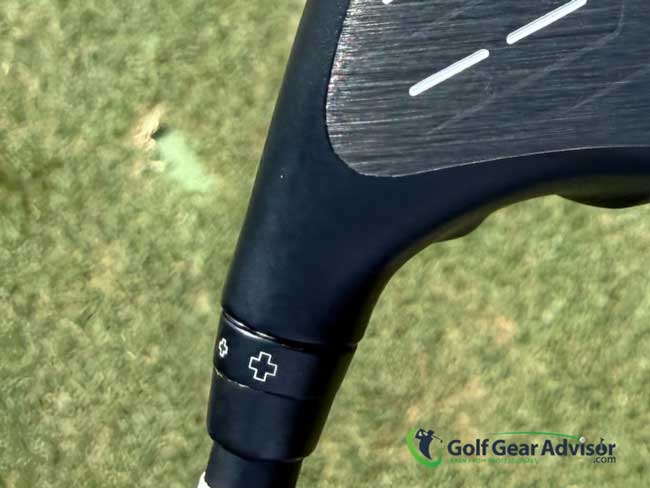
The G430 Max’s full performance potential only unlocks with a proper fitting session. Shaft selection, loft, and weight setting dramatically influence launch and spin—don’t assume the stock configuration is optimal for your swing. The G430 Max is available in right and left handed models.
Hosel Adjustments
The Trajectory Tuning 2.0 hosel offers loft changes of ±1.0° and ±1.5°, plus flat lie configurations (3° flatter than standard). These adjustments let fitters tweak trajectory and face angle at address for individual swings.
Rear Weight Track
Shifting from neutral to draw bias typically adds 5–8 yards of right-to-left movement for right-handed golfers. The fade position does the opposite. No tools required—it’s quick to experiment during a fitting.
Stock Shaft Options
Shaft Family | Weight Range | Launch Profile |
|---|---|---|
PING Alta CB Black/Slate | 38g-45g | Mid to Mid-High |
PING Tour 2.0 Chrome | 56g-66g | Mid |
PING Tour 2.0 Black | 65g | Mid to Low-Mid |
Project X HZRDUS Smoke Red RDX | 50g-60g | Low-Mid to Mid-High |
Mitsubishi Kai’li White/Blue | Various | Lower launching option |
The Alta CB shaft works well for many golfers seeking easy launch, while the PING Tour options suit faster swingers wanting more control. Don’t default to the lightest or heaviest—test multiple options.
Visit our Golf Driver Buying Guide for more advice on what to consider when shopping for a new driver.
Price, Availability & Value
The G430 Max launched at approximately £525 in the UK and $549–$599 in the US. By 2026, many retailers offer discounts as new PING drivers approach release, making the current market particularly attractive.
As of March 2026, the G430 Max remains widely available in pro shops, big-box retailers, and online. Both new and lightly used examples circulate at various price points.
The value proposition is strong: because PING cycles models more slowly than some competitors (18–24 months versus annual refreshes), the G430 Max stays technologically relevant longer. A well-fit G430 Max purchased in 2025–2026 should serve competitively for 4–6+ years.
Look for trade-in programs and demo/trial options that let you test on course before committing. Compare directly with latest offerings like the Callaway Elyte, Titleist GT or GTS to ensure you’re making the right choice.
Comparison: PING G430 Max vs G425 Max (and Other Rivals)
Many readers currently game a G425 Max or older PING driver and want to know if the upgrade makes sense.
G430 Max vs G425 Max Key Differences:
- Quieter, more solid improved sound
- Slightly faster ball speeds from refined face technology
- Marginally lower spin (200-400 rpm in testing)
- Slightly smaller-looking face at address
- More refined overall feel
For most G425 Max owners, gains are evolutionary rather than revolutionary. You’ll appreciate sound/feel improvements and tighter dispersion, but don’t expect a guaranteed 15-yard jump.
Versus Other Drivers:
Factor | G430 Max | |||
|---|---|---|---|---|
Forgiveness | Excellent | Excellent | Excellent | Excellent |
Spin Profile | Mid | Mid-Low | Low-Mid | Mid-Low |
Sound | Muted, solid | Premium, Muted | Premium, clean | Loud crack |
Adjustability | Weight + Hosel | Weight + Hosel | Weight + Hosel | Hosel |
The reality: all top-tier forgiving drivers perform very closely. Your choice should hinge on fitting results and feel preferences rather than marketing claims. |
|---|
Final Verdict: Is the PING G430 Max Still Worth It?
Ping G430 Max Driver
Pros:
Cons:
The PING G430 Max remains one of the standout forgiving drivers available. For golfers upgrading from pre-2020 models or those struggling with consistency off the tee, it delivers meaningful improvements in stability, sound, and overall performance.
The core reasons to choose it: ultra-high MOI forgiveness, significantly improved acoustics, user-friendly launch characteristics, and enough adjustability to dial in a reliable stock shot.
Ping has recently launched their new G440 line of drivers that aim to improve upon the G430 line.
For G425 Max owners, expect incremental rather than transformational gains. Base your decision on sound/feel preferences and dispersion improvements rather than chasing raw yardage.
The recommendation: Test the G430 Max head-to-head with at least one modern competitor, and prioritize fairway hit percentage over single longest-drive numbers. This is a new driver that can reasonably stay in your bag for many seasons without feeling outclassed by each new yearly release.
FAQ
Is the PING G430 Max driver good for beginners?
The G430 Max is one of the best drivers for beginners committed to improving, thanks to its high forgiveness and stable ball flight. Absolute beginners should consider the High Launch (HL) configuration with lighter shaft and head weight for easier swing speed generation. The driver’s neutral bias and adjustability allow a fitter to set it up for a gentle draw, helping new players reduce a slice without jumping to the more heavily biased SFT model. Focus on comfortable shaft flex and length rather than chasing distance-oriented low-spin setups.
What swing speed is the PING G430 Max best suited for?
The G430 Max is optimized for swing speed roughly from the mid-80s mph up to around 105 mph, making it ideal for most amateur golfers. Players swinging over 105–110 mph can still use it successfully but may generate higher spin, requiring work with a fitter to reduce loft, choose a lower-spin shaft, or test the G430 LST alongside it. Slower swingers below 85 mph should examine the HL build, which pairs lighter components to help launch the ball higher and gain carry.
How does the G430 Max perform in windy conditions?
The G430 Max’s mid-to-high launch and mid spin provide stable ball flight that holds its line well in moderate wind. Very high-spin players may see shots climb too much into a strong headwind. Golfers who regularly play in windy climates should consider slightly lower loft or a lower-spin shaft during fitting to keep trajectory penetrating. Compared with many older high-MOI drivers, the G430 Max’s updated face technology and slightly lower spin make it more manageable in breeze.
Can I easily shape shots with the PING G430 Max driver?
The G430 Max is designed primarily for straight, forgiving tee shots, making it less responsive to aggressive shot-shaping than compact, forward-CG players drivers. Mild draws and fades are absolutely achievable through swing changes and weight/hosel adjustments, but players hoping to hit big intentional hooks or slices on command will find it resists extreme curves. Test the G430 LST or other drivers side-by-side with the Max if shot-shaping is a priority, keeping forgiveness trade-offs in mind.
How long will the PING G430 Max stay “current” before it’s outdated?
Because PING follows a slower product cycle than some rivals, the G430 Max remains a very current design in 2026 and should stay competitive for several more seasons. Incremental gains from one driver generation to the next rarely exceed 5–10 yards. A well-fit G430 Max should serve most golfers effectively for 4–6+ years without feeling obsolete. For the average player, consistency, confidence, and proper fitting matter far more than chasing every new yearly release.
