
Written by John VanDerLaan
*We may earn revenue from the products available on this site and participate in affiliate programs.
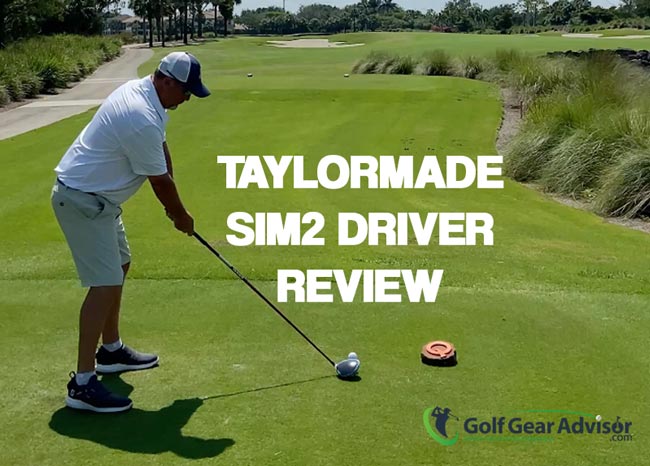
This is Golf Gear Advisor's review of the Taylormade Sim2 driver.
I am a six handicap, working on getting back to a scratch, and have been testing golf clubs and equipment for more than 20 years.
I tested the Taylormade Sim2 driver over several 18 hole rounds of golf here in Naples and Fort Myers Florida. I then tested the driver on the Trackman launch monitor at The Golf Club in Naples.
In this Taylormade Sim2 driver review I will share my experience with this driver along with the features, benefits and potential drawbacks that you may experience.
Quick Verdict
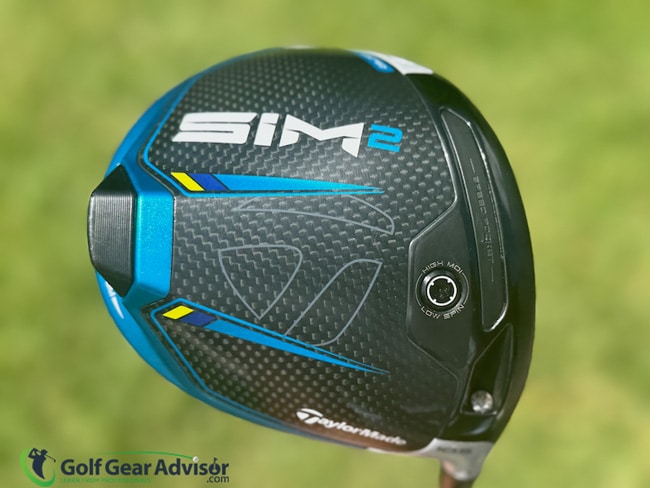
Taylormade Sim2 Max Driver
Pros:
Cons:
Key Takeaways
- The TaylorMade SIM2 driver (launched early 2021) remains highly competitive against many 2024–2025 drivers, delivering ball speed and forgiveness within 1-3 yards of current flagships for most amateurs.
- Three heads are available: SIM2 (low spin for faster players), SIM2 Max (best all-rounder for mid handicappers), and SIM2 Max D (draw bias for slicers).
- On the used market in 2026, SIM2 drivers typically cost 40–60% less than current-year TaylorMade models while offering nearly identical performance.
- The forged ring construction, carbon crown, and speed injected twist face technology remain relevant and effective in 2026.
- Most golfers will find the SIM2 Max offers the ideal balance of forgiveness, launch, and distance for their game.
TaylorMade SIM2 Driver Overview
When TaylorMade replaced the original SIM driver with the SIM2 lineup in early 2021, the golf industry took notice. Players like Dustin Johnson and Rory McIlroy quickly put SIM2 variants in the bag on the PGA Tour, and the driver’s “deconstructed head” architecture set the template for TaylorMade’s carbon-heavy designs that followed.
The concept centers on separating components to optimize weight distribution. A forged aluminum back ring unites the carbon sole, carbon crown, and titanium face into one rigid structure. The heavy Inertia Generator weight sits low and rearward in the head, boosting stability and launch.
Three models address different player needs:
- SIM2: Low spin, lowest forgiveness, built for faster swing speed players who can control trajectory
- SIM2 Max: Mid-high launch, most versatile, offering excellent forgiveness for the widest range of golfers
- SIM2 Max D: Draw-biased with the highest MOI, designed for slicers fighting a weak right miss
Compared to the original SIM, the SIM2 delivers a slightly larger face (12% more area), higher MOI (about 5% increase), and more stable mishit performance. In 2026, sitting two to three generations old after Stealth, Stealth 2, and Qi10, performance data still shows competitive ball speed and forgiveness for most amateurs.
Key Technologies & Design
The SIM2 represented a genuine engineering shift for TaylorMade rather than a cosmetic refresh. Understanding these technologies helps explain why this driver remains relevant years after its release.
Forged Ring Construction

The distinctive electric blue forged aluminum back ring weighs just 9 grams—significantly lighter than an equivalent titanium structure. This weight savings allows engineers to push more mass to the perimeter for higher MOI without sacrificing structural integrity.
Carbon Crown & Sole
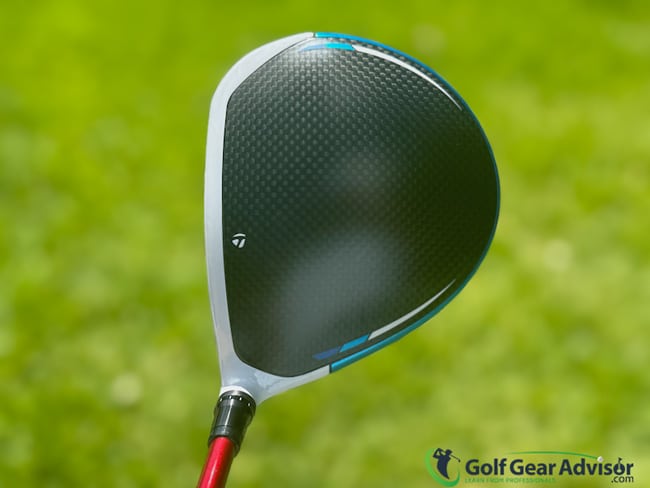
Full carbon fiber panels on both crown and sole reduce weight by an estimated 20-30% compared to titanium equivalents. This frees up grams for the steel Inertia Generator, which uses tungsten infusion to maximize stability.
Speed Injected Twist Face
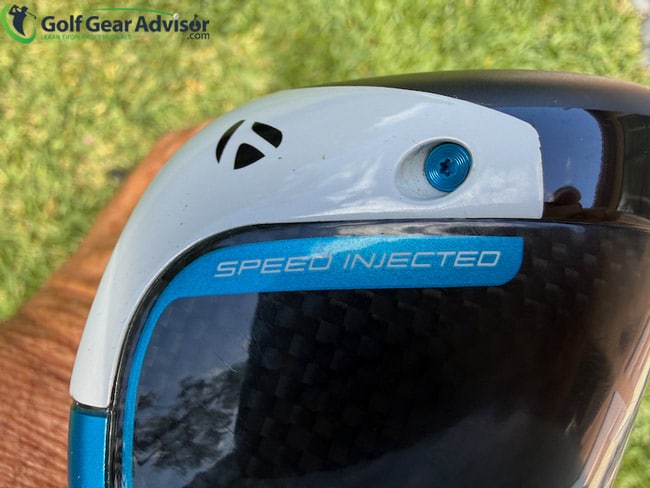
The titanium milled back face cup features variable thickness (thinner center, thicker edges) and subtle corrective curvature on heel and toe regions to normalize spin and launch on mishits. Resin injection during manufacturing calibrates ball speed to near the legal limit across the club face.
Split Mass Weighting
Instead of a sliding weight track, SIM2 uses fixed Split Mass Weighting with a TPS (Thru-Plate Sole) front weight port for swing-weight tuning. This “no wasted weight” approach improves off-center ball speed retention by 5-10% over the original SIM.
Aerodynamic SIM Sole
The Inertia Generator angles diagonally across the sole to reduce drag during the downswing, potentially adding 1-2 mph of clubhead speed.
Key differences between heads:
Model | CG Position | Spin Profile | MOI Level |
|---|---|---|---|
SIM2 | Neutral | Low spin | Standard |
SIM2 Max | Lower, further back | Mid spin | Higher |
SIM2 Max D | Heel-biased | Mid-high spin | Highest |
Performance Testing: Distance, Launch & Forgiveness

Author Testing The Taylormade Sim2 Driver At The Quarry Golf Club In Naples Florida
Testing the SIM2 10.5° with a stock Ventus Blue-style shaft against newer Stealth and Qi10 drivers on a launch monitor reveals just how competitive this driver remains in 2026.
Distance
For a typical 95-100 mph swing speed player, center-hit ball speed ranges from 148-152 mph, producing carry distance of 250-265 yards and total distances pushing 280-290 yards with roll. The SIM2 often trails the very latest models by only a few yards on pure strikes.
Launch & Spin
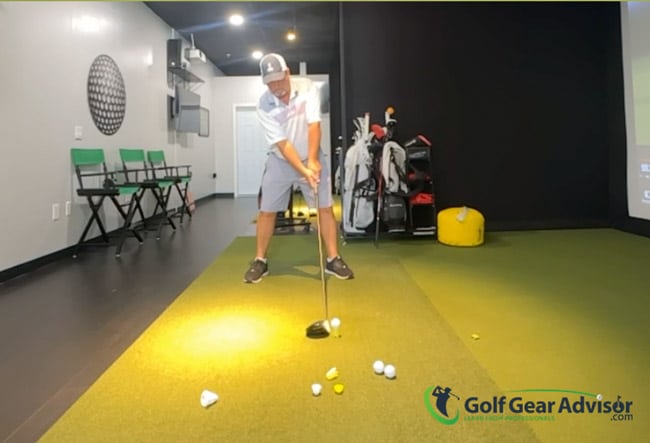
Author Testing The Taylormade Sim2 Max On The Trackman Launch Monitor
The standard SIM2 delivers mid launch with launch angles around 11-13 degrees and spin rate in the 2200-2500 rpm range. This low spin profile suits faster swingers who generate natural height. The SIM2 Max produces a little more spin and higher launch for players needing help getting the ball airborne.
Forgiveness
Off-center strikes retain ball speed impressively well. Low-heel mishits maintain 145-148 mph ball speed with straight-to-slight-draw ball flight. Even severe low-face strikes drop to only 140-142 mph and carry 230+ yards—far superior to pre-2021 drivers where similar mishits lost 10-15 yards more.
Shot Shape

The standard SIM2 offers neutral bias for players who want to work the ball both ways. SIM2 Max favors a gentle draw for many players, while SIM2 Max D delivers clear right-to-left correction, reducing slice dispersion by 20-30% in testing.
On the golf course, testers consistently report tighter dispersion (10-15 yards offline maximum versus 25+ on older models), predictable mid-high trajectories with penetrating rollout, and fewer big misses that require recovery shots.
My Experience With the SIM2 Driver

I tested the 10.5° SIM2 head at the stock 45.75” length after being accustomed to a slightly shorter 44.5” driver setup. The first swing required a timing adjustment—the extra half-inch felt slightly unwieldy until I settled into rhythm during the first of several range sessions.
Once dialed in, my typical carry numbers settled between 250-265 yards with a medium high flight pattern. Tee shots flew largely straight with the occasional baby-draw when struck well. The ball flight felt penetrating, holding its line even in moderate wind.
What impressed me most was mishit tolerance. Slight heel and toe contacts still reached the fairway or first cut consistently. Only severe low-face strikes were heavily punished—and even those stayed in play rather than finding trouble.
The sensory feedback builds confidence. There’s a solid, fast feel off the face with a powerful but not overly loud crack at impact. Behind the ball at address, the contrast topline and subtle alignment cues make squaring up intuitive.
Look, Sound & Feel
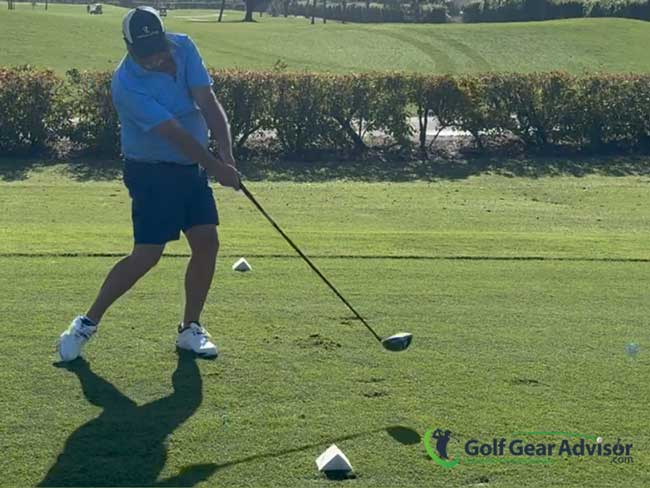
The SIM2’s aesthetics remain distinctly modern in 2026, with that electric blue forged ring now almost iconic among TaylorMade fans.
Looks
The satin carbon crown, chalk-white leading edge, and blue/yellow sole accents create a futuristic yet understated appearance. At address, the slightly asymmetrical sole design appears more refined than the original SIM. The 460cc head footprint provides confidence without looking oversized.
Head Shape
The standard SIM2 appears more compact and “tour” oriented—a pear shape that better players often prefer. SIM2 Max and SIM2 Max D stretch slightly rearward for a larger footprint, offering visual reassurance for golfers wanting maximum forgiveness.
Sound
Impact produces a medium-volume crack with a solid, fast tone. It’s less metallic than some older titanium heads and avoids the hollow ring of cheaper golf clubs. Compared to carbon-faced models like Stealth, the SIM2 sounds a touch more traditional and “hot” off the face.
Feel
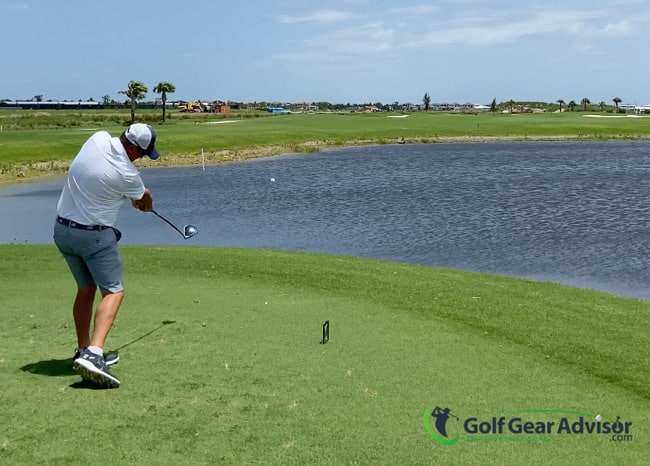
The firm, springy face sensation provides excellent feedback. Center contact delivers an explosive trampoline effect, while off-center hits feel damped but informative—never harsh. You always know where on the face you made contact.
Model Breakdown: SIM2 vs SIM2 Max vs SIM2 Max D
Picking the right head matters more than obsessing over minor tech differences between model years. Here’s how to choose:
SIM2 (Standard)
Built for faster swings (100+ mph) that generate excess spin. Delivers low launch, low spin for penetrating flight. More workable for players who shape shots intentionally. Best for low handicap index players who prioritize control over forgiveness.
SIM2 Max
The best all-around option for most golfers. Ideal for mid handicappers with 85-105 mph swing speeds. Features higher MOI, higher launch, and slightly more spin for carry and stability. The SIM2 Max driver represents TaylorMade’s sweet spot of forgiveness and distance.
SIM2 Max D
Features built-in draw bias through heavier heel weighting and a slightly closed face. Highest MOI in the lineup (15% more than the original SIM Max D). Perfect for chronic slicers and players who consistently fight a weak right miss.
Available lofts:
- SIM2: 8°, 9°, 10.5°
- SIM2 Max: 9°, 10.5°, 12°
- All models: ±2° adjustability via SureFit hosel

Quick selection guide:
- Low handicaps → Standard SIM2
- Most mid handicaps → SIM2 Max
- Beginners and high handicaps or slice-prone → Max D
Stock Shaft & Grip Options
The main stock shaft families offered with SIM2 include the Fujikura Ventus Blue 6 series (non-Velocore) and Mitsubishi Kuro Kage Silver.
Ventus Blue delivers a mid launch, mid spin profile suitable for a wide range of golfers. Kuro Kage Silver runs slightly firmer in the tip for those wanting lower spin and flatter flight.
Most SIM2 drivers on the used market will have these stock shafts in Regular, Stiff, or X-Stiff flexes, with occasional custom upgrades. The standard grip is a Golf Pride Z-Grip variant—factor in regripping costs when buying a 2021-vintage head used.
Who Is the TaylorMade SIM2 Driver Best For
The SIM2’s age actually helps value-focused golfers, like seniors. Here’s who benefits most:
Low handicappers / Faster swings: The standard SIM2 head in lower loft (8-9°) suits players generating excess spin who want penetrating flight and workability.
Mid handicappers: The SIM2 Max at 9-10.5° serves as the default choice. Its forgiving face, easy launch, and neutral-to-slight-draw bias fits the widest range of players.
High handicappers / Slicers: The SIM2 Max D bakes in right-to-left help while still offering generous MOI and launch for those forgiving drivers’ benefits.
Budget-conscious players: SIM2 series drivers often cost significantly less than new Qi10 or Stealth 2 models yet perform within a few yards of them for most amateurs.
If you are a beginner or only play a few times per month, the tiny gains from the latest models rarely justify the price difference over SIM2.
Comparison With Other Drivers
Factor | Taylormade Sim2 | |||
|---|---|---|---|---|
Forgiveness | Excellent | Excellent | Excellent | Excellent |
Spin | Mid-Low | Mid-Low | Mid | |
Sound | Loud Crack | Crisp | Muted | |
Adjustability | Hosel | Hosel | Weight+Hosel | |
Distance | Good | Better | Best | Better |
The Sim2 driver can hold its own against the newest Ping drivers and the best golf drivers on the market. It is slightly shorter off the tee, but the lower price is worth losing a few yards.
If you want to check out the best driver Taylormade has ever launched, check out our Taylormade Qi4D Review.
Buying Tips & How to Choose the Right SIM2 Setup
The SIM2 is primarily a pre-owned or discounted model. Here’s how to navigate:
Head selection: Standard SIM2 for low spin and speed, SIM2 Max for all-round play, SIM2 Max D for slice correction.
Loft choice: Start with 10.5° for most players (or 12° in Max if swing speed falls below ~85 mph). Use the loft sleeve to fine-tune 1-2° for optimal launch.
Shaft flex guidance:
- R-flex: ~80-95 mph
- S-flex: ~95-105 mph
- X-flex: 105+ mph
Click here for a guide to choosing the right shaft.
The Sim2 is available in right and left handed drivers.
Buying used: Inspect for face wear, crown damage, and signs of caving. Buy from reputable golf retailers offering return windows. Watch for authenticity guarantees.
Pro tip: Consider shortening the shaft to around 45” to improve center-face contact during tee shots, even at the cost of a couple of yards.
Our Verdict on the TaylorMade SIM2 Driver
Taylormade Sim2 Max Driver
Pros:
Cons:
The TaylorMade SIM2 is absolutely worth considering in 2026. This is still a good driver by any modern standard.
The performance gap between SIM2 and current flagship drivers is small for most swing speeds, while the price gap is large. For budget-conscious golfers, this makes SIM2 one of the smartest buys in the driver market.
Choosing the right head—whether standard SIM2, SIM2 Max, or Max D—along with proper loft and shaft through at least a basic fitting will matter far more than the driver’s model year. Even a few range sessions with different configurations can reveal your optimal setup.
Test SIM2 against your current driver and, if possible, against a newer TaylorMade model like Qi4D on a launch monitor. You may discover those extra a few yards from the latest tech don’t happen as consistently as marketing suggests.
The bottom line: If you’re shopping for a new driver and want tour-proven performance without a brand-new price tag, the TaylorMade SIM2 family should be at the very top of your shortlist. Add it to your demo list and hit one—you might be surprised how competitive this driver still is.
FAQ
Is the TaylorMade SIM2 driver still legal for tournament play in 2026?
Yes, SIM2 drivers remain on both the USGA and R&A conforming lists in 2026, making them fully legal for all official competitions. As long as the head hasn’t been altered through face shaving or other illegal modifications, it’s treated like any other conforming driver. You can quickly verify conformity by checking the model name on official USGA/R&A databases.
How long will a SIM2 driver last before the face wears out?
For a typical amateur playing 20-40 rounds per year with modest practice, a SIM2 titanium face can easily remain performant for 5-8 years or more. Heavy range usage (hundreds of balls weekly) may accelerate fatigue and microfractures, but this is rare in normal play. Inspect the face periodically for cracks or caving and replace the head if structural issues appear.
Can I put a modern shaft into a SIM2 driver head?
Absolutely. SIM2 uses TaylorMade’s standard adjustable hosel (0.335” tip), so most current aftermarket driver shafts are compatible with the correct TaylorMade adapter. Many fitters and club builders in 2026 still stock SIM-era adapters, making reshafting straightforward. Work with a fitter to dial in length, flex, and swing weight rather than just swapping shafts without guidance.
Is it worth upgrading from the original SIM to SIM2?
Golfers moving from the 2020 SIM to SIM2 might see modest but noticeable gains—slightly more forgiveness, a slightly larger face, and more stable mishit performance. Players fighting dispersion or wanting a bit more launch are most likely to notice improvement. However, those who already hit the original SIM consistently and love its feel may benefit more from a professional fitting than a full review and equipment change.
How does SIM2 compare to TaylorMade Stealth and Qi10 drivers?
Stealth and Qi10 offer incremental advances in face materials (carbon faces) and MOI, providing small gains in forgiveness and consistency for many players. Launch monitor testing often shows only a few yards difference in carry between SIM2 and the newest models at average swing speeds. For budget-conscious golfers, SIM2 usually delivers most of the performance at a fraction of the price—making upgrades to the latest generation a “nice to have” rather than a necessity. Even players like Tiger Woods might appreciate the value proposition when the performance difference is measured in inches rather than yards.
