
Written by John VanDerLaan
*We may earn revenue from the products available on this site and participate in affiliate programs.

This is Golf Gear Advisor's Taylormade Qi4D driver review.
I am a six handicap, working on getting back to a scratch, and have been testing golf clubs and equipment for more than 20 years.
I tested the Taylormade Qi4D driver over several 18 hole rounds of golf here in Naples and Fort Myers Florida. I then tested the driver on the GCQuad launch monitor at The Golf Guys, in Bonita Springs, where I compared it to the Callaway Quantum Max driver, the Titleist GT2 and GTS drivers, and the Ping G440.
In this review, I will share my experience with this driver along with the features, benefits and potential drawbacks that you may experience.
Quick Verdict
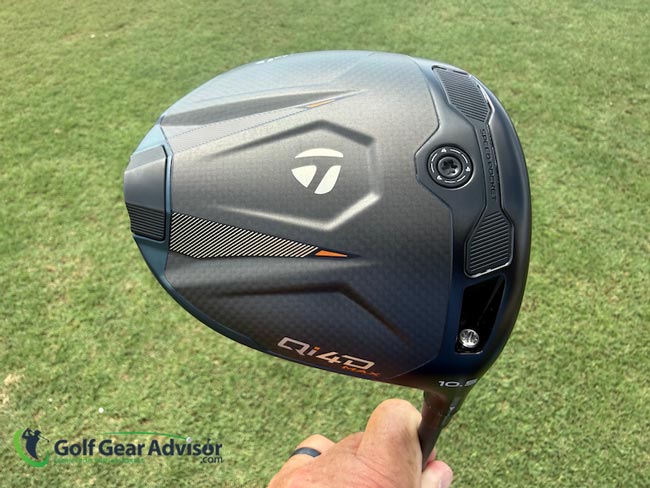
TaylorMade Qi4D Driver
Pros:
Cons:
Key Takeaways
- This taylormade Qi4d driver is the core model in TaylorMade’s 2026 lineup,along with the Qi Max irons, built as a perfect blend of distance, forgiveness, and adjustability for many golfers.
- The TaylorMade Qi4D family includes three main models: the Qi4D Standard, Qi4D Max, and Qi4D LS, each designed for different player needs; max lite is the lighter build for slower swing speed players.
- The Qi4D Standard is aimed at golfers seeking a balance of distance and forgiveness, while the Qi4D Max offers a larger footprint and higher MOI for maximum forgiveness.
- My testing shows 2-3 mph more ball speed and tighter dispersion than the Qi35, and almost 5 mph more ball speed than the Stealth, with more consistent spin from the 60x Carbon Twist Face, 4D Club Design.
- The sound is muted versus titanium, so players who like a refined carbon crack may love it, while traditionalists should test it before buying a new driver.
Introduction To the TaylorMade Qi4D Driver
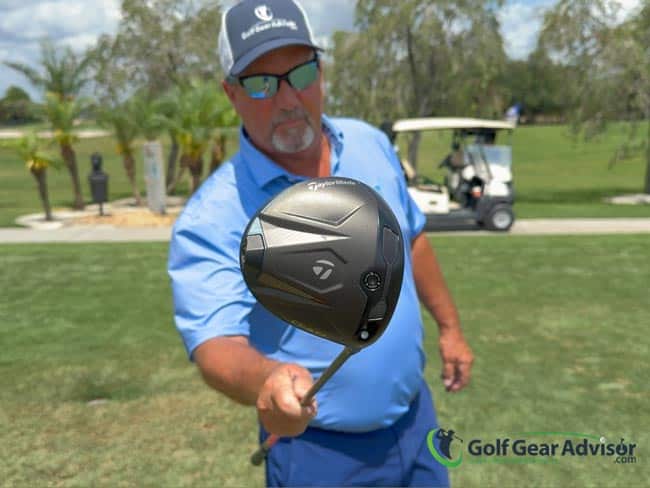
TaylorMade’s driver story has moved from SIM speed, through Stealth carbon-face disruption, into Qi35 forgiveness and now the Qi4d. Tour feedback from players such as Rory McIlroy pushed TaylorMade to refine sound, feel, and consistency rather than chase only raw speed. TaylorMade calls the Qi4D approach “4D Club Design,” blending face, body, weighting, and shaft fitting.
At launch, the driver sits in the premium range at about $649.99 / £549.00. Below I will cover looks, sound, launch monitor performance, golf course play, weight ports, stock shafts, comparison with older taylormade drivers, and buying advice.
Looks & Design: Classic TaylorMade Shaping with Modern 4D Tech
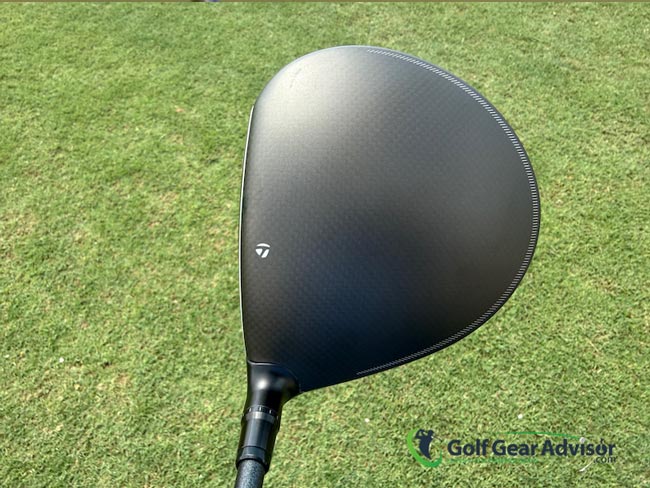
At address, the Qi4D driver features a refined pear-shaped profile, described as clean and premium in aesthetics. The TaylorMade Qi4D driver features a modern matte-carbon crown with a subtle weave and a restrained topline graphic that helps frame the ball at address.
The driver head looks compact enough for better players, yet forgiving enough for an 8 to 20 handicap golfer.
The Qi4D driver incorporates a 60x Carbon Twist Face, which is darker than titanium and features fine scorelines that aid in alignment, enhancing the overall aesthetic and functionality. Compared with Stealth and Qi35, the face looks cleaner and less loud.
On the sole, the Trajectory Adjustment System places two heavier and two lighter weights around the rear and near the cut through speed pocket.
Branding is restrained, with small color accents that nod to classic TaylorMade golf clubs rather than flashy new clubs graphics.
Technology Breakdown: 4D Club Design, Carbon Face & High-MOI Chassis
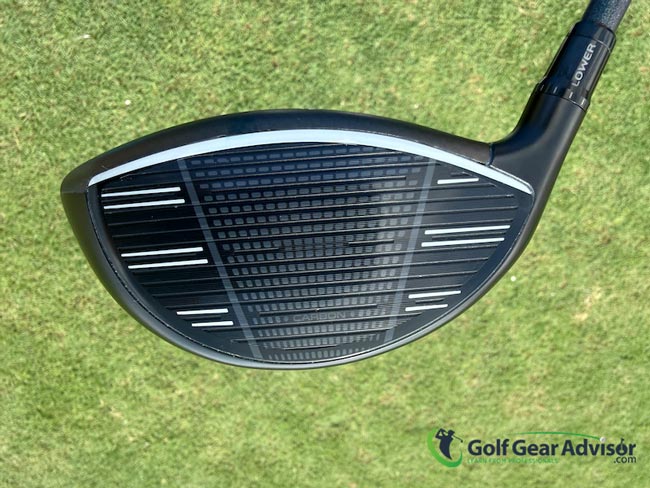
The Qi4D driver is not just one tech story. Its 4D Club Design combines the face, body, hosel, weights, and shaft system to manage speed, launch, spin, and sound together.
Key technology points:
- The 60x Carbon Twist Face saves weight versus titanium and counters common mishit patterns.
- The improved roll radius of the Qi4D driver normalizes spin on strikes made high or low on the face, leading to more consistent performance.
- The 60x Carbon Twist Face enhances forgiveness by countering common mishit patterns, resulting in tighter shot dispersion even on off-center hits.
- The driver maintains better distance and accuracy on low-face strikes due to its enhanced vertical face forgiveness features.
- The redesigned Speed Pocket protects ball speed and spin when strike location drifts low on the face.
The high moi chassis uses saved mass to stabilize the head without making the model look oversized. Our testing has ranked the TaylorMade Qi4D driver highly for its blend of ball speed and downrange forgiveness, with critical acclaim for its traditional silhouette.
REAX Shaft System & Fitting: Matching the Qi4D to Your Swing
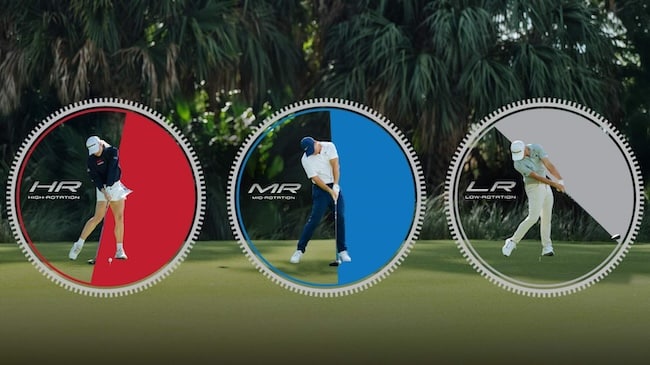
The TaylorMade Qi4D driver features a new REAX shaft fitting system that categorizes shafts based on the golfer’s rotation type during impact, rather than just swing speed. TaylorMade’s REAX shafts were developed in collaboration with Mitsubishi and are engineered with specific bend and torque profiles to match the rotation categories identified in their fitting system.
The REAX shafts available for the TaylorMade Qi4D driver are designed in three categories: High Rotation Red, Mid Rotation Blue, and Low Rotation White, each tailored to different player profiles. A reax blue shaft will suit many moderate swing types, while Red or White can help golfers whose face rotation is faster or slower.
This matters because two golfers with the same shaft flex and same shaft weight can deliver the club very differently. A custom fit can move a player from an old model 60g stiff shaft into a better-matched REAX profile and produce more consistent results without an expensive aftermarket shaft.
Sound & Feel: Carbon ‘Snap’ vs. Old-School Titanium
I am coming from a Taylormade Stealth driver, so I am used to the sound of the carbon face, but I found the Qi4D to sound slightly more solid, inspiring confidence when struck all across the face, not just on the sweet spot.
The driver’s acoustic profile is characterized as muted when compared to traditional titanium drivers, affecting impact feel and feedback. Center hits feel quick and springy from the sweet spot, with a controlled crack rather than a metallic ping, like the Ping G430 driver.
Heel strikes sound firmer, while toe strikes feel heavier and quieter. That gives more feedback without harsh vibration.
On-Course & Launch Monitor Performance: Distance, Spin Consistency & Forgiveness

The driver is designed for golfers of all abilities with swing speeds of 90–115 mph, aiming to enhance both distance and control.
It is ideal for low, mid and high handicappers, as well as PGA Tour Pros.
In my testing, the TaylorMade Qi4D driver showed a notable improvement in performance metrics, with an increase of nearly 5 mph in ball speed and a tighter dispersion compared to my Taylormade Stealth driver.
I also compared it to the Callaway Quantum driver and I found the Qi4D to be much more consistent in launch and spin numbers.
My launch and spin numbers with the Qi4D driver averaged a 14 degree launch angle and low-to-mid 2,000 rpm spin, but the real advantage is consistent spin when contact moves around the face. Off center hits, low-face misses, and heel-toe variation stay more playable.
The Callaway Quantum driver produced similar numbers when I hit the sweet spot, but varied wildly on mishits.
I also compared it to the Ping G440 and the Titleist GT2 driver.
I found the Ping G440 to produce similar numbers and forgiveness, but less ball speed and workability.
I found the Titleist GT2 to be very similar in numbers across the board, but slightly less forgiving.
Last but not least, I tested the Qi4D against the Titleist GTS driver and found them to be very close in launch numbers and forgiveness.
When I took it out on the course, I was consistently hitting it 15 yards further than my Stealth driver, and I was able to hit high draws and fades on demand, with ease.
I found that into the wind, the ball is less likely to balloon, and on firm fairways, predictable launch characteristics helps turn carry into total distance
Needless to say, the Taylormade Qi4D now has a permanent place in my bag and may be the best driver that I have ever tested.
Adjustability: Loft Sleeve, Weight Ports & Qi4D vs Qi4D Max / Max Lite
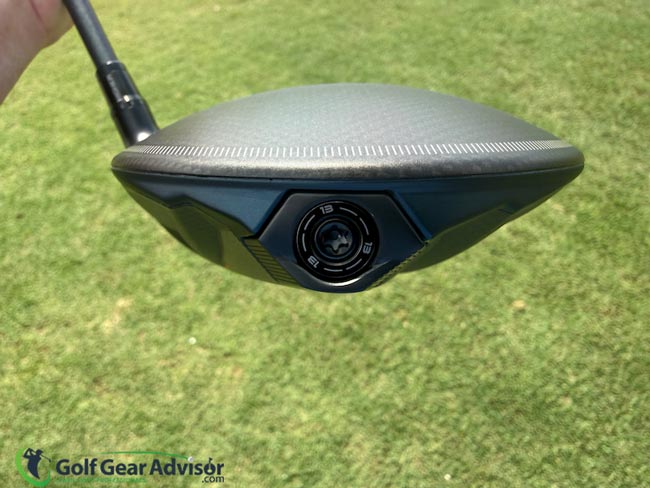
The adjustable loft sleeve on the TaylorMade Qi4D driver allows for changes in loft, lie, and face angle, enabling golfers to fine-tune their launch conditions. Start there before moving weights.
The TaylorMade Qi4D driver features a Trajectory Adjustment System (TAS) with four distinct weight configurations that allow golfers to customize their driver for maximum distance, forgiveness, fade, or draw. By moving the weights in the Qi4D driver, golfers can change the center of gravity (CG) location, which directly affects launch, spin, forgiveness, and shot shape.
Simple setup logic:
Goal | Adjustment idea |
|---|---|
lower spin | heavier weight forward |
adds forgiveness | heavier weight back |
draw help | heavier weight toward heel |
fade control | heavier weight toward toe |
The Taylormade Qi4d Max bakes in more rear and heel mass, making it the most forgiving option for slice-prone players. The standard max is more stable, while Max Lite helps golfers who need easier launch from a lighter club.
Who the TaylorMade Qi4D Driver Is For (and Who Should Skip It)

The TaylorMade Qi4D driver is best for golfers who want a consistent driver without moving into a bulky head. It suits players who swing 90–115 mph, hit the center often enough, and want adjustability.
Choose Qi4D if you want:
- neutral flight and workability
- strong ball speed on a wide area of the face
- forgiveness without a huge footprint
- modern carbon feel
Choose Qi4D Max for maximum forgiveness. Choose Qi4D LS for faster swingers who need lower spin. Skip the family and consider Ping drivers if you dislike carbon sound or if price matters more than peak performance.
Final Verdict: Is the TaylorMade Qi4D Driver the New Benchmark?
The Qi4D is one of the best driver candidates that I have tested, because it blends distance, forgiveness, consistency, and fitting depth. It is not only fast; it keeps the ball online when contact is imperfect.
It is an ideal driver for seniors, beginners and even PGA Tour pros.
The muted sound will not please everyone, but the numbers are hard to ignore. If you want a balanced driver rather than an extreme low-spin or maximum-forgiveness head, the Qi4D should be on your test list.
TaylorMade Qi4D Driver
Pros:
Cons:
FAQ
Is the TaylorMade Qi4D driver worth upgrading to if I already play a recent TaylorMade driver?
Yes, if your current driver is poorly fit or older than a few seasons. The biggest gains over Qi35, Stealth, and other Taylormade drivers are usually spin consistency, forgiveness, and tighter dispersion rather than huge raw distance jumps.
How does the TaylorMade Qi4D compare to the Qi4D Max and Qi4D Max Lite for higher handicaps?
Higher handicaps who slice or miss the center often should test Qi4D Max or Qi4D Max Lite first. The standard Qi4D is forgiving, but Qi4D Max is built for maximum forgiveness and easier correction.
What stock shafts come with the TaylorMade Qi4D, and do I need the REAX system?
The stock shafts are REAX profiles co-developed with Mitsubishi: Red, Blue, and White. Most golfers do not need expensive upgrades if the fit matches their closure rate and timing.
Can slower swingers still use the Qi4D, or should they go straight to Max Lite?
Slower swingers under roughly 90 mph should usually start with Max Lite. Some can still play standard Qi4D with more loft and a lighter shaft, but Max Lite is easier to launch.
Does the carbon face on the Qi4D wear out faster than titanium?
Modern carbon faces are engineered for normal golf use. Cosmetic marks can appear, but they do not usually mean performance loss unless there is structural damage.
