
Written by John VanDerLaan
*We may earn revenue from the products available on this site and participate in affiliate programs.
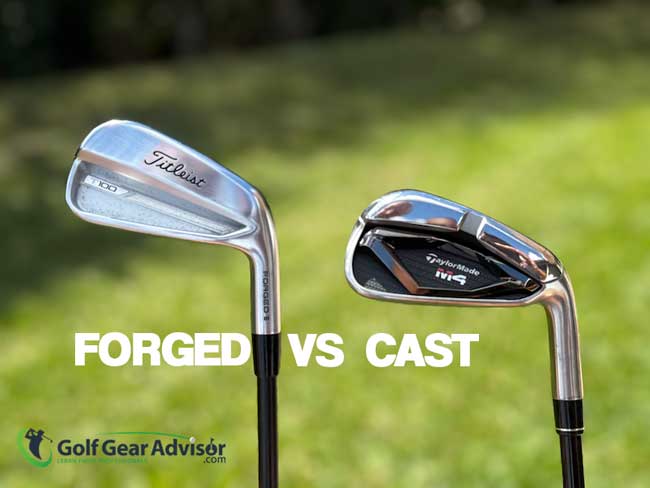
Choosing the right irons can feel overwhelming when you’re faced with terms like “forged” and “cast.” These construction methods affect everything from how the club feels at impact to how forgiving it is on mishits. Understanding forged vs cast irons helps you make a smarter purchase—one that actually matches your game.
In this guide, we’ll break down the manufacturing processes, explore the real-world performance differences, and help you figure out which type of iron belongs in your bag.
Quick Answer: Forged vs Cast Irons
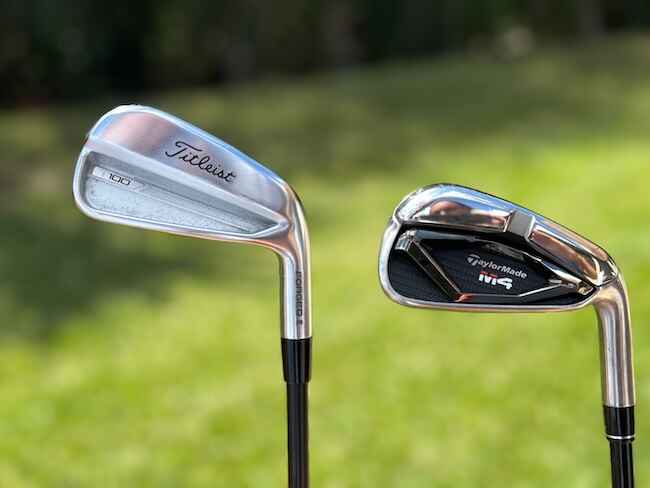
If you’re short on time, here’s what you need to know about forged and cast irons. Forged irons are made by heating a solid billet of soft steel and shaping it under tremendous pressure, creating a dense, uniform grain structure that delivers exceptional feel and feedback. Cast irons are made by pouring molten metal into precision molds, which allows for more complex designs with built-in forgiveness features.
Forged irons tend to appeal to skilled golfers who prioritize workability, responsive feel, and the ability to shape shots. Cast irons offer maximum forgiveness, higher ball speeds, and greater design flexibility—making them ideal for many golfers seeking distance and consistency.
Factor | Forged Irons | Cast Irons |
|---|---|---|
Manufacturing | Single piece of steel, heated and pressed | Molten metal poured into molds |
Best For | Low handicaps, feel-focused players | Beginners to mid handicaps, forgiveness seekers |
Feel | Soft, buttery feedback | Can be firmer or muted |
Forgiveness | Smaller sweet spot | Larger sweet spot, higher MOI |
Workability | Excellent shot shaping | More resistant to manipulation |
Price | Generally higher | Budget-friendly to premium |
Many modern iron sets now blend forged and cast constructions within the same bag—forged short irons for precision, cast long irons for forgiveness. This hybrid approach gives golfers the best of both worlds.
Neither construction is “automatically better.” The right choice depends on your consistency, handicap, and what you value most: feel, forgiveness, or distance.
How Are Forged Irons Made?
The forging process transforms raw steel into a precision golf club through controlled heat and pressure. Unlike melting metal, forging keeps the steel in a solid state, which is what gives forged clubs their distinctive characteristics.
Here’s how it works:
- Heating the billet: A soft carbon steel billet (typically 1025 or 1035 carbon steel) is heated to approximately 900-1200°C—hot enough to become malleable but not melted
- Pressing under pressure: The heated billet is placed between dies and compressed multiple times under tons of force, gradually forming the rough club head shape
- Precision shaping: CNC machines mill and grind the head to exact specifications, creating grooves, toplines, and sole geometry
- Finishing: The head receives chrome plating or other finishes, stamping, and final quality inspection
This process creates a uniform grain structure where metal crystals align along the direction of force. Think of it like wood grain—the aligned fibers make the material stronger and more consistent throughout.
Forged irons are easier to bend for loft and lie adjustments during fitting sessions. Most fitters can safely adjust forged heads by ±2° or more without risking damage. This precision shaping and adjustability is why many professional golfers and skilled players gravitate toward forged construction.
Modern forged irons (especially post-2015) often use multi-piece constructions with forged faces and tungsten weights for enhanced performance, while still being classified as “forged.”
Benefits of Forged Irons
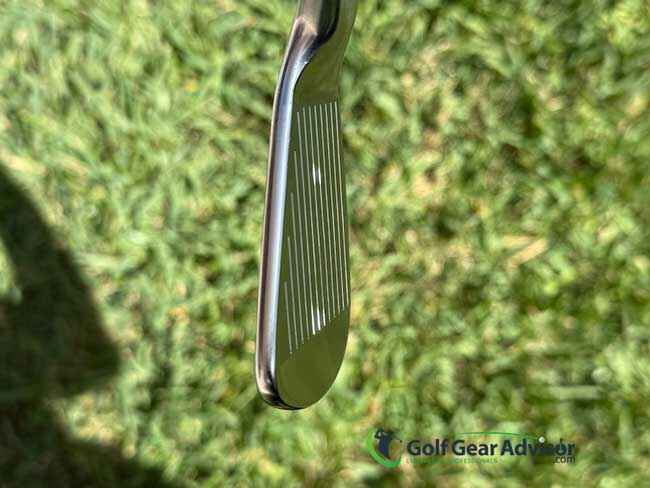
Better ball-strikers gravitate toward forged heads for good reasons. The construction method directly influences on-course performance in ways that matter to skilled players.
Key benefits include:
- Softer, more responsive feel that communicates strike location clearly—you’ll know immediately if you caught it on the heel, toe, or center
- Enhanced workability for hitting controlled draws, fades, and trajectory changes when you need to shape shots around obstacles
- Consistent feedback that helps low-to-mid handicap players fine-tune their swing and contact patterns over time
- Greater fitting flexibility since the softer metal bends more easily for precise loft and lie adjustments
- Dense, impurity-free structure that many describe as a “buttery feel” at impact
Tour players and accomplished amateurs choose forged irons primarily for this feedback and precision—not for extra distance. The ability to control ball flight and receive immediate tactile feedback outweighs any distance considerations at that level. Forged irons like the Mizuno Mp-15s and the Titleist T100 irons display these characteristics.
Disadvantages of Forged Irons

The same traits that better players love can make forged irons punishing for developing golfers. That responsive feedback works both ways—it also tells you (loudly) when you miss the sweet spot.
Main drawbacks include:
- Smaller sweet spot with less forgiveness on off center hits, meaning mishits lose more distance and accuracy
- Thinner toplines and less perimeter weighting that expose swing inconsistencies rather than masking them
- Higher average price compared to mass-market cast game-improvement irons—often 2-5x more expensive
- Soft metal shows wear faster, including bag chatter, dings, rust and groove wear after heavy play
- Less built-in launch assistance, making it harder to get the golf ball airborne for slower swing speeds
Golfers who rarely find the center or struggle with launch and distance may find forged irons frustrating, especially in the long irons (4-6). If your poor shots currently go sideways or come up short, a forged blade will magnify those misses rather than minimize them.
How Are Cast Irons Made?
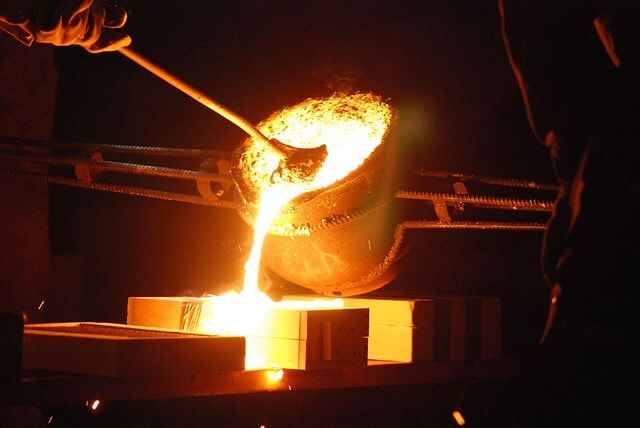
Casting takes a fundamentally different approach to iron construction. Instead of shaping solid metal, manufacturers melt steel or multi-metal alloys and pour them into precision molds where the metal solidifies into the desired shape.
The pouring molten metal process allows engineers to create shapes impossible or prohibitively expensive to forge:
- Complex hollow bodies with internal chambers for weight redistribution
- Deep cavities with aggressive perimeter weighting
- Undercut channels that lower the center of gravity
- Thin, flexible faces that increase ball speeds
Cast construction dominates game-improvement and super game-improvement categories. Distance-oriented models featuring strong lofts and springy faces almost universally use casting to achieve their performance goals.
The trade-off is grain structure. When metal melts and resolidifies, crystals form randomly rather than aligning as they do in forging. This creates a slightly different feel at impact and can introduce microscopic voids, though modern quality control has minimized these concerns in premium cast clubs.
Benefits of Cast Irons

Most recreational golfers end up in cast irons—and for good reason. The performance advantages align perfectly with what higher-handicap players need to improve.
Primary advantages include:
- Larger sweet spots with greater forgiveness thanks to cavity back designs and perimeter weighting that increase moment of inertia (MOI)
- Easier launch and more distance, often achieved through stronger lofts and springier faces that produce 2-5 mph higher ball speeds
- More design freedom for engineers to incorporate multi-material inserts, sound-dampening badges, and extreme low/back weighting
- Lower price points and wider availability across retailers, making quality golf clubs accessible to more players. The least expensive cast irons that we have tested are the Lazrus irons
- Better performance on mishits, with data showing 10-15 yard improvements on off-center strikes compared to less forgiving designs
Cast construction is ideal for beginners, high handicappers, and many mid-handicap players who prioritize straight, high, and long shots over pure feel. When your mishits still find the green, your confidence grows—and that builds momentum throughout your round.
Disadvantages of Cast Irons
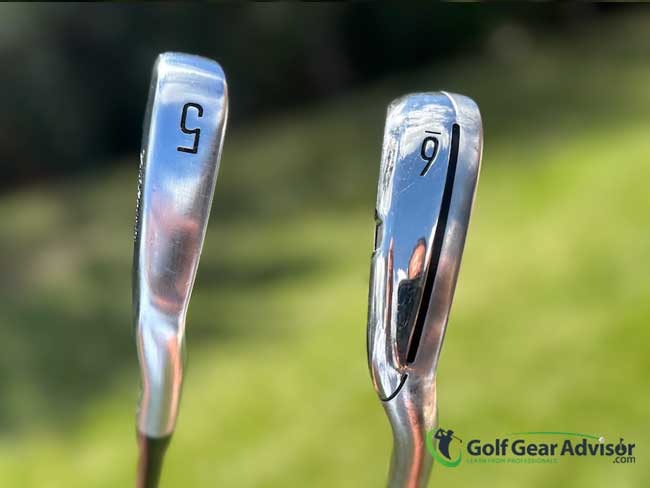
Technology has narrowed the gap between forged and cast irons, but meaningful trade-offs remain. Understanding these helps you decide if cast clubs match your priorities.
Key downsides include:
- Feel at impact can be firmer or more muted compared to a one-piece forged head, especially on pure center strikes
- Some designs limit shot-shaping and trajectory control due to high MOI and strong lofts that resist manipulation
- Harder or riskier to bend for loft and lie adjustments, which can limit precision fitting options
- Bulkier profiles with thicker toplines and wider soles that some players find visually unappealing at address
- Less precise feedback that makes it harder to diagnose swing flaws based on feel alone
Better players may find it difficult to work the ball or control ball flight as precisely with very forgiving cast models. The old Ping Eye 2 irons were the original super forgiving cast irons. If you need to hit a low punch under trees or a high fade over water, some cast clubs will fight you.
Cast irons that display these characteristics are the Titleist T300s and the Ping G440s.
Forged vs Cast Irons: What Do the Pros Use?

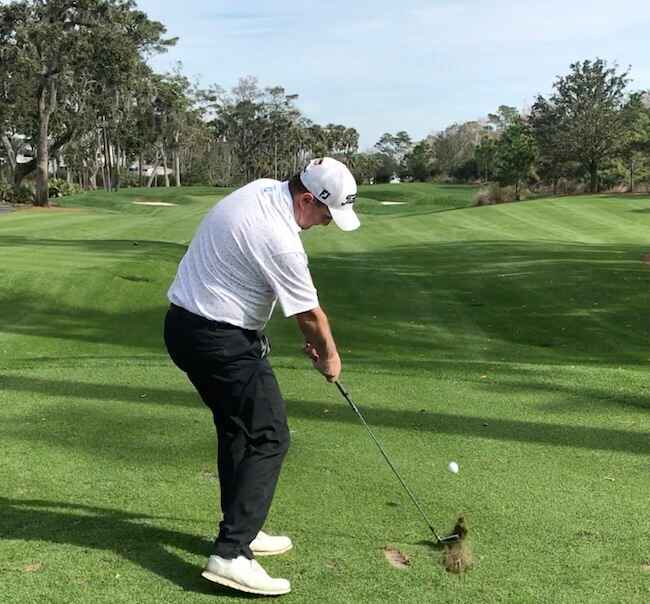
PGA Tour Player John VanDerLaan Hitting Forged Irons At The Barbasol Championship
PGA and major professional tours predominantly feature forged irons, but usage patterns are more nuanced than most amateurs assume. The days of every tour player gaming pure muscle-back blades are long gone. Our staff member, PGA Tour player John VanDerLaan uses the Titleist 620 CB forged irons.
What you’ll actually see on tour:
- Many pros play forged cavity back irons or players’ distance irons rather than thin blades
- It’s increasingly common for pros to blend sets—forged short irons paired with more forgiving long irons that may be hollow-body or feature cast components
- OEMs build tour-only models that are forged but still integrate tungsten weights, multi-material faces, and modern tech
- Over half of tour players use mixed constructions within a single iron set, adjusted for specific course setups and personal preference
Professional golfers prioritize precise distance control, consistent spin rates (typically 5000-7000 rpm with wedges), and immediate feedback more than raw forgiveness. They hit thousands of balls weekly and groove their swings to a consistency most amateurs never achieve.
What works for a tour player hitting 500 balls daily doesn’t automatically translate to a 15-handicapper playing twice a month. Your equipment should match your game, not someone else’s.
Who Should Use Cast Irons, and Who Should Use Forged Irons?
Player profile and goals matter more than construction labels. The “right” iron is the one that helps you play better golf, regardless of how manufacturers made it.
Cast irons are better if you:
- Are a beginner, high handicapper, or many mid-handicappers who need maximum forgiveness to build confidence
- Frequently miss the center of the club head, especially on longer irons where mishits hurt most
- Prioritize distance, higher launch, and straighter ball flight over pure feel
- Want budget considerations to work in your favor with more affordable options
- Prefer cavity back irons with generous sweet spots and stability through impact
Forged irons are better if you:
- Are a consistent ball-striker, often single-digit or trending toward low-teens handicaps
- Actively work the ball and value precise distance gaps over maximum distance
- Prioritize responsive feel and immediate feedback on strike quality
- Are willing to invest in custom fitting and appreciate the ability to adjust loft and lie
- Want to control ball flight for various shot shapes and trajectories
Players in the 10-18 handicap range often benefit most from “players distance” models. These may be forged, cast, or hybrid constructions that balance forgiveness with feel. A professional fitting using launch monitor data helps identify the best option for your specific swing.
Are Forged Irons Better Than Cast Irons?

Neither construction is objectively “better” for everyone. The answer depends entirely on your swing consistency, ball-striking ability, and what you prioritize in your game.
Here’s the honest breakdown:
- Forged is often better for golfers who already hit a lot of greens and want to fine-tune trajectory, spin, and workability
- Cast is often better for golfers trying to hit more fairways and greens while reducing the severity of mishits
- Many players will see lower scores faster with forgiving cast irons than with less-forgiving forged blades, even if forged sounds more prestigious
Your decision should focus on score-improvement potential rather than the prestige of “playing forged.” If maximum forgiveness helps you hit three more greens per round, that matters more than how your irons were manufactured.
Do Forged Irons Go Further Than Cast Irons?
Distance is driven more by loft, face design, and shaft than by “forged vs cast” alone. This is one of the most persistent misconceptions in golf equipment.
Here’s what actually affects distance:
- Many cast game-improvement irons feature stronger lofts (7-iron at 28-30°) and thin, flexible faces that often produce higher ball speeds than traditional forged models
- Traditional forged players’ irons typically have weaker lofts (7-iron at 33-35°) prioritizing consistent spin and distance gapping over outright maximum distance
- A cast 7-iron may fly as far as or farther than a forged 6-iron simply due to design differences, not materials
- Face thickness, CG location, and overall head design influence ball speeds more than construction method
When comparing irons, look at actual lofts—not just the number stamped on the sole. A “7-iron” can vary by 5° or more between different models and manufacturers.
Key Performance Factors: Feel, Forgiveness, Workability & Cost
Construction method influences several performance categories that golfers actually experience on the course. Understanding these trade-offs helps you prioritize what matters most for your current game.
Feel & Feedback:
- Forged: Typically softer, clearer feedback on strike quality with that sought-after buttery feel
- Cast: Can be firmer or more muted, though modern designs incorporate dampening to feel surprisingly soft
Forgiveness:
- Cast cavity back designs: Higher MOI, larger sweet spots, better retention of ball speeds on mishits—often 30-50% improvement on off center hits
- Forged blades and compact heads: Smaller sweet spot, more penalty on mishits with greater distance loss
Workability:
- Forged players’ irons: Easier to manipulate curve and height for experienced golfers who shape shots intentionally
- Highly forgiving cast irons: More resistant to curvature, tend to fly straighter regardless of club head manipulation
Cost:
- Forged: Generally mid-to-premium pricing due to labor-intensive manufacturing and lower production volume
- Cast: Cover the widest price range, with many value-oriented sets for budget considerations while premium cast options exist too
Consider which factors matter most for your current skill level. A 20-handicap golfer typically benefits more from forgiveness than from nuanced feel differences.
Myths About Forged and Cast Irons

Outdated assumptions often lead golfers to pick the wrong clubs for their skill level. Let’s clear up the most common misconceptions.
- Myth: “Forged irons are only for scratch or professional players.” Many modern forged irons are cavity back designs or players’ distance models built specifically for mid-handicappers. Construction method doesn’t automatically mean blade-only designs.
- Myth: “Forged irons are automatically softer than cast irons.” Feel is influenced by club design, cavity construction, face thickness, and inserts as much as by forging vs casting. Some premium cast irons feel remarkably soft, while some forged models feel firm.
- Myth: “You can’t shape shots with cast irons.” Shot shape depends on head design, CG location, and your ability to manipulate the face. Certain cast players’ irons can be very workable for skilled players who understand how to control ball flight.
- Myth: “Cast irons are cheap and low quality.” Some of the most technologically advanced and expensive irons on the market use cast components. Premium cast irons incorporate tungsten weighting, AI-designed faces, and sophisticated multi-material constructions.
- Myth: “All professionals use forged blades.” Many tour pros game cavity back designs, hollow-body long irons, and mixed sets that include cast or hybrid components.
Test clubs and examine launch monitor data rather than relying on these myths. Dispersion patterns and consistent performance matter more than construction labels.
Which Type of Iron Is Best for You?
Before buying new irons, think honestly about your current scores, consistency, and goals over the next 1-3 seasons. Your playing style and skill level should drive this decision.
If you’re a beginner or high handicap (roughly 20+):
- Prioritize cast game-improvement or super game-improvement irons with generous forgiveness
- Look for cavity back designs with wide soles and strong lofts that help with launch and distance
- Don’t worry about “upgrading” to forged—focus on building confidence and consistent contact first
If you’re a mid handicap (roughly 10-20):
- Consider blended or players distance models, like the Taylormade P790, that balance forgiveness with better feel
- Be open to mixed sets with more forgiving long irons and more traditional short irons
- This is where personal preference really starts to matter—test both construction types
If you’re a low handicap or competitive player:
- Evaluate forged players’ irons or players’ cavity backs, like the Titleist CB or T100 irons, designed for precision and control
- Don’t dismiss slightly more forgiving options in the long irons, even within forged lines
- Focus on consistent distance gapping and spin control rather than maximum distance
Get fit using launch monitor data. Test both forged and cast options at equivalent lofts, paying attention to dispersion patterns, carry distances, and how each feels at impact.
The “right” iron is the one that helps you shoot lower scores and enjoy the game more—regardless of whether it was forged, cast, or built with a combination of both.
Conclusion
Forged vs cast irons comes down to a question of feel, forgiveness, and design goals—not right versus wrong. Forged irons provide exceptional feedback, softer feel, and enhanced workability for skilled golfers who can take advantage of these characteristics. Cast irons offer more forgiveness, design flexibility, and often better value for the majority of players working to improve their game.
Modern irons increasingly blur these traditional lines. Multi-material constructions, hybrid manufacturing approaches, and AI-optimized designs mean you can find forged irons with impressive forgiveness and cast irons with refined feel. The labels matter less than the actual performance.
When choosing your next set, focus on:
- Performance data from launch monitor testing, not assumptions about construction
- Professional fitting that matches specifications to your swing
- Confidence at address—if you don’t like looking at the club, you won’t swing it well
- Honest assessment of your current ball-striking and where you want to improve
Reassess your irons every few seasons as both your swing and iron technology evolve. The clubs that fit your game today may not be ideal three years from now—and that’s okay. Golf equipment should grow with you.
Whether you end up with forged clubs, cast clubs, or a blended set, the goal remains the same: play better golf and enjoy your time on the course.
