
Written by John VanDerLaan
*We may earn revenue from the products available on this site and participate in affiliate programs.

UPDATE 02-14-2026: After struggling a little with my LAB DF3, I decided to put the Directed Force 2.1 in my bag yesterday. The result? 27 putts and a 73! I felt like I couldn't miss with the DF 2. I. have posted the score card below.

If you’ve been searching for a putter that practically eliminates face rotation through the stroke, the LAB Golf Directed Force 2.1 deserves your attention. This isn’t your typical mallet—it’s a purpose-built tool designed to keep the putter face square without you fighting against it.
LAB Golf Directed Force 2.1 – Quick Verdict

The LAB Golf Directed Force 2.1 is absolutely worth considering if you value consistency over conventional looks. It finished 2nd from 20 feet in independent mallet testing and delivers exceptional stability that most golfers will notice immediately on lag putting.
At around $399.99 for a standard custom build, this is firmly a premium mallet putter.
Pros:
- Elite distance control on long putts (tested 2nd from 20 feet)
- Lie angle balance technology removes torque from your stroke
- Massive stability and forgiveness on mishits
- Most forgiving putter we have tested
- Proven performance data since testing
Cons:
- Unconventional appearance takes getting used to
- Adjustment period needed for short putts
What Makes the Directed Force 2.1 Different?
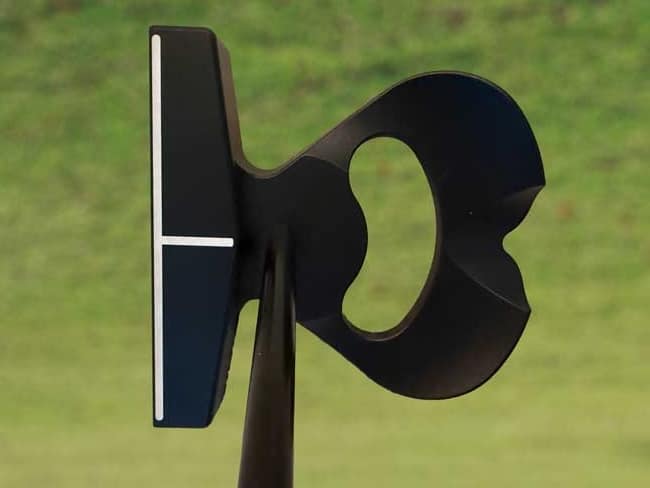
The Directed Force 2.1 is LAB Golf’s flagship lie angle balanced putter, and it operates on fundamentally different principles than traditional golf putters. If you’ve ever felt your putter head wanting to rotate during the stroke, this design aims to eliminate that sensation entirely.
Lie angle balance means the putter stays square to your intended target line without you having to fight against the head twisting open or closed. Most putters, mallet or blade, have some degree of toe hang or face balance, which creates torque during the stroke. The DF 2.1 removes this torque completely, letting you focus on speed and line rather than face manipulation.
In testing against the best mallet putters on the market, the Directed Force 2.1 finished 3rd overall—impressive for a smaller brand competing against industry giants. But the aggregate ranking doesn’t tell the whole story. From 20 feet, it placed 2nd, demonstrating that its technology genuinely separates from conventional designs at distance.
Key differentiators include:
- A massive high-MOI head that prioritizes function over aesthetics
- Center-shafted geometry that creates zero torque at the correct lie
- Deep rear mass positioning for enhanced stability
- The ability to stay square without active hand manipulation
The model first gained significant visibility when Adam Scott used a LAB putter at the 2019 Masters. Then in 2025, J.J. Spaun won the U.S. Open by sinking a 64 foot put on the 18th hole while using a lab putter, demonstrating that tour-level players also struggle with face control and can benefit from this technology.
Design, Build Quality & Tech
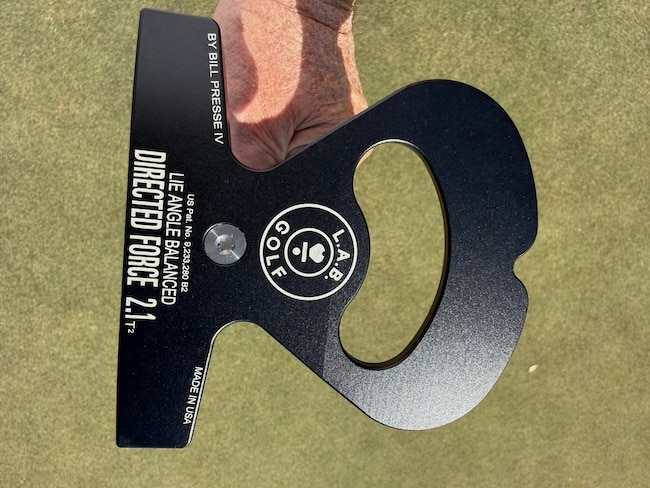
The Directed Force 2.1 features a substantial head CNC-milled from heat treated 6061 aircraft-grade aluminum. Available in black, red, and blue finishes, the construction delivers a consistent feel that holds up across thousands of strokes.
The lie angle balanced concept goes deeper than simple face balancing. Unlike traditional toe-hang or face-balanced putters, the DF 2.1 doesn’t rotate around the shaft axis when you balance it correctly at your natural lie angle. This means during your putting stroke, the putter head has no preference to open or close—it simply follows your shoulder movement.
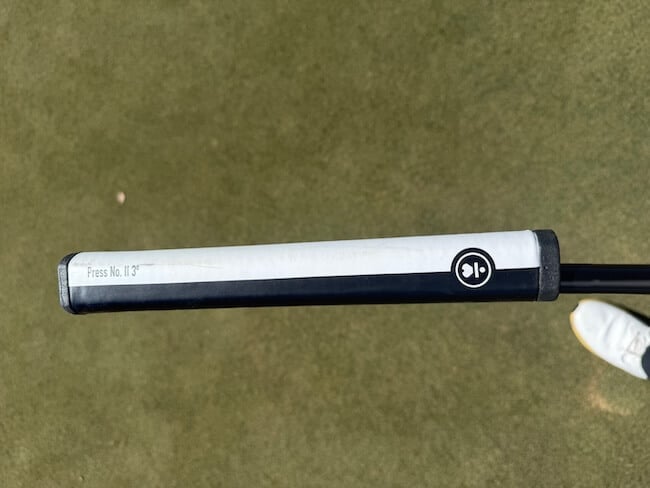
Forward press technology is built into the design through specialized shaft installation and matching press grips. The system creates approximately 3° of forward tilt, setting your hands naturally ahead of the ball at address. This simplifies achieving proper forward press position and encourages you to use larger muscle groups rather than your wrists and hands.
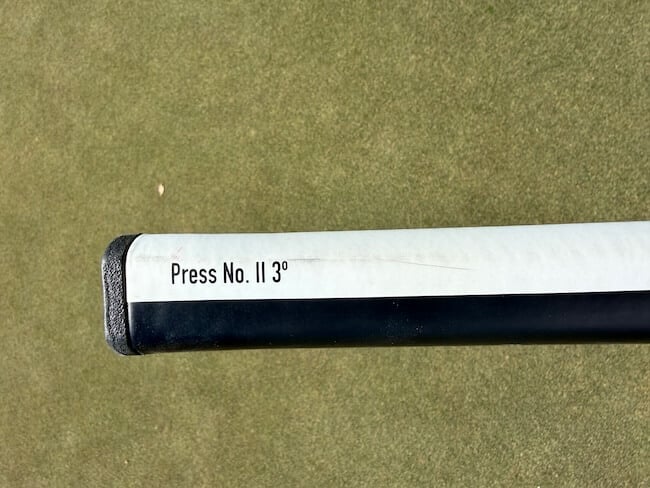
The center-shafted geometry places the shaft in the precise middle of the head, creating an unobstructed top line that many golfers find helpful for alignment. Combined with deep rear mass, this pushes the center of gravity back, creating very high MOI and reduced twisting on heel or toe strikes. Head weight typically ranges from 370-415 grams depending on configuration, with swing weight between F0 and G5.
Available customization options:
- Head colors: Black, red, blue
- Alignment aid options: 30+ layouts including single line, triple lines, and track-style markings
- Shaft choices: Steel, graphite, and premium stability options
- Specialty builds: Arm lock and broomstick configurations
- Multiple Press grip options with varying diameters and weights
LAB Golf Fitting: Getting the DF 2.1 Dialed In
Some players may benefit from fitting, but I own all of the LAB putters and bought them off the shelf, with standard 34" length, 69° lie angle, which will fit most people.
LAB Golf’s remote fitting process makes custom fitting accessible regardless of your location. Here’s how it works:
- Record a short video of your natural putting strokes with your current putter
- Submit the video through LAB’s fitting portal
- LAB’s team analyzes your stroke using specialized software
- They determine your ideal lie angle and length for a DF 2.1
- You receive custom specifications for ordering
For golfers who prefer hands-on fitting, in-person sessions are available at certified centers. The Scottsdale Golf LAB Centre of Excellence in the UK and select fitters across the US and Europe offer the opportunity to try different configurations—comparing lie angles like 67° versus 69° and testing various Press grip models.
The four main Press grip options:
- Traditional diameter versus larger elliptical profiles
- Pistol grips
- Heavier versus lighter weight configurations
- Grips include 0°- 3° of forward tilt to promote quiet hands
- Different textures and materials for grip preference
There are also split grips and options for different putting grip styles, as well as counterbalance options.
If you are interested in the inline fitting, you can find it here: LAB Golf Remote Fitting
Performance Review: On-Course Results

This section focuses on real performance from different distances. I used this putter over several 18 hole rounds of golf, also on my Perfect Practice Putting Mat, and then tested it on the putting green against other putters, like the LAB DF3, the Scotty Cameron Zero Torque, the TaylorMade ZT, The Odyssey Square to Square, the Cobra Agera Putter, the Performance Golf SQ putter and the LAB OZ1i.
In the putter test, the DF 2.1 finished 3rd overall with a score in the low-80s out of 100. However, the aggregate ranking masks where this putter truly excels—it dominated with putts hit off of the toe or heel. The high MOI head was the most forgiving putter out of all that we tested.
Testing revealed excellent distance control, minimal head rotation through impact, stable face angle delivery, good feel at impact, and consistent ball rolls. The LAB Golf technology genuinely delivers on its promise of reducing unwanted torque.
For golfers who regularly struggle with lag putting or face control under pressure, the DF 2.1 offers a confidence boost that compounds over multiple rounds. Once you trust the head to stay square, your stroke becomes simpler and more repeatable.
Performance from 5 Feet

This was the weakest distance category for the Directed Force 2.1 in testing, finishing 3rd among tested mallet putters—the lowest of the three distances measured.
The unusual alignment visuals and slightly open-looking face at address can cause aiming problems at short range until you recalibrate your eye. Some golfers initially reported that the putter appeared to set up open, leading to pulled putts as they subconsciously tried to correct.
Several factors contribute to this challenge:
- The large head and extensive alignment options can feel visually busy on short putts
- The forward press grip setup looks different than conventional address positions
- Distance control on 3-6 footers requires learning new speed sensations
The practical advice here is straightforward: spend extra time on the practice green working specifically on 3-6 footers. Most users report that performance improves significantly with repetition as they learn how the alignment lines and Press grip look behind the golf ball at address. The learning curve exists, but it’s temporary.
Performance from 10 Feet

Performance improves meaningfully at this distance. The Force 2.1 putter finished around 2nd place in testing—demonstrating that the technology starts to separate from conventional designs as distance increases.
At 10 feet, the combination of lie angle balance and high MOI helps keep the putter face square enough to produce very consistent rolls, even on slightly mishit putts. The putter’s forgiveness becomes apparent when you catch one slightly toward the toe or heel and still see it track toward the hole.
I consistently felt less need to manipulate the stroke with my hands. Instead of actively working to square the face, I could focus entirely on speed and line. This mental simplification often translates to improved consistency.
Golfers who prefer a straight-back-straight-through stroke pattern see the biggest gains at this distance. The LAB golf directed force naturally follows this motion, making it feel almost automatic. If you’ve been fighting an arc-based stroke with a face-balanced putter, this design might click immediately.
Performance from 20 Feet and Longer

This is where the LAB Golf Directed Force 2.1 truly stands out. In testing, it finished 2nd from 20 feet, with excellent one-putt percentages and strong three-putt avoidance numbers.
The large head, rearward center of gravity, and zero-torque feel make it easier to produce a smooth, unhurried stroke with predictable distance control on long putts. The effective loft and static loft work together to create a consistent launch condition that promotes end-over-end roll.
I had fewer big misses in both directions—way short and way long became rarer occurrences. The putter rolls the ball with consistent pace, leading to more tap-in second putts and dramatically reduced three-putts.
For golfers who regularly leave long putts short, the heavier DF 2.1 head can help you get the ball to the hole more often. The weight encourages a fuller release without decelerating through impact.
Tracking stats over multiple rounds reveals a clear pattern: three-putts decline once I trusted the head to stay square. The greatest putter improvements often come from eliminating disasters rather than making more long ones, and the DF 2.1 excels at disaster prevention.
Sound, Feel, and Looks
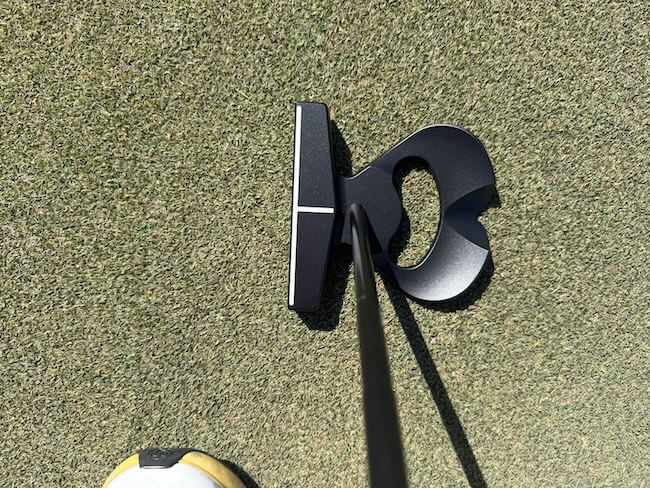
Aesthetics and feedback may be the make-or-break factors for many golfers considering the Directed Force 2.1. Let’s address all three honestly.
The look is unconventional—there’s no sugarcoating it. The head resembles what some golfers describe as a “branding iron” or “alien spaceship.” It’s a massive, deep-cavity design with center-shafted geometry that frames the ball differently than other putters. The available colors (black, red, blue) and wide range of alignment markings help personalize the appearance, but the fundamental shape will always stand out in your bag.
At impact, the feel is firm but not harsh. The aluminum head produces a slightly higher-pitched sound on center strikes—some describe it as muted but somewhat “tinny” compared to steel or insert putters. When you miss the center, the pitch and timbre change noticeably, providing feedback on strike quality.
After testing several LAB putters with different shaft options, I can tell you the the shaft you choose will definitely change the sound of the putter.
The steel shaft produces the somewhat "tinny" sound, while my favorite, the TPT shaft, produces a very subtle click, which I prefer.
Better players may pick up subtle feedback differences from sound and feel on various strikes. However, most mid and high handicap golfers will mainly notice that misses still roll close to the intended target line. The forgiveness essentially masks imperfect contact from a results perspective.
Your playing partners will probably comment on the appearance—expect some jokes about the unusual shape. But opinions often soften dramatically once they see your putts dropping and your lag putting finishing consistently near the hole. Performance has a way of silencing aesthetic critics.
Who Is the LAB Directed Force 2.1 Best For?

The ideal DF 2.1 player prioritizes results over appearance and struggles with face control, especially from mid and long range.
This putter suits golfers who:
- Fight face rotation during the putting stroke
- Struggle with distance control on lag putts
- Want to eliminate variables from their technique
- Are willing to accept non-traditional looks for better performance
- Would benefit from a forgiving putter that performs well with toe and heel strikes.
Both low handicap and high handicap golfers can benefit from the DF 2.1. High handicappers often see immediate help in distance control and three-putt reduction. Low handicappers appreciate the consistency under pressure when the greens speed up.
Golfers who strongly prefer a classic blade putter appearance or enjoy feeling the toe release during the stroke may be happier with a Scotty Cameron Newport or Newport 2.
The Directed Force 2.1 specifically rewards players who want a “point and roll” sensation. Set it down, trust the lie angle balance, and focus entirely on speed rather than face manipulation. If that sounds appealing, this is your new putter.
Pros, Cons, and Final Verdict
Advantages:
- Exceptional stability from lie angle balance technology
- Elite long-range performance (tested 2nd from 20 feet)
- Highly forgiving on heel and toe mishits
- Fully customizable fits, alignment options, and putter grips
- Proven success in independent testing
- Custom fitting included in purchase price
The LAB Golf Directed Force 2.1 is absolutely worth considering if you value consistency over conventional looks. It finished 2nd from 20 feet in independent mallet testing and delivers exceptional stability that most golfers will notice immediately on lag putting.
This is not a cheap putter, at around $399.99 for a standard custom build, this is firmly a premium mallet putter.
Drawbacks:
- Divisive appearance that many golfers initially dislike
- Non-traditional feel and sound compared to steel or insert putters
- Weaker out-of-the-box performance on short putts until the player adjusts
- It is expensive, with a premium price around $399.99 / £389.00
Overall Verdict: The LAB Golf Directed Force 2.1 earns 4.5/5 for performance while sitting closer to 3.5/5 for aesthetics—depending entirely on personal taste. The technology works exactly as advertised, and the performance data backs up the claims.
Players willing to go through a proper LAB fitting and invest a few practice sessions recalibrating their eye will likely see tangible improvement in putting stats. The gains are most dramatic in the 10-30 foot range, but the overall consistency boost affects your entire game on the green.
The best putter for you is ultimately the one that helps you hole more putts and reduce three-putts. I love my Taylormade Spider Tour X putter and my LAB Mezz Max, but they are not as forgiving as the DF2.1. If you care more about rolling the golf ball close than how your club looks in the bag, the LAB Golf Directed Force 2.1 belongs on your shortlist. Pick one up, give yourself time to adapt on the course, and let the results speak for themselves.
