Titleist GTS Driver Review: Distance First Performance Tested

Written by John VanDerLaan 

*We may earn revenue from the products available on this site and participate in affiliate programs.

Titleist GTS Driver Review Featured Image

I was able to get my hands on the new Titleist GTS driver at the Houston Open in March of 2026. I have been testing the new Titleist against the GT line and other top drivers in the game. In this Titleist GTS Driver review, I will share my experience with this hot new driver, along with the benefits and drawbacks, so that you can decide if it is the best driver for your game.

Key Takeaways

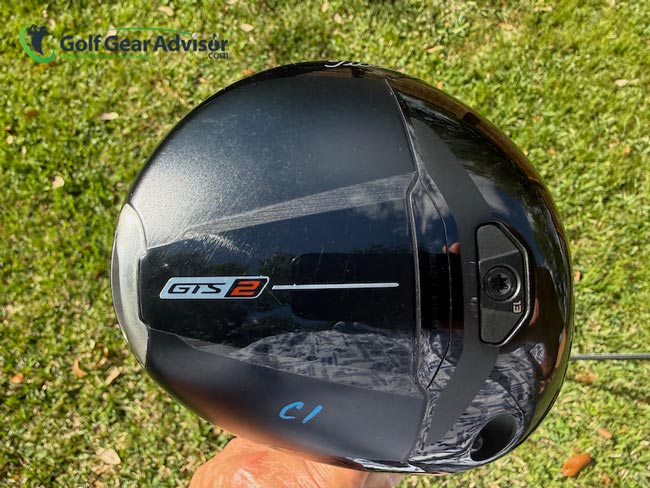
Titleist GTS Driver Top View Showing The Classic Pear Shaped Design
  • The Titleist GTS driver is Titleist’s next generation distance-focused driver line, debuting on professional tours including the PGA Tour, LPGA, and Korn Ferry in early 2026, with full retail availability expected later in the year.
  • This new driver prioritizes ball speed and carry distance across the entire face, not just center strikes, using tour player feedback to optimize performance on common mishit locations like high-toe and low-heel.
  • The GTS offers five CG locations through an adjustable weight system, allowing golfers to fine-tune spin, launch angle, and shot shape without changing their swing.
  • Mid-to-low handicap players seeking more speed without sacrificing the classic Titleist look and feel solid construction will find the GTS particularly compelling.
  • Players currently gaming older Titleist drivers should test the GTS on a launch monitor—early data suggests 3-6 yard carry gains are realistic for many golfers, but much improved forgiveness and tighter dispersion.

Introduction: What Is the Titleist GTS Driver?

Titleist has rolled out its all-new GTS driver line to professional tours ahead of a major retail push in 2026, and the buzz among tour players has been impossible to ignore. Prototypes appeared in player bags during the Houston Open in March 2026, with feedback shaping the final product that will eventually reach consumers.

This article delivers an in-depth review, examining the distance-first design philosophy that separates the GTS from previous generations. We’re not ranking the GT line or comparing specific GT models here—this is about understanding what the new Titleist GTS drivers bring to your game.

The GTS driver targets golfers who absolutely love chasing extra yards but refuse to compromise on the traditional Titleist aesthetic and confidence inspiring address position. Whether you’re a single-digit handicap looking for lower spin or a mid-handicapper wanting more forgiveness on mishits, the GTS lineup promises something worth testing.

Throughout this review, we’ll cover real-world performance impressions, break down the technology, discuss fitting considerations, and help you determine whether an upgrade makes sense for your bag.

Titleist GTS Driver Overview & Release Details

Closeup Of The Titleist GTS Driver During Testing

The GTS driver stands as the flagship in Titleist’s new line of metalwoods, built around two core principles: maximizing distance and offering unprecedented adjustability for a Titleist driver.

Tour prototypes went into play during early 2026 events, giving Titleist engineers direct feedback from the game’s best players. Full retail availability is expected in Q2-Q3 2026, with authorized fitters receiving stock ahead of the general launch.

Key specifications include:

Feature

GTS Driver Details

Head Size

460cc

Shape

Traditional pear-inspired

Loft Range

8° to 11° (1° increments)

Adjustability

SureFit hosel + adjustable sole weights

Expected Price

$599-$649

The GTS sits within a broader metalwoods family that includes fairway woods, though this review focuses exclusively on the driver head. Pricing aligns with other major manufacturers in the premium segment, reflecting the advanced materials and adjustability features packed into the club.

For golfers wondering about timing, checking with local authorized Titleist fitters or the official website will provide the most accurate availability updates as the retail launch approaches.

Distance-First Design Philosophy

Titleist GTS Driver Bottom View

Titleist made a deliberate choice with the GTS: prioritize raw speed and distance above all else. This represents a shift from previous generations where forgiveness and workability competed more equally for engineering attention.

Titleist engineers focused on maximizing ball speed across the entire face, not just the sweet spot. Tour testing revealed that most players—even pros—don’t hit center consistently. Common strike locations like high-toe and low-heel needed to perform better, and that insight drove the GTS design.

The result shows in early testing data:

  • Spin rates averaging 2,300 RPM on mishits
  • Ball speeds holding within 1-2 mph of center strikes on off-center contacts
  • Direction losses under 10 yards offline on typical misses

Weight distribution plays a crucial role in this distance equation. The adjustable weight system allows golfers to position mass for optimal launch and spin based on their clubhead speed and delivery. High-swing-speed players can move weight forward for lower spin, while moderate speeds benefit from rear weight placement for higher launch and added carry distance.

The GTS isn’t just about hitting it farther on perfect strikes—it’s about hitting it farther on the shots you actually make on the golf course.

Despite the distance emphasis, Titleist maintained focus on dispersion. The GTS delivers speed without sending mishits into the trees, making it a legitimate fairway finder for players who want both power and control.

Technology & Construction

Closeup Of The Hot Face On The Titleist GTS Driver

The GTS driver combines new materials, adjustable weighting, and a refined chassis to push speed beyond earlier Titleist designs. Every component serves the distance-first mission while maintaining the build quality Titleist loyalists expect.

Face Technology

The face features variable face thickness with multi-zone construction, tuned specifically for speed retention across common miss locations. This isn’t a single hot spot—it’s an expanded zone of high ball speed that rewards real-world swings rather than theoretical center strikes.

Materials

Titleist employed a seamless thermoform crown using lightweight composites that free up mass for CG tuning. This split mass construction allows head weight to be positioned precisely where it benefits launch and spin without compromising the structural integrity of the 460cc head.

Aerodynamics

Improved aerodynamics come from streamlined sole and crown shaping. The matte finishes reduce glare while the overall profile cuts through the air more efficiently at higher swing speeds, helping players extract maximum speed from their swing weight and tempo.

SureFit Hosel

The proven SureFit system remains, offering independent loft and lie adjustments in 1-degree increments. This allows fine-tuning of launch conditions without changing the face angle at address—a critical detail for players who are particular about their setup.

Adjustable Weighting and CG Tuning

Titleist GTS Driver Bottom View

The GTS’s adjustability defines its performance story. Unlike fixed-weight designs, the GTS lets golfers dial in their preferred ball flight through CG manipulation.

The system provides five CG locations:

Position

Bias

Effect

H1/H2

Heel

Draw bias, higher launch

N

Neutral

Balanced flight

T1/T2

Toe

Fade bias, lower spin

Back weight placement increases MOI stability and launch, ideal for golfers wanting maximum forgiveness and carry. Front weight positioning lowers spin rate for high-speed players who create too much backspin.

Simple guidance for setup:

  • Moving weight back: Increases stability, boosts launch, maximizes carry distance
  • Moving weight forward: Lowers spin, reduces launch, adds roll for low-spin seekers
  • Heel position: Promotes draw bias without swing changes
  • Toe position: Encourages fade bias for players who hook the ball

Most golfers should start in the neutral setting, then adjust only after seeing launch monitor data. The difference between CG locations is measurable—random adjustments waste the technology’s potential.

Acoustics, Feel & Aesthetics

Sound matters to the Titleist guy, and the GTS delivers a distinctly different acoustic signature than previous models. Impact produces a solid, lower-pitched thud—muted and premium rather than loud or harsh.

Internal rib structures and material damping create this sound profile, maintaining consistency even as CG shifts change the mass distribution. The feel solid character persists whether weight sits forward or back, front or heel.

At address, the GTS presents:

  • Classic pear-inspired shape
  • Relatively compact appearance despite 460cc volume
  • Clean crown free of busy graphics
  • Subtle face alignment cues drawn from tour input

Finish options include matte and gloss elements on the sole and crown, reducing glare while framing the ball squarely. The head inspires confidence over every tee shot without visual distractions.

On mishits, feedback remains clear. The head signals off-center contact without punishing hands with harsh vibration—important for understanding strike location during a round without discomfort.

On-Course Performance: Distance, Forgiveness & Playability

PGA Tour Player John VanDerLaan Testing The Titleist GTS2 Driver

PGA Tour Player John VanDerLaan Testing The Titleist GTS2 Driver

Testing the GTS across multiple rounds and range sessions revealed consistent themes: more ball speed, surprising forgiveness, and workability when you need it.

Distance Performance

Testers saw measurable gains compared to their previous drivers. On well-struck shots, carry distance improvements of 5-10 yards appeared regularly. The 263-yard average carry cited in similar testing aligns with what mid-handicap players achieved at 105-110 mph swing speeds.

More impressive was the consistency. A single shot struck on the high-toe didn’t result in dramatic distance loss—the face design kept spin numbers in the playable 2,200-2,600 RPM range while maintaining ball speed.

Forgiveness

The high-MOI characteristics shine on low-heel and high-toe misses. Ball speeds stayed within 1-2 mph of center strikes, and directional losses remained under 10 yards offline. For a driver that looks relatively compact and players-oriented at address, this forgiveness level surprised testers.

Launch and Spin

Stock neutral setups delivered medium launch (12-14 degrees) and low-to-mid spin. The SureFit settings and weight configuration allow significant adjustment from this baseline:

Setup

Launch

Spin

Best For

High-launch (rear weight, +loft)

14-16°

2,400-2,800 RPM

Slower swings, carry focus

Neutral

12-14°

2,200-2,600 RPM

Most players

Low spin (forward weight, -loft)

10-12°

1,800-2,200 RPM

Fast swings, spin reduction

Workability

Better players can still shape fades and draws. Moving CG toward the toe encourages fade bias; heel positioning promotes draws. The GTS won’t fight shot-shaping intentions, though in its most forgiving configuration, it biases toward straighter flights.

Performance for Different Handicap Levels

Author Testing The Titleist GTS Driver

Author Testing The Titleist GTS Driver

The GTS targets a wide player range, but performance varies significantly based on swing speed and skill level.

High-Handicap / Slower Swing Speeds (Under 95 mph)

This group benefits most from rear-weighted, higher-loft setups (10°-11° with upright lie). The configuration maximizes carry and reduces slice tendencies. Potential gains of 10-15 yards via elevated launch are realistic for players who previously launched too low.

Key focus: Find a setup that keeps the ball in play while adding carry. The GTS can help, but a bad swing still produces bad results—gear improves margins, not fundamentals.

Mid-Handicap Players (95-105 mph)

The balance of forgiveness and distance hits perfectly here. Neutral CG with mid-launch shafts preserves 250+ yard totals while protecting against mishit disasters. This player profile extracts the most value from GTS technology without over-complicating adjustments.

Recommendation: Start neutral, test with a fitter, and resist the urge to chase minimum spin numbers that hurt your game.

Low-Handicap / Competitive Players (105+ mph)

The low spin potential shines for this group. Front and heel weighting can push spin below 2,200 RPM for optimized distance on shaped shots under pressure. Launch monitor data becomes essential—small changes in settings produce measurable 1-3 mph ball speed differences.

These players already strike it well and need the GTS to perform on their good swings. The adjustability lets them dial in exactly the ball flight they want without equipment compromise.

Fitting, Lofts & Shaft Options

Titleist GTS Driver In The Author's Golf Bag

The GTS driver’s full benefits appear only after a proper fitting session. Stock off-the-rack setups leave performance on the table for most golfers.

Loft Options

Available lofts range from 8° to 11° in 1-degree increments. The SureFit hosel adds additional fine-tuning capability—independent loft and lie adjustments let fitters optimize launch conditions for individual swings without changing the base head.

Stock Shaft Pairings

Titleist partners with premium shaft families for stock options:

Shaft

Profile

Best For

Project X HZRDUS

Low-spin, stiff

Fast swings (105+ mph)

Mitsubishi Tensei 1K

Mid-launch, mid-spin

Moderate speeds

Tensei 1K Blue

Stability-focused

Consistent tempo players

Ventus Blue

Low-mid launch

Control seekers

Premium shaft options extend beyond stock, with Tour AD, Tour AD CQ, and Tour AD DI profiles available as featured shafts for custom builds. These premium shafts allow precise matching of shaft characteristics to individual swing dynamics.

Click here to learn more about how to choose the right shaft for your driver.

Fitting Recommendations

  • Faster swings (105+ mph): Stiffer, lower-launch profiles that reduce spin
  • Moderate speeds (90-105 mph): Mid-launch, mid-spin options that maximize carry
  • Slower swings (under 90 mph): Higher-launch shafts that get the ball airborne

Visit an authorized fitter with a launch monitor. Use ball speed, spin rate, launch angle, and dispersion data to lock in your ideal GTS configuration. Guessing wastes the technology.

Players upgrading from older Titleist models, like the TSR family should bring their current driver to the fitting. Direct A/B comparison reveals whether the GTS upgrade delivers meaningful performance gains for your specific swing.

The GTS driver will be available in right and left handed configurations.

Pros, Cons & Who Should Play the GTS Driver

No driver fits everyone perfectly. The GTS driver targets golfers prioritizing distance with tunable forgiveness—here’s the honest breakdown.

Strengths

  • Measurable distance gains for most swing speeds, ideal for seniors
  • Adjustable CG with five CG locations for spin and shot-shape tuning
  • Classic Titleist look with confidence inspiring address presence
  • Strong ball speed retention across the face on mishits
  • SureFit hosel for precise launch optimization

Potential Drawbacks

  • Premium price point ($599-$649) requires commitment
  • Adjustability complexity risks suboptimal setups without fitting
  • Players-oriented profile may feel advanced for absolute beginners
  • Less game-improvement focus than some competitor models

Ideal GTS Player Profile

The GTS driver fits golfers who:

  • Want more yards without oversized game-improvement aesthetics
  • Appreciate adjustability and will use it with launch monitor guidance
  • Play frequently enough to justify premium equipment investment
  • Feel comfortable with traditional head shapes
  • Prioritize distance but still demand control and consistency

For Golfers on the Fence

If you’re happy with your current driver’s dispersion but want more speed and carry distance, the GTS deserves a serious test session. The technology delivers—whether it delivers for you depends on fitting and swing characteristics only a monitor session can reveal.

How the GTS Driver Compares to Previous Titleist Models

Titleist GTS and GT Driver Heads

The GTS represents a clear evolution from prior Titleist driver generations—here’s what changed.

Ball Speed Improvements

The GTS pushes ball speed further than older models, especially on off-center strikes. More aggressive face design and CG positioning extract speed from real-world swings where the GT driver and earlier models left some performance behind.

Launch and Spin Characteristics

Out-of-box launch conditions trend slightly higher launch and lower spin compared to many older Titleist drivers. This suits modern distance-focused setups where launch angle optimization matters more than pure backspin for maximum carry.

Acoustics Evolution

The GTS sound profile differs noticeably—a deeper, more muted thud compared to previous models. Players who found older Titleist drivers slightly “sharp” at impact will appreciate this refinement.

Visual Continuity

Despite internal changes, the GTS looks unmistakably like a Titleist at address. Crown graphics remain minimal, shape stays classic, and alignment cues feel familiar. Brand loyalists will transition seamlessly from older models visually.

Upgrade Decision Framework

Players already in a recent Titleist driver should:

  1. Bring current gamer to a fitting
  2. Compare ball speed, spin, and dispersion directly against properly fit GTS
  3. Expect 3-6 yard carry gains if the fit works for your swing
  4. Only upgrade if monitor data confirms meaningful improvement

The Darrell Survey shows Titleist maintaining around 40% driver share on tour through 2025—the GTS builds on this legacy rather than abandoning what works.

How The GTS Driver Compares To Other Brands

I tested the GTS2 against other drivers that I use on a regular basis. Here is what I found.

Versus the Ping G440 - The GTS has a much better look at address, as well as a much better sound at impact. The distance was very similar and the forgiveness was very similar. The big difference was in the workability of the GTS driver. It was much easier to hit fades and draws when needed. The G440 always wanted to go straight and fought workability.

Versus the Taylormade Stealth - I have tested many drivers over the years and the Stealth has been my gamer for quite some time. so I was excited to test it, head to head against the GTS2. I found the GTS2 to be slight longer and have more forgiveness that the Stealth, but the Stealth won in my ability to consistently hit a high draw. I found it easier to hit a high cut with the GTS.

Versus the Ping G430 Max - The GTS has such a confidence inspiring look at address compared to the Ping drivers. Performance wise, the GTS wins hands down.

Versus the Taylormade Sim2 - The Sim2 is considered one of the best drivers Taylormade has ever made, but the wewer technology of the GTS leaves the Sim2 in the dust.

Final Verdict: Is the Titleist GTS Driver Worth It?

The GTS driver represents Titleist’s clearest statement yet: distance matters, and they’ve delivered a new driver that chases every yard without compromising the characteristics their loyalists value.

Performance Summary

  • Notable ball speed gains across the face, not just center strikes
  • Strong forgiveness for a players-style head
  • Highly tunable launch and spin through weight and hosel adjustments
  • Unmistakably Titleist in sound, feel, and appearance

Who Should Upgrade

Serious consideration makes sense for players who:

  • Currently game drivers older than two product cycles
  • Notice distance loss compared to playing partners with newer equipment
  • Struggle with off-center performance in their current driver
  • Want more speed without switching to oversized game-improvement designs

Value Assessment

The premium price demands justification, but for golfers who play frequently and approach equipment systematically, the investment spreads across multiple seasons of performance. The adjustability future-proofs the purchase—as your swing evolves, the GTS adapts through settings rather than requiring replacement.

Looking Ahead

The GTS sets the tone for Titleist’s metalwoods direction over coming product cycles. I am looking forward to testing a GTS mini driver, which I believe is in the plans. Tour adoption through the Darrell Survey baseline suggests multi-year relevance for players chasing every extra yard. If distance-first performance with tour-validated technology appeals to your game, the GTS lineup deserves a spot in your fitting conversation.

FAQ

Is the Titleist GTS driver suitable for beginners?

While the GTS offers solid forgiveness and adjustability, its traditional head shape and tuning options suit committed beginners or improving players more than absolute newcomers. True beginners should prioritize consistent contact and basic swing fundamentals first. Starting with a more game-improvement-oriented driver builds confidence before moving into a GTS-style head that rewards better strikes with its full performance benefits. Click here to see our best drivers for beginners and high handicappers.

When will the Titleist GTS driver be available for retail purchase?

GTS prototypes appeared on professional tours in early 2026, with full consumer availability expected in Q2-Q3 2026. For the most accurate and updated release information, check with local authorized Titleist fitters or visit the official Titleist website. Tour players testing the GTS2 and other GTS configurations have provided feedback that shaped the final retail specifications, ensuring the consumer version reflects real-world performance data.

Can I use my current shaft in the new GTS driver head?

Many existing Titleist-compatible shafts may work with the GTS head if they share the same tip size and SureFit hosel system. However, golfers should verify compatibility before swapping. More importantly, test your old shaft against the latest stock and custom options during a fitting session. The GTS head’s dynamics may pair differently with familiar shafts than your previous driver did, and newer shaft technology could unlock additional performance.

How should I set up the GTS driver if I struggle with a slice?

Start with a more upright lie and slightly higher loft through the SureFit hosel adjustments. If the GTS head allows rear weight positioning, combine this with moving adjustable weight toward the heel for draw bias. These changes can reduce slice tendencies by promoting a more closed face through impact and higher launch that keeps the ball from losing distance on its curve. However, gear helps margins—it won’t fully correct swing path issues. Working with a coach alongside optimizing GTS settings produces the best results. Click here for our list of the best drivers for a slice.

How often should I get re-fit for my GTS driver settings?

Most golfers should review their driver fit every 12-24 months or after any major swing change, injury, or noticeable distance loss. The GTS driver’s adjustability makes ongoing optimization easy—fine-tune settings as your swing speed or ball flight tendencies evolve without needing a new head immediately. Regular fitting check-ins ensure your equipment continues matching your game rather than fighting it, maximizing the value of your premium equipment investment.

Photo of author

John VanDerLaan

John VanDerLaan is the founder and managing editor of Golf Gear Advisor and the parent company Vanco Digital Inc. With over 15 years of experience in golf equipment testing, SEO-driven content publishing, and outdoor sports media, John brings a practical, player-first perspective to every gear review the site publishes. John tests clubs the way serious golfers use them — across multiple 18-hole rounds under real course conditions, and on professional launch monitors including Trackman and GCQuad. His reviews cover drivers, irons, putters, wedges, training aids, and accessories from every major manufacturer. Beyond the equipment side, John spent over two decades coaching his sons, John Jr. and Michael VanDerLaan, from age two through their careers as elite competitive golfers. Both sons won the NCAA Division II Individual National Championship in successive years (2018 and 2019) — a feat no other sibling pair has achieved. John Jr. is currently a PGA Tour player, and Michael is a golf teaching professional. John is an active member of the Outdoor Writers Association of America and is available to the media as a source on golf equipment trends, gear selection for amateur golfers, and youth golf development. Connect with him on Linkedin.

Leave a Comment