
Written by Michael VanDerLaan and John VanDerLaan
*We may earn revenue from the products available on this site and participate in affiliate programs.
In today's game, golf club technology has come a long way. While the putter may seem like the simplest tool in the bag, there have also been great strides made in engineering new designs and subtle changes to classic models in order to give the golfer that all-elusive consistency. The reality is that the putters today really are more forgiving than the ones your grandfather used.
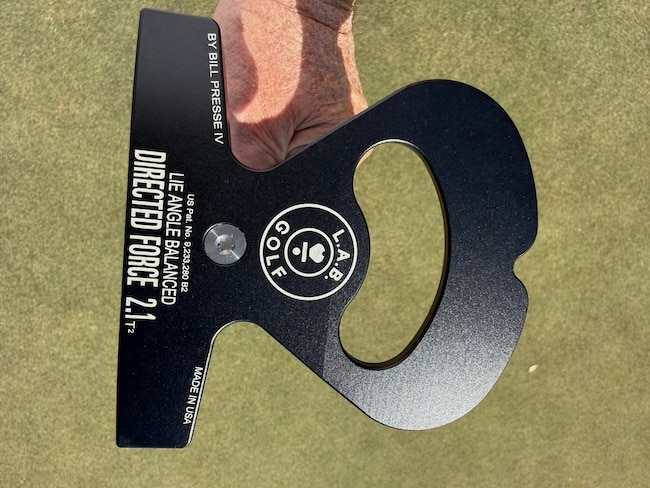
The most forgiving putter in 2026 is the LAB Golf Directed Force 2.1.
In this article we’ll take a look at the most forgiving putters and what makes them different from their peers.
most Forgiving of all time
LAB directed force 2.1 zero torque
Pros:
Cons:
Runner Up
LAB DF3 Zero Torque Putter
Pros:
Cons:
Most Forgiving Taylormade
Taylormade Spider Tour X Putter
Pros:
Cons:
Our staff consists of a PGA Tour Player, John VanDerLaan, a golf professional and instructor, Michael VanDerLaan and a single digit handicap golf coach, John Sr.
All three of us test each putter and then we bring in mid and high handicap friends to help us test and get their perspective on each putter.
We test each putter on the practice putting green and then evaluate the putter through at least one 18 round of golf.
Each putter is rated on five characteristics, giving each putter a score between one and five ( 1 = lowest score and 5 = highest score). This gives a total score out of 25 for each tester which is averaged to give us the highest scoring putters.
We rate the putters on these five characteristics:
- Forgiveness: The putter performs well on off center hits, maintaining speed and staying on line..
- Feel & Sound: The putter provides provides great feel and a satisfying sound at impact.
- Alignment: The putter provides good alignment aids.
- Stability: The putter head is stable throughout the stroke.
- Roll: The putter produces a quality roll that minimizes skidding and bouncing, keeping putts on line and speed consitent.
Where Do We Test?
We test all the putters at various courses in Naples and Fort Myers Florida, where we live. Some of these courses have very fast greens and some have slow greens. This allows us to see how each putter performs in different conditions.
Golf Ball
To make sure that all testing is consistent, we always test with Titleist Prov1 and Prov1x golf balls.
Most Forgiving Putters At A Glance
Reviews And Recommendations
There are 2 things that are really important when talking about the most forgiving putters.
- A high Moment of Inertia (MOI) rating when compared to other similar putters on the market.
- A good looking putter that appeals to the eye of the user while incorporating forward thinking technology.
These are the main things we looked at while testing putters to compile this list. We discuss these factors as well as general feel to fully encompass the experience with each putter.
L.A.B Directed Force 2.1 Putter
Our Rating 5.0
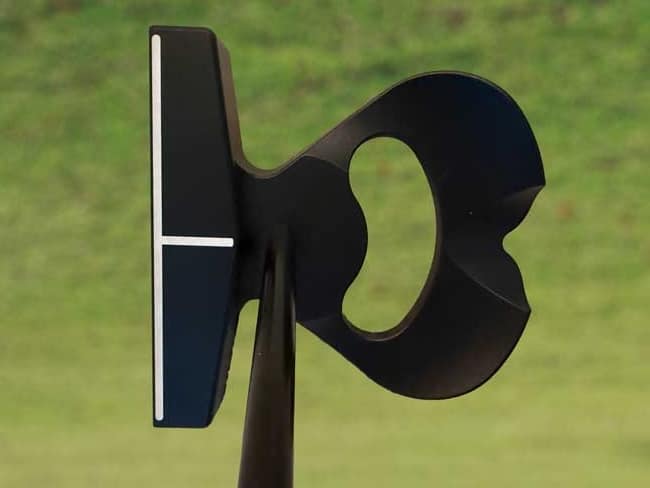
L.A.B. Directed Force Putters present a unique twist (pun intended) on the traditional futuristic mallet designs with their special weighting known as Lie Angle Balancing.
These putters have the weight and shaft attachment point custom distributed to achieve a brand new effect known as lie angle balancing. Rather than having toe-hang or strictly face-balancing as most traditional putters are classed, these putters stay perpendicular to the arc due to their unique weighting that takes away twisting of the putter head, completely dialing in the effect sought after by the other toe hang option.
In simpler terms, the putter is designed to help you keep the face square to the arc of the stroke all the time.
Pros
Cons
While the technology and unique design of the heads has not caught on on TOUR yet, it is used by some notable golfers at the highest level, such as Adam Scott.
This was the best putter for distance control and lag putting that I tested. Even off center hits resulted in really good putts.
This was the most forgiving putter that we tested and is a great option for all ages of golfers.
There is a learning curve with this putter. We have been conditioned over the years, to manipulate the putter face when making a putting stroke. With this putter, you have to learn to not manipulate the putter, because the putter face stays square by default.
Click here for our full review of the LAB Golf Directed Force 2.1 Putter
L.A.B DF3 Putter
Our Rating 4.9
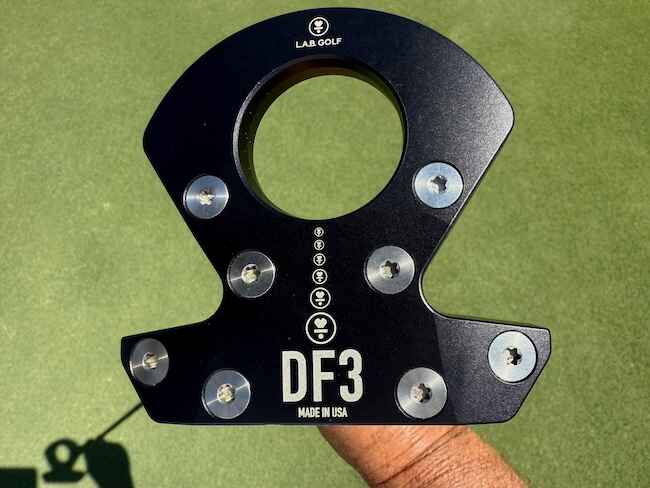
The LAB Golf DF3 is the little brother of the DF2.1 above. It is much smaller and easier to look at than the DF2.1, but it is not quite as forgiving.
The DF3 features all of the same technology as the Directed Force 2.1. The same Lie Angle Balance, same zero torque and same press grips, but in a smaller package.
I have tested both extensively and I actually use the DF3 as my gamer now. Even though it is slightly less forgiving than the DF2.1, I find that I make more putts with the DF3.
I have also tested the LAB oz.1 and Oz.1i and the Mezz.1 Max, but they are not as forgiving as the DF3 and DF 2.1.
Pros
Cons
We have been taught for so long that we have to manipulate the putter to keep it square to our target line, that we now have to learn to just let the putter stay square with the LAB DF3. Once you learn to stop manipulating the face, you are going to find that this putter is as close to automatic as you will ever see.
Click here to read my full review of the DF3 after more that 50 rounds of testing and use.
Odyssey Ai One Square To Square Jailbird Putter
Our Rating 4.9

Zero torque has become all the rage in the putter market and the Odyssey Ai One Square To Square Jailbird Putter sits at the top of the list with its face balanced design.
Zero torque works best with larger mallet putters, which translates into high MOI and super forgiving designs, and promotes a straight back straight through putting stroke, which keeps the putter face square to your start line.
The Odyssey Ai One putter features a 3 degree forward press, which provides exceptional feel and a more consistent roll, with no hopping or skidding, but it can take an adjustment period to get used to.
Pros
Cons
The Odyssey Ai One Square To Square Jailbird Putter is an exceptionally high-MOI putter that helps improve forgiveness on off-center strikes. It features some of the best new technology in more than 20 years.
Put one in your bag and watch your putting improve.
Click here to see the results of our testing and our full review of the Odyssey Ai One Square 2 Square Jailbird putter.
Cobra 3DP Tour Agera Putter
Our Rating 4.9
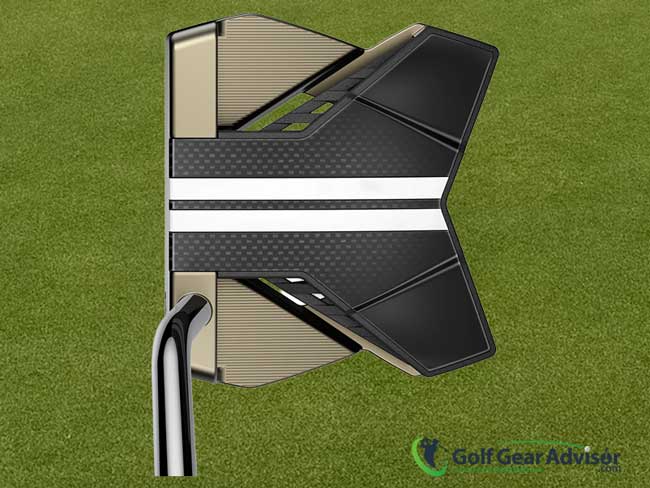
For a long time, the cutting-edge putters have been dubbed “spaceships” for their large and elaborate designs often featuring intricate shapes. The Cobra 3DP Tour Agera putter really takes that to the next level, including some truly space-age designs.
This putter features a multi-material 3D-printed design, including a nylon lattice structure inside the body of the putter. This is remarkable because it allows engineers to move even MORE weight around to the outside of the putter, creating even more stability. This putter truly is maxed-out for forgiveness.
Pros
Cons
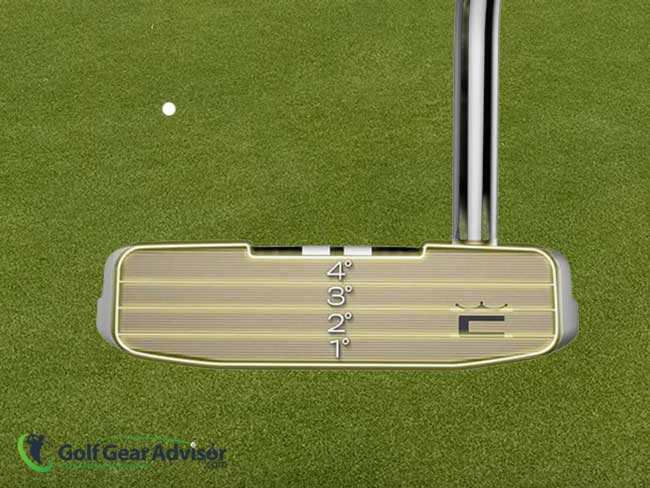
The other very cool thing about this putter is they bring the LA Golf descending loft face technology to a “big 5” brand in the form of an aluminum face insert. Not only does this insert give a different feel that some golfers may prefer to the more common polymer inserts, the ascending loft technology gives another level of forgiveness beyond just MOI by allowing for more even rolls no matter what loft is presented at impact.
Between the 3D nylon lattice and descending loft that are both geared towards making your ball roll straighter and more consistent, it's easy to see why the Agera is one of our top picks.
Click here to see our full review of the Cobra Agera putter.
TaylorMade Spider Tour X Putter
Our Rating 4.8
The TaylorMade Spider design has been one of the most copied and most innovative putter designs in the modern era.
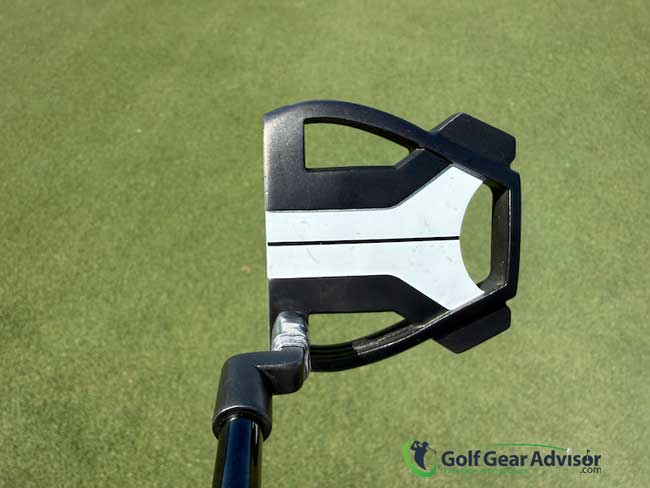
Taking the full mallet idea to an extreme, TaylorMade Spider putters are one of the original “spaceship” designs that really create a lot of space and widen the weight distribution as much as possible in the putter head, creating stability in the strike and consistency in the stroke with a low rate of twisting.
The Tour X model turns that on its head, offering a smaller mid mallet size for players coming from a traditional blade but looking for the forgiveness that a mallet provides.
The Taylormade Spider Tour X was made famous by Rory Mcilroy, as he has used this model to win multiple golf tournaments.
Pros
Cons
The Spider Tour X provides significant toe-hang for putters who want a max-MOI club head design but still naturally favor an arc stroke. It's no shock that the putter trusted by some of the top players in the world is firmly planted on our list.
Click here to read my full review of the Taylormade Spider Tour X putter.
Scotty Cameron Phantom 11R OC Putter
Our Rating 4.8
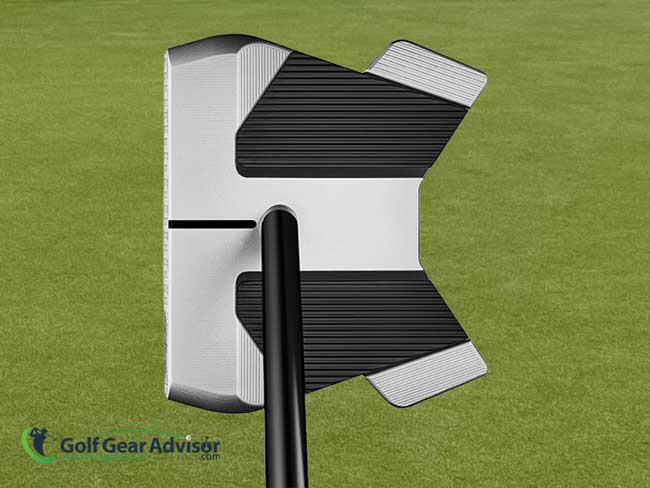
Scotty Cameron putters have basically invented an entire tier of their own when it comes to high-end putters. You are going to get the best of everything with a Scotty, including collectability and resale value to go along with best-in-class feel, functionality, and looks.
The Phantom 11R OC is their take on the zero torque and low torque designs that have dominated the high-MOI marketplace in recent years.
The difference with Scotty design is that they attempt to take all of the technology of the large “Spider” or spaceship style putters, like the EvnRoll ZT, and essentially hide that technology in a much more sleek, understated look, hence the “Phantom” moniker.
The OC stands for onset center, which means it is a center shafted putter and the shaft enters the putter behind the face.
Pros
Cons
A very simple and elegant look at address from the 100% milled putter belies the fact that it has one of the highest MOIs on the market and features two adjustable weight ports on the bottom.
All in all, a fantastic option for a forgiving putter if you are willing to fork over the cash.
Click here for our full review of the Scotty Cameron Phantom 11R OC Putter.
Odyssey Ai One Square 2 Square Double Wide Putter
Our Rating 4.5
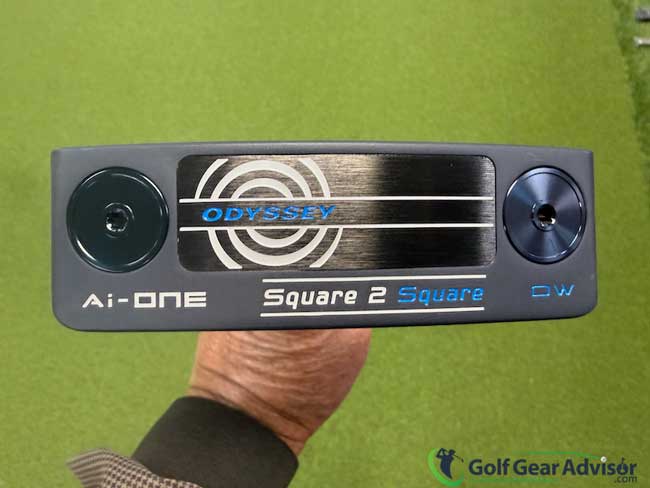
Blade style putters are not very forgiving, but some of you are looking for the most forgiving blade, and this is it.
We have tested hundreds of blade putters and the Odyssey Ai One Square 2 Square Double Wide is the most forgiving blade putter that we have ever tested.
Odyssey's Square 2 Square technology and Ai One insert both contribute to the forgiveness of this putter.
The Double Wide comes with a Stroke Lab 90 shaft and a Square 2 Square counterbalanced grip, which gives it great feel.
Keep in mind, that even though it is the most forgiving blade we have tested, it is still not nearly as forgiving as the top mallet putters on our list.
Pros
Cons
If you insist on a blade design, but are looking for the most forgiveness available in that style putter, you won't find a more forgiving blade than the Odyssey Ai One Double Wide.
Click here for our full review of the Odyssey Ai One Double Wide Putter.
Things To Consider When Buying A New Putter
These are the things that you need to consider when shopping for the most forgiving golf putters. This buying guide will be especially important for beginners and high handicappers.
Head Design
The head design is the overriding determining factor between various putter “styles.” In general, the heavier the head, the bigger the head, and the more forgiving the putter.
It should be noted here that the most forgiving putters are a mallet design. Blade putters just can't match the forgiveness of modern mallets.
Blade

Modern blade putters were once considered a huge improvement in forgiveness over their “bullseye” predecessors. The ability to carve some weight out of the back and move it to the edges and farther back in the body improved the ability of the putter to refrain from twisting during the putting stroke as well as through impact.
These modifications have basically been taken to more and more extremes as designers have come up with new metals to use and machines that can cut more and more elaborate designs, as well as ways to balance heavier and heavier putter heads, all in search of maximum MOI.
Nowadays, blade head designs are considered to be on the less forgiving end of the spectrum, typically, but have been enhanced by weight inserts, mixed materials, and face inserts milled in elaborate patterns all to make improvements in their forgiveness, as well, over past decades.
Mallet

The mallet is the first design to take forgiveness to the next level. The concept takes the ideas of the original Anser blade design and extends them to a whole new era of putters. These putters typically extend the rear flange of the putter well behind the head. This moves the center of gravity back and increases the moment of inertia - the tendency of the putter to stay on course during the putting stroke.
These putter heads also naturally are larger visually than blade putters, allowing for some very elaborate alignment aids, and weigh significantly more, lending themselves to shorter shaft lengths and larger grips, both of which also are considered to aid in forgiveness and consistency for many golfers.
Futurist(Extra Large)

The “Max MOI” or “Futurist” putter shapes are a brand new category that take the mallet concept into the next century and beyond with elaborate, intricate designs that often extend the head of the putter out into space and leave exotic holes with no material at all, again in an effort to distribute weight to the maximum degree while still not exceeding limits that feel balanced and controllable to the golfer.
These designs eschew all of the classic design norms to focus on one thing and one thing only: maximum stability. So why doesn’t everybody use these? Some golfers feel they sacrifice an ability to feel the putt, make athletic micro-adjustments in the putting stroke, and that the heavier heads limit their ability to control slight variations in touch required for lag putting and distance control on fast greens at a very high level.
Putter Shaft and Neck Styles
Center Shaft

While a center shafted putter might seem like the most obvious and normal place to start, these are typically looked at as kind of an odd ball or quirky design in the putter world. Most center shafted putters are naturally face balanced, but since putters are by rule required to have some angle in the shaft, nobody has a truly straight-back-straight-through putting stroke in theory, making some degree of offset or toe hang the norm.
Plumbers Neck

The plumber's neck hosel might be one of the most popular, again an invention of PING founder Karsten Solheim around the same time he designed the revolutionary Anser blade. This special bend in the hosel - resembling an L-shape bend in a pipe joint - allowed the putter to feel as if their hands were slightly ahead of the face as well as visually frame the ball.
The popularity of this design with a cavity back blade putter has been ubiquitous in golf for the past half-century and many golfers consider it the most normal, standard hosel design today.
Slant Neck
The slant neck hosel is a slight variation on the plumber’s neck. Instead of an L-shape the hosel bends at a consistent angle at the very end, creating an attachment point for the shaft that is again offset from the face. It is not mandatory but it is typical that a short slant neck will attach near the heel of a putter, creating a design with high toe hang.
Both the slant neck and plumber’s neck designs are not necessarily more forgiving on paper, but offset helps many golfers aim the putter at address and return the face square at impact.
Double Bend

It is one important point to note that the actual attachment point of the hosel to the putter face doesn’t necessarily dictate toe hang. It is actually where an extension of the shaft would intersect the face that determines the balance point. Enter the double bend putter hosel.
This genius invention allows the shaft to basically point near the middle of the putter, creating a face balanced putter, but attach closer to the heel, giving a better visual. The DOUBLE bend allows it to also attach with some offset (one bend away from center, one bend in away from the face).
Twist Neck
One elaborate neck style that you will see mostly in custom hand-made putters is the twist neck. This is a purely aesthetic design that was invented by Scotty Cameron.
In the early days of his putter design business, he would heat the neck up red-hot and twist it around in a spiral to show the durability of the solid one-piece milled designs he was creating. This became popular, and in addition to being requested as a custom add-on for one-off putters has been copied by other boutique manufacturers as well.
Shaft Length
In theory, shorter shafts are easier to control. In reality everyone is going to putt better with a shaft length that is properly in harmony with the other components of their club, and matches their natural body setup.
That said, some players do prefer to go with the shortest shaft they can get into comfortably, without sacrificing balance or creating an uncomfortable posture.
Materials
Generally, extra-large club heads are going to be made from lightweight aluminum, while smaller blade designs will be made from steel. This is simply to achieve the right balance in the club while changing the size and shape of the head.
Additionally, many high-end designs include some amount of tungsten weighting, to further redistribute weight to the outsides of the club, either built-in or in the form of removable weights.
Inserts

Regardless of head shapes and sizes, the other area manufacturers have focused on to improve putting consistency and forgiveness is in the area of the putter face. There are a few main technologies to focus on here.
The first is “simple” face milling which can take on elaborate patterns these days, in an attempt to give an even amount of topspin and get the ball rolling consistently with the help of a little bit of friction.
The next level of this is the LA Golf face technology where they actually have a face that is four different segments with different lofts, with the idea being that no matter what degree of shaft lean is delivered to the ball, the face will present the same launch angle at impact, increasing consistency in roll despite an inconsistent putting stroke.
The other big advent of the 21st century is the use of polymer face inserts. Urethane, durometer, and other fancy words basically try to achieve a “softness” to the face while also providing the friction of a milled metal putter face. These are also used in an attempt to match the change in impact dynamics from the modern golf ball in the “Pro-V1 era” of golf.
The most advanced of these designs attempt to combine multiple layers of face inserts or combine polymer with aluminum in order to achieve a very specific combination of forgiveness and feel.
Alignment Aids

On a blade putter style, this is limited to something as simple as a dot or a dash either on the top of the blade or on the back flange of the putter.
With the advent of the mallet and super-size mallets of today, the alignment aids have become a huge focal point of the club. With more “real estate” we can see everything from a humongous line all the way down the back to sets of parallel alignment lines - sometimes one large and others dashed, or three stripes as with Callaway’s “Triple Track” technology.
The most successful of all of these, however, may be Odyssey’s “2 Ball” design that presents a very unique way for the golfer to perceive alignment without feeling as technical as the lines and stripes of other models.
Grip

While not a rule, in general, more forgiving putters tend to be larger and have more weight, and they tend to have corresponding larger grips. That said, blade putters can have weight added to match a large grip, and traditionally thin “pistol” grips once popular with blade putters can be weighted to match a modern high-MOI, extra-large putter as well.
When it comes to forgiveness, there has been a huge shift in grip preference in recent years with the advent of the SuperStroke style putter grips. These have proven to be more than just a quirk or a fad and many rave about their ability to keep the hands stable in the stroke, improving forgiveness by using the “big muscles” in the shoulders to roll the rock.
Keep in mind, too, that the grip you put on your putter should match up with your putting grip style for best results!
Look
One of the main drawbacks of the high-MOI era, at least as far as traditionalists are concerned, is that some of the new-school putter designs are quite elaborate. While TaylorMade has embraced this and dubbed their multi-flanged design the Spider, Scotty Cameron has gone the other route and attempted to hide the alien-like technology in their Phantom putter.
At this point in golf history, and given that the vast majority of golfers and iconic golf moments have seen a very narrow array of putter designs, with the blade putter being the most common and also the thing that most golfers pick up first, it can be difficult for some to adjust. Others just feel more confident with a more streamlined design and feel they have greater control over their putts, regardless of MOI.
Generally, however, we can rest assured knowing that equipment manufacturers aren’t coming up with wilder and wilder designs unless there’s a technological reason to go with it, and there is probably little end in sight with people pushing the materials to make larger and larger mallets as well as other novel designs such as the L.A.B. technology that is now coming on the scene.
Feel

Feel vs. forgiveness is basically the age-old debate in any golf equipment sector. Generally most known club designs are going to represent a tradeoff between the two, with all clubs existing on a spectrum. And every year, manufacturers advertise that they are finally presenting us with a club that gives you the best of both worlds.
To this day, however, insistence remains that the larger putters, by the laws of physics, give us a resistance to twisting and swinging off-track also by definition give us less ability to feel the nuances in the stroke and fine-tune speed control that lightweight blade head users crave. Obviously it is possible to become a near-master with either design, but that is the one thing that those who eschew the high-forgiveness designs will point to.
Budget
Nowadays, almost all putter manufacturers will create an entire line of putters, covering small, medium, large, and extra large heads that exist on a range of forgiveness levels, and each of those will offer various hosel shapes to match corresponding arcs as well as their own proprietary face insert or milling technology. Conversely, the biggest, most forgiving head shapes are definitely not confined to only the high-end manufacturers, and there are budget options for any style.
RELATED: Are Expensive Putters Worth It?
The bottom line, however, is that the more elaborate high-MOI designs cost more to manufacture, and the more different materials that are used in the form of multi-layer faces and weight inserts, etc., also drive the price up. As with most industries, the tried-and-true classics are going to be more widely available while the designs pushing the envelope of the latest technology are going to be on the more expensive side of the spectrum.
FAQs
What does a forgiving putter mean?
In general, a forgiving putter means the ability of the face to resist twisting during the stroke and to resist being swung off of the pendulum arc that it starts on. Physically, both of these are dictated by MOI or moment of inertia, which corresponds to the weight (and therefore size) of the putter.
It’s almost possible to make the blanket statement that bigger is more forgiving. These putters also tend to create more consistency off the face since the distribution of the mass makes it less likely for an off-center strike to start on a bad line.
The other area where manufacturers try to turn the screws on the forgiveness meter is in the design of the face. This could be as simple as milling a pattern on the face to produce a consistent roll or the slightly more elaborate method of adding a face insert of various different materials or layers that creates similar “soft” impact dynamics across the face.
What putters are most forgiving?
The most forgiving putters tend to be the ones with bigger club heads, like mallets or the more futuristic styles.
The quest for forgiveness and consistency in the putter world has been almost synonymous with the quest to build bigger and heavier putter heads. This started when brands began going from bullseye putters to the cavity back blades of the Anser era. Then came mallet putters that pushed the limits of how big and heavy and widely distributed the mass of the club head could be with conventional materials. Recently manufacturers have started into aluminum designs with huge cavities and tungsten perimeter weighting and even 3D printing to make the most efficient use of materials.
While not a hard-and-fast rule, the reason for making putters larger in the first place is to improve forgiveness first and foremost so those head designs are favored by golfers looking for consistency in stroke over all else.
Which Scotty Cameron putter is most forgiving?
The most forgiving Scotty Cameron putter is the Phantom 11R OC. It is a super high MOI putter with face balanced technology.
Is Scotty Cameron Newport forgiving?
The Scotty Cameron Newport putter is not very forgiving. While it is a great putter, forgiveness is not what it is known for. It is a blade putter that works best when you hit the ball with the sweet spot of the putter. The sweet spot is very small on The Newport and Newport 2 putters.
Is a mallet or a blade more forgiving?
A mallet putter is generally more forgiving than a blade putter.
The entire reason why mallet putters were invented was to continue to evolve the forgiveness both in the stroke and on off-center hits. While there may be some personal preference involved or something that matches well with the golfer who uses a blade design, larger mallet heads are technically more forgiving.
A blade putter demands more control over your stroke and an ability to strike the ball consistently in a smaller sweet spot.
Final Thoughts
It’s amazing how much engineers can come up with when it comes to the demands of the modern golfer to help them with their game. Both at the professional and amateur level, putting continues to drive golfers crazy. Putters are probably the number one most tinkered-with club in all of golf, at all levels of the game.
Equipment manufacturers have tried to filled this void, coming up with lots of tricks to tease more and more forgiveness out of putters each year. Some of the designs have become so outrageous looking that even the most die-hard traditionalists have surely picked up a Futura or Phantom or Two Ball putter and thought how ordinary even a regular mallet putter looked in contrast.
The reality is that these innovations have not just been in vain, they represent actual improvements in materials and the ability to shape those materials into shapes that are, by the laws of physics, able to offer more to golfers of all levels. That means an ability for the putter to start on line, stay on line, stay pointed where you intended it, and give a consistent roll no matter where you hit it on the face. These are all huge factors for the golfer, whether pro, beginner or high handicapper, and there have been massive strides made in the past couple of decades when it comes to MOI and face inserts, with things like tungsten weighting and polymer and milled faces being incorporated to the most classic blade designs.
It’s safe to say if you’ve been holding out, there’s no better time than the present to take a peek at what some of the newest models have to offer, because they represent some very significant departures from what was capable even 15 years ago.
